


12th Grade European History Quizzes
Test your knowledge of European History with our comprehensive Grade 12 quiz featuring practice questions on key historical events, figures, and developments across Europe. Assess your understanding through self-paced questions with instant feedback to strengthen your mastery of European historical concepts.

15 questions
AP European History

Quiz
•
12th Grade

15 questions
AP European History
Quiz
•
12th Grade

20 questions
European History and Geography
Quiz
•
12th Grade
10 questions
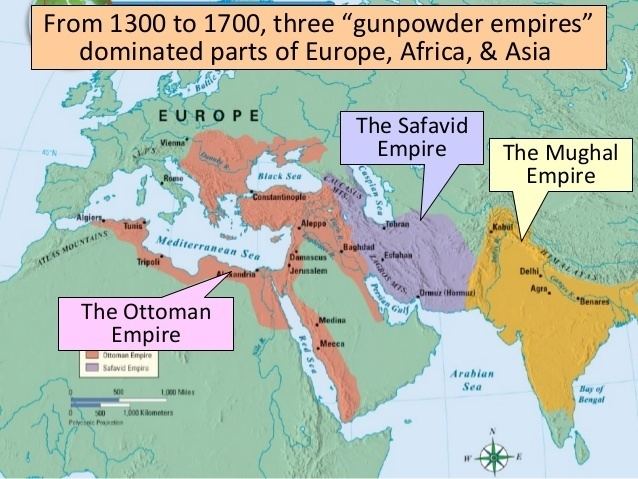
Gunpowder Technology and European History Quiz
Quiz
•
12th Grade
23 questions
AP European History Unit 0 Test
Quiz
•
12th Grade

15 questions
AP European History
Quiz
•
12th Grade
15 questions
AP European History
Quiz
•
12th Grade
15 questions
AP European History
Quiz
•
12th Grade
18 questions
AP European History Units
Quiz
•
10th - 12th Grade
22 questions
European History Revolutions
Quiz
•
9th - 12th Grade
7 questions
European History Review
Quiz
•
9th - 12th Grade
20 questions
European History Overview
Quiz
•
9th - 12th Grade
Explore 12th Grade European History Quizzes
European History for Grade 12 students encompasses a comprehensive examination of the continent's complex political, social, and cultural evolution from ancient civilizations through modern times. These carefully curated quiz collections available through Wayground provide systematic assessment opportunities that challenge students to demonstrate their understanding of pivotal events, influential figures, and transformative movements that shaped European society. The practice questions are designed to develop critical analytical skills essential for advanced historical study, requiring students to synthesize information across multiple time periods, evaluate cause-and-effect relationships, and interpret primary and secondary sources. Through regular assessment and immediate feedback, students strengthen their ability to construct well-supported historical arguments and develop the sophisticated reasoning skills necessary for college-level coursework and beyond. Wayground's extensive library draws from millions of teacher-created resources specifically designed to support educators in delivering comprehensive European History instruction at the Grade 12 level. The platform's robust search and filtering capabilities enable teachers to quickly locate quiz materials aligned with specific curriculum standards and learning objectives, whether focusing on particular eras, themes, or historical methodologies. Advanced customization tools allow educators to differentiate instruction by adjusting question difficulty, incorporating multimedia elements, and tailoring assessments to meet diverse student needs and learning styles. The flexible digital delivery format supports various instructional approaches, from formative assessment during lessons to comprehensive unit reviews, enabling teachers to seamlessly integrate these resources into their planning for remediation, enrichment, and ongoing skill reinforcement throughout the academic year.
FAQs
How do I teach European history in a way that helps students see connections across time periods?
Teaching European history effectively requires building a clear chronological framework first, then layering in thematic connections such as the relationship between the Renaissance and Reformation, or how Enlightenment ideas fueled the French Revolution. Using primary source analysis alongside cause-and-effect organizers helps students move beyond memorizing dates and instead understand how events shaped one another across centuries. Structured practice with chronological reasoning tasks reinforces these skills consistently over time.
What exercises help students practice European history skills?
Effective practice exercises for European history include primary source analysis tasks, cause-and-effect relationship charts, and chronological sequencing activities tied to major periods such as the Renaissance, Reformation, Enlightenment, Industrial Revolution, and the World Wars. Document-based questions that ask students to evaluate evidence and draw historical conclusions are especially valuable for developing interpretive thinking. Varied question formats, including multiple choice, short answer, and matching, help reinforce factual knowledge while building analytical skills.
What common mistakes do students make when studying European history?
A frequent misconception is treating European history as a sequence of isolated events rather than recognizing the cause-and-effect relationships that connect them. Students often struggle to distinguish between correlation and causation, for example, conflating the conditions that enabled the rise of fascism with the event of World War II itself. Another common error is misattributing the influence of historical figures, such as overstating or understating Luther's role in the Reformation relative to broader social and economic pressures.
How do I differentiate European history instruction for students at different levels?
For struggling learners, scaffolded quizzes with guiding questions, simplified timelines, and reduced answer choices on assessments help reduce cognitive overload while maintaining content rigor. Advanced students benefit from enrichment tasks such as comparative analysis across periods or evaluating competing historical interpretations. On Wayground, teachers can apply individual accommodations including extended time, read-aloud support, and reduced answer choices to specific students, while the rest of the class works under standard settings without disruption.
How do I use Wayground's European history quizzes in my classroom?
Wayground's European history quizzes are available as printable PDFs for traditional classroom use and in digital formats for technology-integrated environments, making them flexible for in-person, hybrid, or remote instruction. Teachers can also host quizzes as a live or assigned quiz directly on Wayground, enabling real-time student responses and instant feedback. Each quiz includes a complete answer key, reducing prep time and supporting consistent grading across multiple class sections.
How do I assess student understanding of European history accurately?
Formative assessment in European history is most effective when it targets specific interpretive skills rather than recall alone. Tasks that ask students to evaluate a primary source, identify the significance of a historical period, or explain a cause-and-effect relationship reveal deeper understanding than fact-based quizzes. Watching for common error patterns, such as students confusing the chronology of the Reformation and the Enlightenment, helps teachers identify gaps before they compound in later units.

Accessibility
Features
Wayground Super
School & District
Wayground for Business
Create a quiz
Create a presentation
Wayground AI
Subjects
Mathematics
Social Studies
Science
Physics
Chemistry
Biology
About
Our Story
Wayground Blog
Media Kit
Careers
Support
F.A.Q.
Help & Support
Privacy Policy
Terms of Service
Teacher Resources
2026 Wayground


Get our app

