


9th Grade Finding Missing Sides Quizzes
Assess your understanding of finding missing sides in Grade 9 geometry with this comprehensive quiz featuring practice questions and instant feedback. Master essential techniques for calculating unknown side lengths through self-paced assessment problems.
19 questions
Similar Polygons and Finding Missing Sides

Quiz
•
9th - 10th Grade

23 questions
Right Triangle Trig Ratios and Finding Missing Sides
Quiz
•
9th - 10th Grade

10 questions
Finding missing Sides
Quiz
•
9th - 11th Grade

20 questions
Trig Ratios - Finding Missing Sides
Quiz
•
8th - 10th Grade

10 questions
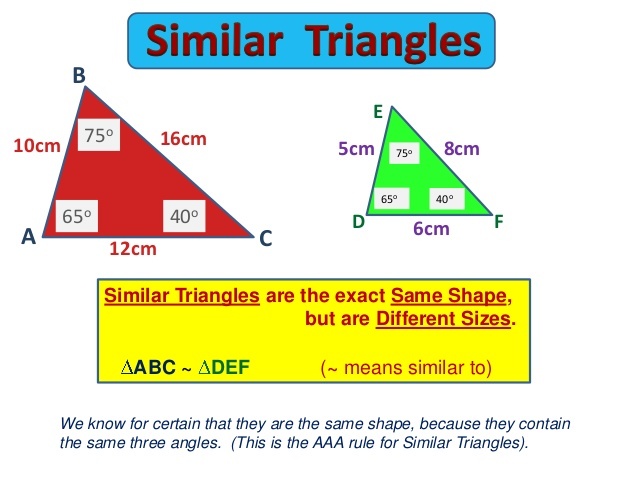
finding missing sides of similar triangles
Quiz
•
9th - 11th Grade

20 questions
Finding missing sides using trig ratio
Quiz
•
9th - 12th Grade
20 questions
5.05: Classifying Triangles and Finding Missing Sides
Quiz
•
9th - 12th Grade
16 questions
Trig Ratios & Finding Missing Sides
Quiz
•
9th - 12th Grade
100 questions
Similarity Finding Missing Sides
Quiz
•
8th - 11th Grade
20 questions
Similarity
Quiz
•
9th - 12th Grade
10 questions
2nd Finding missing sides using trig
Quiz
•
8th - 12th Grade
10 questions
Finding Missing Sides Similar Figures
Quiz
•
7th Grade
Explore 9th Grade Finding Missing Sides Quizzes
Finding Missing Sides in Grade 9 geometry represents a fundamental skill that bridges basic geometric understanding with more advanced mathematical reasoning. These comprehensive quiz collections available through Wayground provide targeted assessment opportunities that help students master the essential techniques for calculating unknown side lengths in various geometric figures, including right triangles, similar triangles, and polygons. The practice questions systematically guide learners through the application of key theorems such as the Pythagorean theorem, properties of similar figures, and trigonometric ratios, while immediate feedback mechanisms allow students to identify knowledge gaps and reinforce correct problem-solving strategies. These quizzes develop critical analytical thinking skills as students learn to identify which geometric principles apply to specific scenarios and execute multi-step calculations with precision and confidence. Wayground's extensive library of teacher-created resources offers mathematics educators powerful tools to support instruction in finding missing sides through carefully curated quiz collections that align with Grade 9 geometry standards. The platform's robust search and filtering capabilities enable teachers to locate assessments that match their specific curriculum requirements and student needs, while built-in customization tools allow for differentiation based on individual learning levels and pacing. Digital delivery formats provide immediate scoring and detailed analytics that inform instructional planning, helping educators identify students who require additional remediation or are ready for enrichment activities. These flexible assessment resources seamlessly integrate into classroom routines, supporting both formative evaluation during initial concept introduction and summative assessment following skill reinforcement, ultimately enabling teachers to ensure all students achieve mastery in this foundational geometric concept.
FAQs
How do I teach 9th graders to find missing sides using trigonometry?
The biggest conceptual hurdle at grade 9 is that trigonometric ratios are defined relative to a specific angle — so students must first identify the reference angle, then label the sides as opposite, adjacent, or hypotenuse relative to that angle. Many students try to memorize SOH-CAH-TOA as a formula without understanding that the labels change depending on which angle they're using. A reliable teaching move: give students a right triangle and ask them to label the sides twice, once from each acute angle's perspective, before they ever set up a ratio.
What exercises help 9th graders practice finding missing sides?
Effective practice at this level mixes Pythagorean theorem problems with trig ratio problems so students have to decide which method applies — that decision-making is itself a key skill. Within trig problems, include all three ratios (sine, cosine, tangent) and vary whether students are solving for a leg or need to use an inverse function. Wayground's grade 9 quizzes progress from simple right triangles to more complex polygon problems, building both computational accuracy and the judgment to select the right approach.
What mistakes do 9th graders make when using trig ratios to find missing sides?
The most common error is mislabeling opposite and adjacent — students often label sides relative to the right angle rather than the given acute angle. A second frequent mistake is setting up the ratio correctly but then solving it backwards: writing sin(θ) = x/hypotenuse and then dividing instead of multiplying. Students also frequently round the trig ratio value too early (using 0.87 instead of keeping sin(60°) exact), which compounds into a noticeably wrong final answer.
How do I use Wayground's grade 9 finding missing sides quizzes?
You can host these as a digital quiz on Wayground — useful for in-class practice where you want to see results before the lesson ends — or download the PDF and assign it on paper. Every quiz includes a complete answer key. The print route works well for assessments where you want students working without device access; the Wayground for Teachers app lets you scan and grade paper submissions without scoring each one by hand.
Is finding missing sides with trigonometry aligned to Common Core for high school geometry?
Yes. Common Core's high school geometry standards expect students to define trigonometric ratios for acute angles in right triangles and use them to solve for unknown side lengths and angles. This builds directly on the Pythagorean theorem work from grade 8 — students already know how to find a missing side when two sides are given; trig extends that to situations where an angle and one side are given instead. From here, the progression moves toward applying trig in non-right triangles using the law of sines and cosines.
How can I differentiate trig-based missing sides practice for 9th graders?
Students entering grade 9 geometry with weak Pythagorean theorem fluency will struggle with trig problems before they've closed that gap. Wayground lets you create alternate quiz versions — adjusting font size or applying a dyslexia-friendly font — so you can assign the same topic at different accessibility levels without preparing separate materials. For digital sessions, extended time is worth enabling for students who need more time to work through multi-step trig calculations; it's set per student and invisible to the rest of the class.

Accessibility
Features
Wayground Super
School & District
Wayground for Business
Create a quiz
Create a presentation
Wayground AI
Subjects
Mathematics
Social Studies
Science
Physics
Chemistry
Biology
About
Our Story
Wayground Blog
Media Kit
Careers
Support
F.A.Q.
Help & Support
Privacy Policy
Terms of Service
Teacher Resources
2026 Wayground


Get our app

