


9th Grade Area of Shaded Region Quizzes
Test your Grade 9 geometry skills with this comprehensive quiz on area of shaded regions. Practice calculating complex areas through instant feedback and self-paced assessment questions.

20 questions
Area of Shaded Region Using Expression

Quiz
•
9th Grade

20 questions
Polynomial Area of Shaded Region
Quiz
•
9th Grade

12 questions
Area of Shaded Regions Circles
Quiz
•
9th Grade
12 questions
Area of Shaded Region Circles
Quiz
•
9th Grade

12 questions
Area of Shaded Region with Circles
Quiz
•
9th Grade

12 questions
Area of Shaded Region Using Expression
Quiz
•
9th Grade
12 questions
Area of Shaded Regions and Overlapping Shapes
Quiz
•
9th Grade
20 questions
Area of Shaded Region Rectangles
Quiz
•
7th Grade
12 questions
Area of Shaded Regions with Circles
Quiz
•
9th Grade
15 questions
Finding Area of Shaded Region
Quiz
•
9th Grade
20 questions
Area of Shaded Region of Rectangles
Quiz
•
7th Grade
20 questions
Area of Shaded Region Word Problems
Quiz
•
7th Grade
Explore 9th Grade Area of Shaded Region Quizzes
Area of shaded region problems represent a fundamental component of Grade 9 geometry curriculum, requiring students to apply multiple mathematical concepts simultaneously to determine the area of complex composite figures. These comprehensive quizzes available through Wayground provide targeted assessment opportunities that challenge students to decompose irregular shapes, subtract overlapping regions, and combine various geometric formulas to arrive at precise solutions. The practice questions systematically develop critical problem-solving skills as students learn to identify constituent shapes within larger figures, calculate individual areas using appropriate formulas for rectangles, triangles, circles, and other polygons, then perform the necessary arithmetic operations to find the shaded portion. Regular assessment through these specialized quizzes offers immediate feedback that helps students recognize common misconceptions about area calculations and strengthens their understanding of how geometric shapes interact within composite figures. Wayground supports mathematics educators with millions of teacher-created quiz resources specifically designed for geometry instruction, featuring robust search and filtering capabilities that allow teachers to locate precisely the right area of shaded region problems for their Grade 9 students. The platform's standards alignment ensures that quiz content directly supports curriculum objectives while comprehensive differentiation tools enable teachers to customize difficulty levels, time limits, and question types to meet diverse learning needs within their classrooms. Flexible digital delivery formats make these geometry assessments accessible for both in-person and remote learning environments, while detailed analytics help educators identify specific areas where students struggle with composite figure analysis. These capabilities streamline lesson planning by providing ready-to-use assessment materials while supporting targeted remediation for students who need additional practice with area calculations and enrichment opportunities for advanced learners ready to tackle more complex geometric challenges.
FAQs
How should I teach area of shaded regions in Grade 9 geometry?
Shift the emphasis from following a fixed procedure to planning the solution. Have students identify possible decompositions, write one algebraic area expression for the shaded region, and justify why each component is added or subtracted before evaluating it.
What exercises build skill with shaded regions in Grade 9?
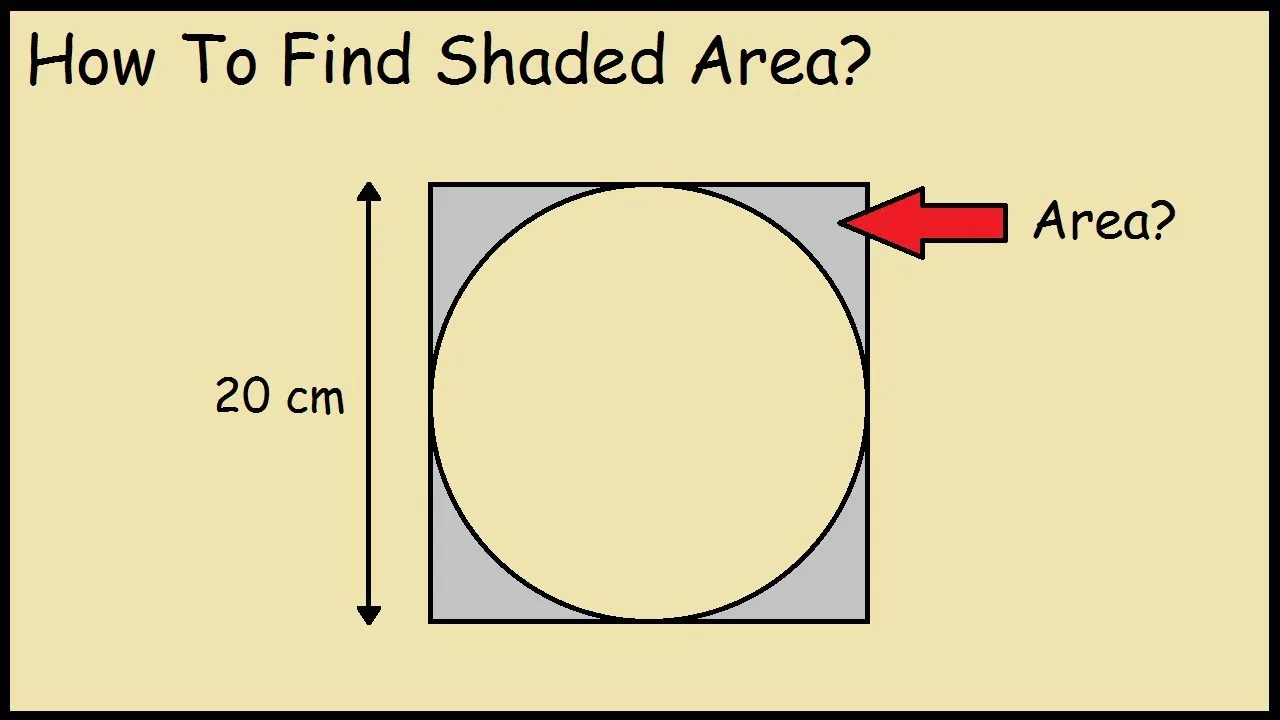
Useful problems include a circle inside a rectangle, a triangle removed from a parallelogram, and overlapping polygons. Add questions with unknown side lengths so students must use geometric relationships or algebra before applying an area formula.
What common mistakes occur in Grade 9 shaded-area problems?
Students may double-count an overlap, subtract the wrong region, or use a slanted side as a triangle or parallelogram height. Algebraic errors also appear when dimensions contain variables, so checking the area expression before substituting values is essential.
How can I assign a Grade 9 shaded-region quiz on Wayground?
Teachers can host the quiz as a digital Wayground quiz or print the PDF for paper-and-pencil geometry practice. A complete answer key is included with every quiz, and the Wayground for Teachers app can scan or capture paper submissions for grading.
How does shaded-region practice fit Common Core high school geometry?
It aligns with Common Core's emphasis on applying area formulas and geometric relationships to solve problems. Students build from numerical composite areas toward figures whose missing dimensions require algebra, preparing them for more advanced work with similarity, coordinate geometry, and solids.
How can I differentiate shaded-area work in a Grade 9 geometry class?
Provide struggling students with diagrams using larger text and wider spacing, then let them complete digital problems with extended time. Challenge advanced students to compare two decompositions or solve figures with variable dimensions and overlapping regions.
What grade level is area of shaded regions usually taught?
Composite and shaded areas begin in middle school and continue into high school geometry. Grade 9 work typically adds algebraic dimensions, more complex overlaps, and greater emphasis on explaining the chosen decomposition.

Accessibility
Features
Wayground Super
School & District
Wayground for Business
Create a quiz
Create a presentation
Wayground AI
Subjects
Mathematics
Social Studies
Science
Physics
Chemistry
Biology
About
Our Story
Wayground Blog
Media Kit
Careers
Support
F.A.Q.
Help & Support
Privacy Policy
Terms of Service
Teacher Resources
2026 Wayground


Get our app

