


10th Grade Gene Expression Quizzes
Test your understanding of gene expression concepts with this comprehensive Grade 10 biology quiz featuring targeted practice questions and instant feedback. Assess your knowledge of transcription, translation, and regulatory mechanisms through self-paced questions designed to reinforce key learning objectives.
44 questions
Unit 4: Gene Expression Review

Quiz
•
10th Grade

18 questions
gene expression and mutation
Quiz
•
10th Grade

12 questions
DNA Gene Expression and Regulation
Quiz
•
10th Grade

39 questions
Unit 4 Test: Gene Expression
Quiz
•
10th Grade

15 questions
gene expression
Quiz
•
10th Grade

11 questions
DNA + Gene Expression
Quiz
•
10th - 12th Grade
48 questions
Gene Expression
Quiz
•
10th - 12th Grade
60 questions
AP Biology Unit 6: Gene Expression & Regulation
Quiz
•
10th - 12th Grade
22 questions
Unit 5 Gene Expression Review
Quiz
•
9th - 12th Grade
17 questions
Nucleic Acids and Gene Expression
Quiz
•
9th - 12th Grade
75 questions
Chapter 14 Gene Expression and Regulation
Quiz
•
9th - 12th Grade
41 questions
DNA Gene Expression and Mutations
Quiz
•
9th - 12th Grade
Browse by grade
Explore 10th Grade Gene Expression Quizzes
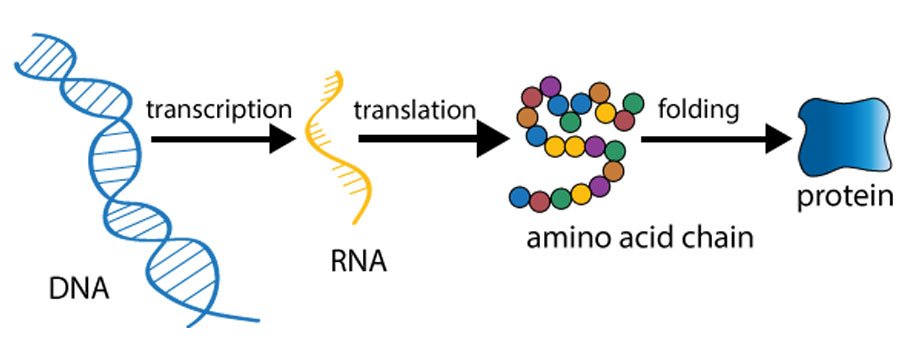
Gene expression in Grade 10 biology represents a fundamental concept where students explore how genetic information stored in DNA is converted into functional proteins that determine cellular characteristics and organism traits. Through comprehensive assessment and practice questions available on Wayground, students develop deep understanding of transcription and translation processes, regulatory mechanisms, and the relationship between genotype and phenotype. These carefully designed quizzes provide immediate feedback on complex topics including RNA synthesis, protein folding, gene regulation, and environmental influences on gene activity, enabling students to identify knowledge gaps and strengthen their grasp of molecular biology principles that form the foundation for advanced biological studies. Wayground supports biology educators with access to millions of teacher-created gene expression quiz resources that can be seamlessly integrated into Grade 10 science curricula. The platform's robust search and filtering capabilities allow teachers to locate assessments aligned with specific learning standards while offering extensive customization tools to differentiate instruction based on individual student needs. These digital-first quiz collections can be deployed in various formats including live classroom sessions, self-paced assignments, and homework activities, providing educators with flexible options for formative and summative assessment. Teachers utilize these resources for comprehensive lesson planning, targeted remediation of challenging molecular concepts, enrichment activities for advanced learners, and ongoing reinforcement of critical gene expression principles throughout their biology units.
FAQs
How do I teach gene expression to high school biology students?
Teaching gene expression effectively means building the concept in two stages: first establish transcription (DNA to mRNA) and then translation (mRNA to protein), before introducing regulatory mechanisms like promoter regions, transcription factors, and enhancer sequences. Visual aids such as labeled diagrams of the transcription and translation machinery help students track the flow of genetic information. Connecting each molecular step to a real cellular outcome, such as how a single regulatory protein can silence or activate an entire gene, grounds abstract biochemistry in biological meaning.
What exercises help students practice transcription and translation?
Targeted practice problems that walk students through each step, such as transcribing a DNA template strand into mRNA and then using a codon chart to translate that sequence into amino acids, build procedural fluency before conceptual questions are introduced. Problems that include mutations, such as a single base substitution or frameshift, push students to apply their understanding rather than just recall steps. Quizzes that combine these mechanics with questions about regulatory mechanisms, such as how a transcription factor affects gene activation, extend practice into higher-order thinking.
What mistakes do students commonly make when learning gene expression?
The most common error is confusing the template strand with the coding strand during transcription, which leads to students writing the wrong mRNA sequence. Students also frequently misapply complementary base pairing rules, particularly forgetting that uracil replaces thymine in RNA. A third persistent misconception is treating gene expression as a linear, always-active process rather than understanding that regulatory proteins, promoter accessibility, and post-translational modifications tightly control when and how much protein is produced.
How can I differentiate gene expression instruction for students at different levels?
For students who need additional support, reducing the complexity of practice problems to focus on one process at a time, such as transcription only, prevents cognitive overload before both processes are combined. For advanced learners, problems that incorporate gene regulation, including the role of enhancer sequences or post-translational modifications, extend the challenge beyond mechanics. On Wayground, teachers can apply accommodations such as read aloud, reduced answer choices, and extended time to individual students, so the same assignment can serve a differentiated classroom without requiring separate materials.
How do I use gene expression quizzes from Wayground in my classroom?
Gene expression quizzes on Wayground are available as printable PDFs for traditional classroom use and in digital formats for technology-integrated environments, and teachers can also host them as a quiz directly on the platform. Printable versions work well for guided notes during initial instruction or as structured homework, while the digital format allows for immediate scoring and progress tracking. Answer keys are included with each quiz, enabling students to self-assess and giving teachers a ready-made tool for whole-class review.
How do I assess whether students truly understand gene expression versus just memorizing steps?
Students who have only memorized steps will struggle when given a novel DNA sequence and asked to predict the effect of a point mutation on the resulting protein, or when asked to explain why a cell in the liver expresses different proteins than a cell in the pancreas despite having identical DNA. Assessment questions that require students to apply regulatory concepts, such as predicting what happens to protein production when a repressor protein is inactivated, reliably distinguish procedural recall from genuine conceptual understanding. Including short written justification prompts alongside multiple-choice or fill-in problems also reveals the depth of student reasoning.

Accessibility
Features
Wayground Super
School & District
Wayground for Business
Create a quiz
Create a presentation
Wayground AI
Subjects
Mathematics
Social Studies
Science
Physics
Chemistry
Biology
About
Our Story
Wayground Blog
Media Kit
Careers
Support
F.A.Q.
Help & Support
Privacy Policy
Terms of Service
Teacher Resources
2026 Wayground


Get our app

