
Filters
Resource Type


Grades
4th Grade Geometry 3D Shapes Quizzes
Our Grade 4 geometry 3D shapes quizzes help students practice identifying and understanding three-dimensional figures through interactive questions and instant feedback. These self-paced assessments cover essential concepts like cubes, spheres, cylinders, and pyramids to strengthen spatial reasoning skills.
Recommended topics for you

15 questions
Area Perimeter Volume Rectangles and Rectangular Prisms

Quiz
•
4th Grade

20 questions
Geometry
Quiz
•
4th Grade
12 questions
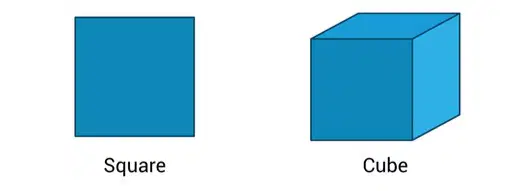
Squares and cubes review
Quiz
•
4th Grade

16 questions
Geometry Review
Quiz
•
4th Grade

25 questions
Geometry Pre-Test
Quiz
•
4th Grade

12 questions
Geometry Review
Quiz
•
4th Grade
20 questions
End of Geometry Review
Quiz
•
4th Grade
20 questions
Shapes | 3D Shapes
Quiz
•
4th Grade
19 questions
Cubes
Quiz
•
4th - 5th Grade
10 questions
Surface Area and Volume of Rectangular Prisms
Quiz
•
4th - 5th Grade
19 questions
Volume with Unit Cubes Review
Quiz
•
4th - 5th Grade
19 questions
Packing With Unit Cubes
Quiz
•
4th - 5th Grade
Explore 4th Grade Geometry 3D Shapes Quizzes
Geometry 3D shapes form a crucial component of Grade 4 mathematics curriculum, helping students transition from flat, two-dimensional thinking to spatial reasoning with three-dimensional objects. The comprehensive quizzes available through Wayground provide systematic assessment opportunities that evaluate students' understanding of essential geometric concepts including identifying cubes, spheres, cylinders, cones, and pyramids, along with their distinguishing characteristics such as faces, edges, and vertices. These practice questions are carefully designed to reinforce spatial visualization skills while building foundational knowledge that students will apply throughout their mathematical education. The interactive quiz format delivers immediate feedback, allowing learners to recognize patterns in three-dimensional geometry while developing critical thinking abilities necessary for more advanced geometric concepts. Wayground supports educators with an extensive collection of teacher-created geometry resources, featuring millions of quiz questions specifically aligned with Grade 4 mathematical standards and learning objectives. The platform's robust search and filtering capabilities enable teachers to quickly locate age-appropriate 3D shape assessments that match their specific instructional needs, whether for initial concept introduction, skill reinforcement, or comprehensive evaluation. Flexible delivery options accommodate diverse classroom environments, from individual digital assignments to whole-class review sessions, while built-in differentiation tools allow educators to customize difficulty levels and question types for varied learning abilities. These versatile quiz collections serve multiple instructional purposes, supporting lesson planning, identifying areas requiring remediation, providing enrichment opportunities for advanced learners, and offering ongoing skill reinforcement that helps students master spatial reasoning concepts essential for mathematical success.
FAQs
How do I teach 3D shapes to fourth graders?
Start with familiar objects, such as a soup can for a cylinder and a cereal box for a rectangular prism. Have students name each solid, handle or sketch it, and then compare its faces, edges, and vertices. Sorting shapes by one property at a time helps make the vocabulary stick.
What exercises help Grade 4 students practice 3D shapes?
Useful exercises include matching solids to real-world objects, counting faces, edges, and vertices, and sorting cubes, cones, cylinders, spheres, and rectangular prisms by their attributes. Follow with short explanation prompts so students must justify each classification.
What mistakes do fourth graders make when identifying 3D shapes?
Students often call a solid by the name of one visible face, confuse edges with vertices, or count curved surfaces as flat faces. Rotating a model and marking each feature once can prevent double-counting.
How can I use a Grade 4 3D shapes quiz on Wayground?
Assign the quiz as a digital quiz on Wayground or download the printable PDF for paper practice. Every quiz includes a complete answer key, and paper submissions can be scanned or captured for grading with the Wayground for Teachers app.
How do 3D shapes fit into the Common Core math progression?
This practice fits the Common Core progression from describing and classifying shapes by their attributes toward connecting two-dimensional faces with three-dimensional solids. Identifying the squares on a cube or the rectangles on a rectangular prism prepares students for later work with nets, surface area, and volume.
How can I differentiate 3D shape practice in Grade 4?
Give students who struggle with geometry a version with larger text or wider font spacing, and use Read Aloud when shape descriptions create a reading barrier. Students ready for enrichment can compare solids that share an attribute and explain how they differ.
What grade do students learn about faces, edges, and vertices?
Students commonly begin describing solid shapes in the elementary grades and apply the vocabulary more systematically by Grade 4. At this level, they should identify and compare faces, edges, and vertices across familiar solids.

Accessibility
Features
Wayground Super
School & District
Wayground for Business
Create a quiz
Create a presentation
Wayground AI
Subjects
Mathematics
Social Studies
Science
Physics
Chemistry
Biology
About
Our Story
Wayground Blog
Media Kit
Careers
Support
F.A.Q.
Help & Support
Privacy Policy
Terms of Service
Teacher Resources
2026 Wayground


Get our app

