

Kindergarten Helping Verbs Quizzes
Assess your kindergarten students' understanding of helping verbs with this interactive quiz featuring age-appropriate practice questions. Students receive instant feedback as they work through self-paced assessment activities designed to reinforce their knowledge of helping verbs.

15 questions
Helping Verbs

Quiz
•
KG - 5th Grade

12 questions
Helping verbs
Quiz
•
KG - 1st Grade

10 questions
Helping verbs
Quiz
•
KG

30 questions
Helping Verbs
Quiz
•
NaNth - NaNth Grade
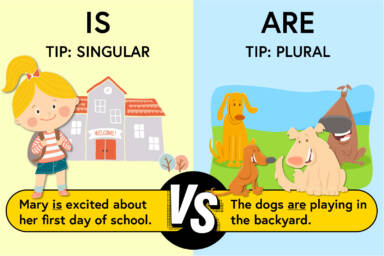
20 questions
Helping Verbs: Is and Are
Quiz
•
KG

15 questions
Helping Verbs
Quiz
•
NaNth - NaNth Grade
25 questions
Helping Verbs
Quiz
•
NaNth - NaNth Grade
12 questions
Action, Linking, and Helping Verbs
Quiz
•
NaNth - NaNth Grade
20 questions
Action, Linking, Helping verbs quiz
Quiz
•
NaNth - 11th Grade
6 questions
helping verbs
Quiz
•
KG - Professional Development
15 questions
Helping verbs
Quiz
•
KG - 3rd Grade
15 questions
Action, linking, and helping verbs
Quiz
•
NaNth - 12th Grade
Explore Kindergarten Helping Verbs Quizzes
Helping verbs form a foundational component of kindergarten English instruction, introducing young learners to the auxiliary words that work alongside main verbs to create complete sentences and express different meanings. These specialized assessment tools available through Wayground provide kindergarten teachers with engaging practice questions designed to help students identify and understand common helping verbs such as "is," "am," "are," "was," "were," "have," "has," and "will." The interactive quiz format allows children to receive immediate feedback as they explore how helping verbs function in simple sentences, building essential grammar skills through age-appropriate examples like "I am running" or "She is happy." This systematic practice develops students' understanding of sentence structure while strengthening their ability to recognize the relationship between helping verbs and main verbs in everyday language. Wayground supports kindergarten educators with access to millions of teacher-created helping verb quizzes that can be easily discovered through robust search and filtering capabilities aligned with early childhood English standards. The platform's differentiation tools enable teachers to customize quiz difficulty levels and question types to meet diverse learning needs, while flexible digital delivery formats accommodate various classroom environments and learning styles. These comprehensive quiz collections serve multiple instructional purposes, from initial skill assessment and targeted remediation to enrichment activities for advanced learners, allowing educators to reinforce helping verb concepts through repeated practice and varied question formats. Teachers can seamlessly integrate these resources into lesson planning workflows, using the immediate feedback mechanisms to identify students who need additional support and those ready for more challenging grammatical concepts.
FAQs
How do I teach helping verbs to elementary students?
Start by introducing a core list of common helping verbs — such as am, is, are, was, were, have, has, had, will, would, could, should, may, might, must, and do — and show students how each one pairs with a main verb to form a complete verb phrase. Use color-coding to visually separate the helping verb from the main verb in sample sentences, which helps students see the two-part structure clearly. Once students can identify helping verbs in isolation, move them toward recognizing verb phrases in context, including sentences where the helping verb and main verb are separated by adverbs like 'not' or 'always.'
What exercises help students practice identifying helping verbs?
Effective practice exercises ask students to underline or circle the helping verb in a sentence, distinguish the helping verb from the main verb, and fill in blanks with the correct helping verb to complete a verb phrase. Sentence-sorting tasks — where students categorize sentences by tense or meaning based on the helping verb used — build deeper understanding of how auxiliary verbs shift meaning. These structured practice formats mirror the kind of targeted repetition that builds automaticity in grammar recognition.
What mistakes do students commonly make with helping verbs?
The most common error is confusing the helping verb with the main verb, particularly with forms of 'have' and 'be,' which can function as either depending on context. Students also struggle when the helping verb and main verb are not adjacent in a sentence, such as in questions ('Did she run?') or negations ('He should not go'). Another frequent misconception is treating modal verbs like 'can,' 'might,' and 'should' as standalone action verbs rather than recognizing their role as auxiliaries that modify meaning and tense.
How do helping verbs change the meaning or tense of a sentence?
Helping verbs signal tense, mood, possibility, obligation, and aspect — making them one of the most meaning-dense elements in English grammar. For example, 'She runs' becomes a future action with 'will' ('She will run'), a past event with 'had' ('She had run'), or a conditional possibility with 'might' ('She might run'). Teaching students to recognize how swapping one helping verb changes the entire meaning of a sentence is a powerful way to deepen their grammatical awareness.
How do I use Wayground's helping verbs quizzes in my classroom?
Wayground's helping verbs quizzes are available as printable PDFs for traditional classroom distribution and in digital formats for technology-integrated lessons, making them adaptable to different teaching environments and student preferences. Teachers can host quizzes as a quiz directly on Wayground, enabling real-time student responses and faster assessment turnaround. The included answer keys streamline grading, so teachers can spend more time on targeted follow-up instruction rather than scoring.
How can I differentiate helping verbs instruction for students at different levels?
For struggling learners, reduce cognitive load by limiting practice to a small set of high-frequency helping verbs (such as 'is,' 'are,' 'was,' 'will') before expanding to modals and perfect tenses. Advanced students benefit from exercises that ask them to rewrite sentences using different helping verbs and explain how the meaning shifts. On Wayground, teachers can apply accommodations such as read aloud, reduced answer choices, and extended time to individual students, allowing the same quiz to serve the full range of learners in one classroom without singling anyone out.

Accessibility
Features
Wayground Super
School & District
Wayground for Business
Create a quiz
Create a presentation
Wayground AI
Subjects
Mathematics
Social Studies
Science
Physics
Chemistry
Biology
About
Our Story
Wayground Blog
Media Kit
Careers
Support
F.A.Q.
Help & Support
Privacy Policy
Terms of Service
Teacher Resources
2026 Wayground


Get our app

