


6th Grade Inca Civilization Quizzes
Assess your understanding of the Inca Civilization with this comprehensive Grade 6 history quiz featuring practice questions on their empire, culture, and achievements. Test your knowledge through self-paced assessment and receive instant feedback to strengthen your grasp of this fascinating ancient civilization.

15 questions
Inca Civilization

Quiz
•
6th Grade
20 questions
Inca Civilization
Quiz
•
6th Grade

15 questions
Inca Civilization
Quiz
•
6th Grade

23 questions
Maya, Aztecs, and Incas
Quiz
•
6th Grade

13 questions
Civilizations of the Americas
Quiz
•
6th Grade

54 questions
Mesoamerican Civilizations
Quiz
•
6th Grade
19 questions
Inca Civilization Colorado 6th grade
Quiz
•
6th - 8th Grade
14 questions
The Incredible Inca
Quiz
•
4th - 6th Grade
15 questions
The Inca Civilization
Quiz
•
6th - 8th Grade
20 questions
Inca Info
Quiz
•
6th - 8th Grade
16 questions
Maya Inca Aztec practice quiz
Quiz
•
6th - 8th Grade
21 questions
Mesoamerica
Quiz
•
6th - 8th Grade
Explore 6th Grade Inca Civilization Quizzes
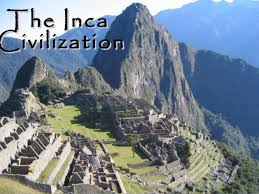
Inca Civilization quizzes for Grade 6 students provide comprehensive assessment opportunities that evaluate understanding of one of history's most sophisticated ancient empires. These practice questions examine critical aspects of Incan society, including their advanced agricultural techniques, impressive architectural achievements like Machu Picchu, complex social hierarchies, and innovative engineering systems such as their extensive road networks. Students receive immediate feedback on their responses, allowing them to identify knowledge gaps and strengthen their comprehension of how the Inca built and maintained their vast empire across the challenging terrain of the Andes Mountains. The assessment materials cover essential topics from the rise of the Inca under Manco Capac through the Spanish conquest, helping students develop analytical skills as they explore cause-and-effect relationships in historical events. Wayground's extensive collection of teacher-created Inca Civilization quizzes offers educators millions of resources with robust search and filtering capabilities that align with social studies standards for middle school instruction. Teachers can easily customize existing assessments or modify practice questions to meet diverse learning needs, supporting both remediation for struggling students and enrichment opportunities for advanced learners. The platform's flexible digital delivery formats enable seamless integration into classroom instruction, homework assignments, or review sessions, while differentiation tools allow educators to adjust content complexity and question types. These comprehensive quiz collections support strategic lesson planning by providing formative assessment data that informs instructional decisions, helps reinforce key historical concepts, and enables teachers to track student progress in understanding this fascinating civilization's contributions to world history.
FAQs
How do I teach the Inca Civilization to middle or high school students?
Teaching the Inca Civilization is most effective when organized around key themes: Andean geography, political structure, agricultural and architectural innovation, the quipu recording system, and the impact of Spanish conquest. Start with geographic context by mapping the empire's expansion along the Andes, then move into society and governance before addressing decline. Primary source analysis and cross-civilization comparisons deepen historical thinking and help students connect Inca history to broader world history standards.
What exercises help students practice and retain knowledge of the Inca Empire?
Effective practice activities for the Inca Civilization include primary source analysis, structured comparison charts that place Inca governmental and social structures alongside other ancient empires, and cause-and-effect exercises tracing the empire's rapid 15th-century expansion. Written response prompts asking students to evaluate the legacy of Spanish conquest on indigenous populations are especially useful for building historical argumentation skills alongside content recall.
What misconceptions do students commonly have about the Inca Civilization?
A common misconception is that the Inca had no system of record-keeping because they lacked a written alphabet. In reality, the quipu, a system of knotted cords, served as a sophisticated tool for recording numerical data and potentially narrative information. Students also frequently conflate the Inca with other Mesoamerican civilizations like the Aztec or Maya, so explicitly contrasting these cultures by region, timeline, and social structure helps correct this error early.
How can I use Inca Civilization quizzes to differentiate instruction for diverse learners?
Inca Civilization quizzes on Wayground can be assigned digitally, which allows teachers to apply individual student accommodations directly within the platform. Features such as read aloud support, reduced answer choices, and extended time can be configured per student without disrupting the rest of the class, making it easier to support English language learners, students with IEPs, or those needing enrichment, all within the same assignment.
How do I use Inca Civilization quizzes from Wayground in my classroom?
Wayground's Inca Civilization quizzes are available as printable PDFs for traditional classroom use and in digital formats for technology-integrated environments, including the option to host them as a live quiz on the platform. Teachers can use printable versions for independent practice or assessments and digital versions for homework, stations, or whole-class review. All quizzes include detailed answer keys, supporting both teacher-led instruction and independent student study.
What topics within the Inca Civilization should I prioritize for a social studies unit?
A well-rounded Inca Civilization unit should prioritize Andean origins and geographic expansion, the ayllu social structure, the role of the Sapa Inca in governance and religion, agricultural innovations such as terraced farming and irrigation, and the significance of sites like Machu Picchu. The quipu recording system and the Spanish conquest of the 1530s are also essential for understanding both the civilization's complexity and its ultimate transformation under colonial rule.

Accessibility
Features
Wayground Super
School & District
Wayground for Business
Create a quiz
Create a presentation
Wayground AI
Subjects
Mathematics
Social Studies
Science
Physics
Chemistry
Biology
About
Our Story
Wayground Blog
Media Kit
Careers
Support
F.A.Q.
Help & Support
Privacy Policy
Terms of Service
Teacher Resources
2026 Wayground


Get our app

