


12th Grade Ionic and Covalent Compounds Quizzes
Test your Grade 12 understanding of ionic and covalent compounds with this comprehensive chemistry quiz designed to assess your knowledge of chemical bonding principles. Practice identifying compound types, predicting properties, and analyzing molecular structures through self-paced questions with instant feedback.

15 questions
Chemical Bonds Quiz

Quiz
•
12th Grade

100 questions
Types of Bonds Test spring 2024
Quiz
•
12th Grade

31 questions
Naming compounds
Quiz
•
12th Grade
22 questions
Physical Science Ionic & Covalent Bond Quest
Quiz
•
9th - 12th Grade

26 questions
AP CHEM Unit 2 Ionic and Covalent Compounds and Properties
Quiz
•
9th - 12th Grade

28 questions
Ionic and Covalent Compounds Exam
Quiz
•
9th - 12th Grade
10 questions
Properties of Ionic and Covalent Compounds
Quiz
•
9th - 12th Grade
15 questions
Ionic & Covalent Naming
Quiz
•
9th - 12th Grade
25 questions
Ionic & Covalent Lewis Structures
Quiz
•
9th - 12th Grade
20 questions
HW: Covalent Bonds & Bonding Diagrams
Quiz
•
9th - 12th Grade
20 questions
6.2 Naming Ionic Compounds Mixed Quiz
Quiz
•
9th - 12th Grade
9 questions
Intro to Bonding and Naming
Quiz
•
9th - 12th Grade
Browse by grade
Explore 12th Grade Ionic and Covalent Compounds Quizzes
Ionic and covalent compounds form the foundation of chemical bonding theory in Grade 12 science curricula, and comprehensive quiz collections through Wayground provide targeted assessment opportunities for students mastering these essential concepts. These practice questions systematically evaluate student understanding of electronegativity differences, bond formation mechanisms, molecular geometry, and the distinctive properties that distinguish ionic compounds from covalent molecules. The quizzes deliver immediate feedback on complex topics including lattice structures, polarity predictions, intermolecular forces, and nomenclature rules, enabling students to identify knowledge gaps and strengthen their grasp of chemical bonding principles that underpin advanced chemistry studies. Wayground's extensive library contains millions of teacher-created quiz resources specifically designed for ionic and covalent compound instruction, with robust search and filtering capabilities that allow educators to locate content aligned with specific curriculum standards and learning objectives. Teachers can customize existing assessments or create differentiated versions to accommodate varying student readiness levels, incorporating visual molecular models, electron dot diagrams, and real-world compound examples that reinforce theoretical concepts through practical application. The platform's flexible digital delivery system supports both formative assessment during instruction and summative evaluation of student progress, while comprehensive analytics help educators identify students requiring additional support with challenging concepts like hybridization theory, VSEPR models, or prediction of compound properties based on bonding types.
FAQs
How do I teach students the difference between ionic and covalent compounds?
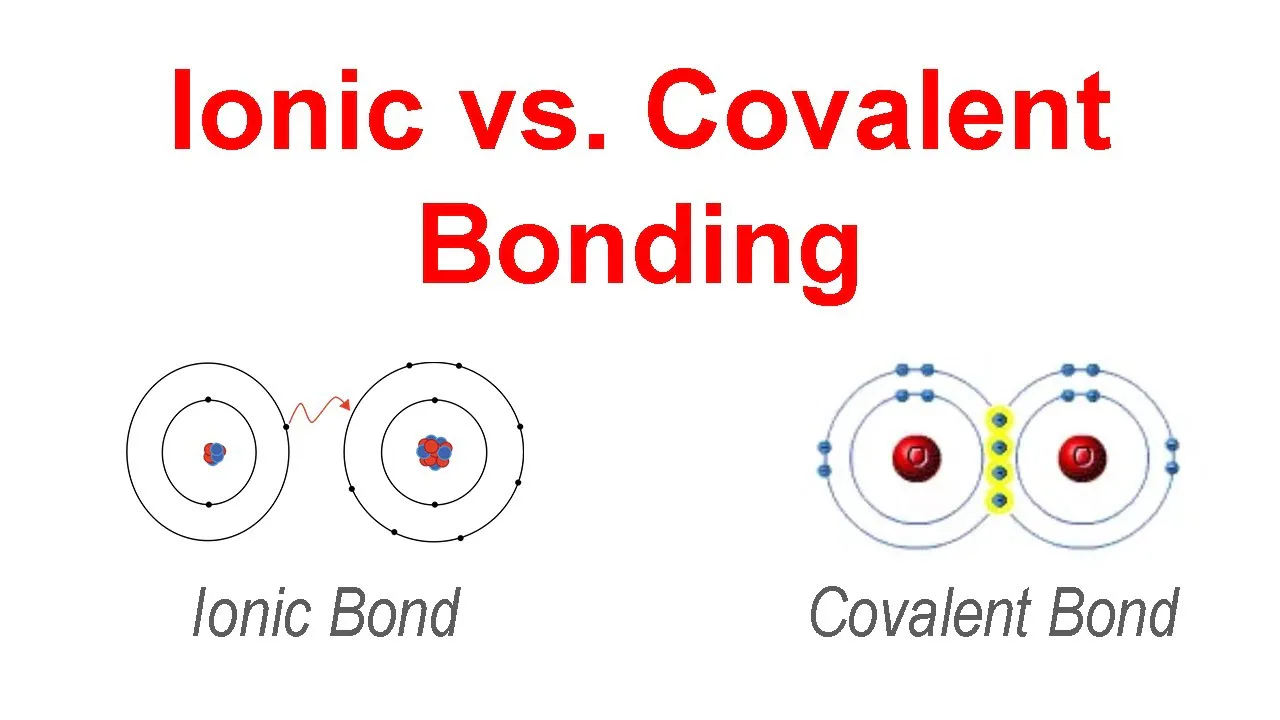
Start by grounding students in electronegativity differences: ionic bonds form when one atom transfers electrons to another (typically metal to nonmetal), while covalent bonds form when two nonmetals share electrons. Use visual models showing electron dot structures and lattice diagrams to make the distinction concrete. From there, connect bonding type to observable properties such as melting point, conductivity, and solubility so students see why the distinction matters beyond the naming rules.
What are effective practice exercises for naming ionic and covalent compounds?
Naming practice should be sequenced: begin with binary ionic compounds using fixed-charge metals, then introduce transition metals requiring Roman numerals, and finally move to covalent naming using Greek prefixes. Formula-writing exercises that reverse the process are equally important, as they force students to apply oxidation states and valence rules rather than memorize patterns. Mixed practice sets that require students to first classify a compound before naming it are especially effective at building flexibility.
What mistakes do students commonly make when identifying ionic vs. covalent compounds?
The most frequent error is assuming that any compound containing a metal must be ionic, which breaks down with organometallic compounds and causes confusion with polyatomic ions like ammonium. Students also routinely misapply Greek prefixes to ionic compounds or forget Roman numerals for variable-charge transition metals. Another common misconception is conflating polarity with bond type, leading students to incorrectly label all polar covalent bonds as ionic.
How can I use quizzes to help students practice predicting properties of ionic and covalent compounds?
Quizzes that pair compound identification with property prediction are highly effective because they push students beyond rote naming into applied reasoning. Tasks might ask students to predict whether a compound will conduct electricity in solution, estimate relative melting points, or explain solubility trends based on bonding type. These exercises reinforce that ionic compounds form lattice structures with high melting points and electrolytic behavior, while covalent compounds are generally molecular, lower-melting, and non-conductive.
How do I use Wayground's ionic and covalent compounds quizzes in my classroom?
Wayground's ionic and covalent compounds quizzes are available as printable PDFs for traditional classroom use and in digital formats for technology-integrated environments, making them flexible for in-class instruction, homework, or test prep. Teachers can also host quizzes as a quiz directly on Wayground, enabling real-time student response and progress tracking. Each quiz includes a complete answer key, so students can self-check independently while teachers focus their review time on persistent gaps.
How do I differentiate ionic and covalent compounds practice for students at different skill levels?
For foundational learners, start with binary ionic and simple covalent compounds before introducing polyatomic ions and molecular geometry. On Wayground, teachers can apply student-level accommodations such as reduced answer choices to lower cognitive load for struggling students, or enable Read Aloud for students who need questions read to them. Advanced students can be directed toward problems involving electronegativity values, lattice energy comparisons, and molecular polarity to extend their understanding beyond naming conventions.

Accessibility
Features
Wayground Super
School & District
Wayground for Business
Create a quiz
Create a presentation
Wayground AI
Subjects
Mathematics
Social Studies
Science
Physics
Chemistry
Biology
About
Our Story
Wayground Blog
Media Kit
Careers
Support
F.A.Q.
Help & Support
Privacy Policy
Terms of Service
Teacher Resources
2026 Wayground


Get our app

