

9th Grade Ions Presentations
This Grade 9 ions presentation explains the formation, properties, and behavior of charged particles through clear visual learning and structured lesson slides. Students will explore how atoms gain or lose electrons to become ions and understand their role in chemical compounds and reactions.
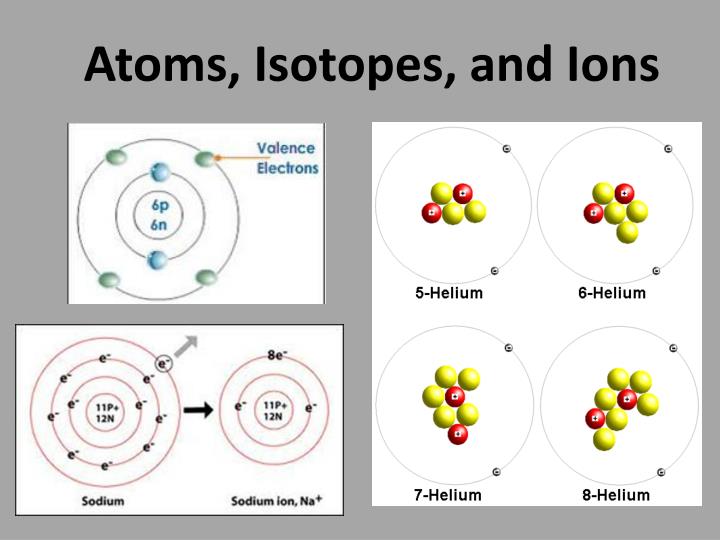
23 questions
Atom Ions and Isotopes Recap

Presentation
•
9th - 12th Grade

31 questions
Lecture 2.1: Atoms, Ions, and Isotopes
Presentation
•
9th - 12th Grade

23 questions
Valence Electrons and Ion Formation
Presentation
•
9th - 12th Grade

25 questions
Polyatomic Ions
Presentation
•
9th - 12th Grade

30 questions
Valence Electrons, Ions & Lewis Dot Structures
Presentation
•
9th - 12th Grade

19 questions
Ionic Bonds
Presentation
•
9th - 12th Grade
25 questions
Ions and Isotopes
Presentation
•
8th - 12th Grade
16 questions
Ions and Isotopes
Presentation
•
6th Grade
44 questions
1/14/26: Introduction to Atoms
Presentation
•
9th Grade
Browse by grade
Explore 9th Grade Ions Presentations
Ions represent a fundamental concept in Grade 9 chemistry that bridges atomic structure with chemical behavior and bonding. Wayground's comprehensive collection of teacher-created presentations delivers structured instruction on ion formation, helping students visualize how atoms gain or lose electrons to achieve stable electron configurations. These educational resources emphasize concept explanation through clear diagrams and step-by-step processes, enabling visual learning of ionic charges, electron transfer mechanisms, and the relationship between ion formation and the periodic table. The presentations guide students through understanding how metals form cations by losing electrons while nonmetals form anions by gaining electrons, establishing the foundation for comprehending ionic compounds and their properties. Wayground's platform empowers educators with access to millions of teacher-developed presentation resources specifically designed for chemistry instruction at the Grade 9 level. The robust search and filtering capabilities allow teachers to locate presentations aligned with curriculum standards while supporting differentiated instruction through customizable content that addresses varying student readiness levels. These digital-first resources provide flexible delivery options that accommodate diverse classroom environments, from interactive whiteboard displays to individual student devices. Teachers can seamlessly integrate these presentations into lesson planning for initial concept introduction, use them for remediation when students struggle with electron configuration concepts, or deploy them for enrichment activities that explore real-world applications of ionic compounds, ultimately reinforcing essential skills in atomic theory and chemical bonding.

Accessibility
Features
Wayground Super
School & District
Wayground for Business
Create a quiz
Create a presentation
Wayground AI
Subjects
Mathematics
Social Studies
Science
Physics
Chemistry
Biology
About
Our Story
Wayground Blog
Media Kit
Careers
Support
F.A.Q.
Help & Support
Privacy Policy
Terms of Service
Teacher Resources
2026 Wayground


Get our app

