

5th Grade Kite Quizzes
Master Grade 5 kite geometry concepts with our comprehensive collection of interactive quizzes designed to assess understanding of this unique quadrilateral's properties and characteristics. Practice identifying kite features, calculating angles and areas, and solving real-world problems through self-paced assessments that provide instant feedback to strengthen your 2D shapes knowledge.

6 questions
Kites and Squares Lesson 19

Quiz
•
5th Grade

20 questions
High School Geometry Polygon Parallelogram Kite Trapezoid Rhombus
Quiz
•
5th Grade

19 questions
Classifying Parallelogram, Rhombus, Kite
Quiz
•
5th Grade

18 questions
Properties Quadrilaterals Trapezoids Parallelograms Kite Rhombus
Quiz
•
5th Grade
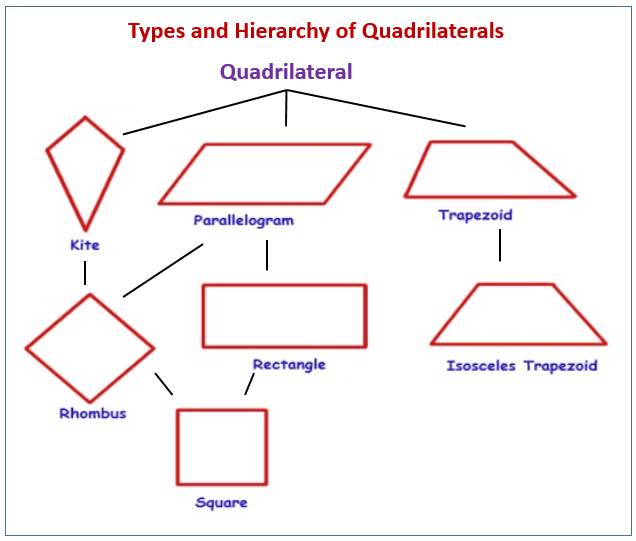
18 questions
Classifying Parallelogram, Rhombus, Kite
Quiz
•
5th Grade

21 questions
Quadrilaterals
Quiz
•
5th Grade
9 questions
Area and Perimeter with Kites and Circles
Quiz
•
4th Grade
Browse by grade
Explore 5th Grade Kite Quizzes
Kite properties and characteristics form a fundamental component of Grade 5 geometry education, building students' understanding of quadrilaterals and their unique attributes. Through comprehensive quiz collections available on Wayground, students engage with targeted practice questions that assess their knowledge of kite features, including perpendicular diagonals, symmetrical properties, and angle relationships. These interactive assessments help fifth-grade learners develop critical geometric reasoning skills while providing immediate feedback on their understanding of how kites differ from other quadrilaterals like rhombuses, rectangles, and parallelograms. The quiz format encourages students to apply their knowledge through varied question types that test both conceptual understanding and practical application of kite properties in mathematical problem-solving scenarios. Wayground's extensive library of teacher-created kite geometry quizzes provides educators with millions of ready-to-use resources specifically designed for Grade 5 mathematics instruction. Teachers can efficiently search and filter quiz collections based on specific learning objectives, curriculum standards alignment, and difficulty levels to match diverse classroom needs. The platform's robust customization tools enable instructors to modify existing assessments or create differentiated versions that support both struggling learners and advanced students exploring geometric concepts. Whether delivered through digital classroom presentations, individual student practice sessions, or homework assignments, these flexible quiz formats support comprehensive lesson planning while offering valuable data for remediation and enrichment activities that reinforce essential geometric skills throughout the academic year.
FAQs
How do I teach kite properties to Grade 5 students?
Begin with the two pairs of adjacent equal sides, then fold or draw a kite along its line of symmetry to examine its diagonals. Students should label equal sides and the right angle formed by the perpendicular diagonals before applying those properties to perimeter problems.
What exercises help fifth graders practice kite geometry?
Use a progression from identifying kites to finding missing side lengths and calculating perimeter. For example, if the two distinct side lengths are 6 units and 9 units, students can reason that the perimeter is 6 + 6 + 9 + 9, or 30 units.
What mistakes do students commonly make with kite perimeter and diagonals?
Common errors include adding each distinct side length only once, treating all four sides as equal, and assuming the diagonals are equal because they are perpendicular. Require students to label congruent side pairs and mark the right-angle intersection before calculating.
How can I assign these Grade 5 kite quizzes?
Teachers can host a quiz as a digital quiz on Wayground or print the PDF for paper-based practice. Printed submissions can then be scanned or captured for grading with the Wayground for Teachers app.
How does studying kites fit into the Common Core geometry progression?
The topic extends Common Core's emphasis on classifying two-dimensional figures through their attributes. Grade 5 students move beyond visual recognition by using equal adjacent sides, symmetry, and perpendicular diagonals to distinguish kites and solve perimeter problems.
How can I support students who struggle with kite geometry?
Give those students a version with larger text or wider spacing, and use reduced answer choices during digital identification tasks. Extended time is especially helpful when students must inspect side markings, interpret diagonals, and complete perimeter calculations.
Is this kite quiz suitable for Grade 5?
Yes. It matches Grade 5 geometry work by combining quadrilateral classification with kite symmetry, perpendicular diagonals, and perimeter calculations.

Accessibility
Features
Wayground Super
School & District
Wayground for Business
Create a quiz
Create a presentation
Wayground AI
Subjects
Mathematics
Social Studies
Science
Physics
Chemistry
Biology
About
Our Story
Wayground Blog
Media Kit
Careers
Support
F.A.Q.
Help & Support
Privacy Policy
Terms of Service
Teacher Resources
2026 Wayground


Get our app

