
Resource Type

Subjects
5th Grade Hexagons Quizzes
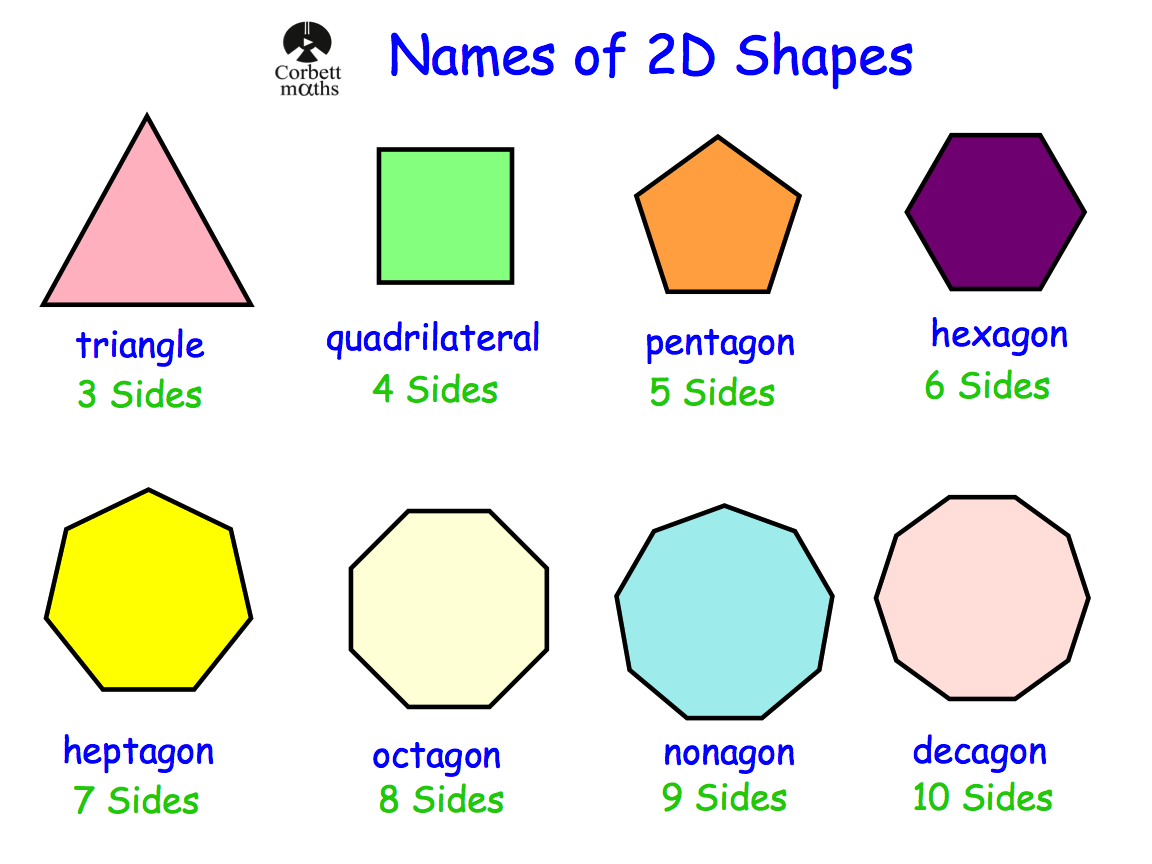
Test your Grade 5 students' understanding of hexagons with our comprehensive collection of interactive quizzes designed to assess their knowledge of this important 2D shape. These self-paced assessments provide instant feedback while helping students practice identifying hexagon properties, counting sides and angles, and distinguishing hexagons from other geometric shapes.




Explore 5th Grade Hexagons Quizzes
Hexagons quizzes for Grade 5 students provide comprehensive assessment opportunities to evaluate understanding of six-sided polygons and their fundamental properties. These interactive practice questions help students develop essential geometric reasoning skills by exploring hexagon characteristics including interior angles, side relationships, and symmetry patterns. Through targeted feedback and varied question formats, students strengthen their ability to identify, classify, and analyze hexagonal shapes while building confidence in mathematical problem-solving and spatial visualization. Wayground's extensive collection of teacher-created hexagon resources offers educators millions of customizable quiz options specifically designed for Grade 5 mathematics instruction. The platform's advanced search and filtering capabilities enable teachers to quickly locate standards-aligned content that matches their curriculum requirements and student ability levels. With flexible digital delivery formats and built-in differentiation tools, educators can seamlessly adapt hexagon assessments for whole-class instruction, small group practice, or individual remediation sessions. These comprehensive quiz collections support effective lesson planning while providing valuable data to guide instructional decisions and reinforce geometric concept mastery across diverse learning environments.
FAQs
How do I teach hexagon properties in Grade 5?
Begin with the six-sided definition, then compare regular and irregular hexagons. Let students mark equal sides, identify lines of symmetry, measure angles, and calculate perimeter so each property is connected to visible evidence in the figure.
What exercises help fifth graders practice hexagons?
Useful practice includes classifying regular and irregular hexagons, finding missing side lengths from a given perimeter, measuring angles, and identifying symmetry. A strong real-world task is to analyze hexagonal patterns in tiles, architecture, or honeycombs and label the relevant properties.
What mistakes do students make when finding the perimeter or angles of a hexagon?
Students often multiply one side length by six even when the hexagon is irregular, or confuse an individual angle measure with the total of all interior angles. Require them to label every known side or angle before choosing an operation.
How can I assign a Wayground Grade 5 hexagon quiz?
Host it as a digital quiz on Wayground or print the PDF for classwork, homework, or off-screen practice. Paper submissions can be scanned or captured for grading with the Wayground for Teachers app.
How do hexagons fit into the Grade 5 Common Core geometry progression?
Common Core geometry in Grade 5 emphasizes classifying two-dimensional figures through shared properties and hierarchical categories. Hexagon practice extends earlier work with sides, vertices, angles, and symmetry toward explaining why a figure can be both a hexagon and a more specific type, such as a regular hexagon.
How can I differentiate Grade 5 hexagon quizzes?
For students who need scaffolding, begin with diagrams that label sides and vertices before moving to angle and perimeter problems. Wayground also lets teachers provide extended time for multi-step calculations, use Read Aloud for word problems, or create translated quiz versions for multilingual learners.
What should fifth graders know about hexagons?
By Grade 5, students should recognize that every hexagon has six straight sides and six vertices, distinguish regular from irregular hexagons, and analyze properties such as perimeter, angles, and symmetry. They should also be able to justify a classification from the figure's attributes.

Accessibility
Features
Wayground Super
School & District
Wayground for Business
Create a quiz
Create a presentation
Wayground AI
Subjects
Mathematics
Social Studies
Science
Physics
Chemistry
Biology
About
Our Story
Wayground Blog
Media Kit
Careers
Support
F.A.Q.
Help & Support
Privacy Policy
Terms of Service
Teacher Resources
2026 Wayground


Get our app

