
Resource Type

Subjects
4th Grade Hexagons Quizzes
Test your Grade 4 students' understanding of hexagons with our comprehensive collection of interactive geometry quizzes on Wayground. These self-paced assessments help students practice identifying hexagon properties, counting sides and angles, and recognizing hexagonal shapes in real-world contexts with instant feedback to support their learning progress.
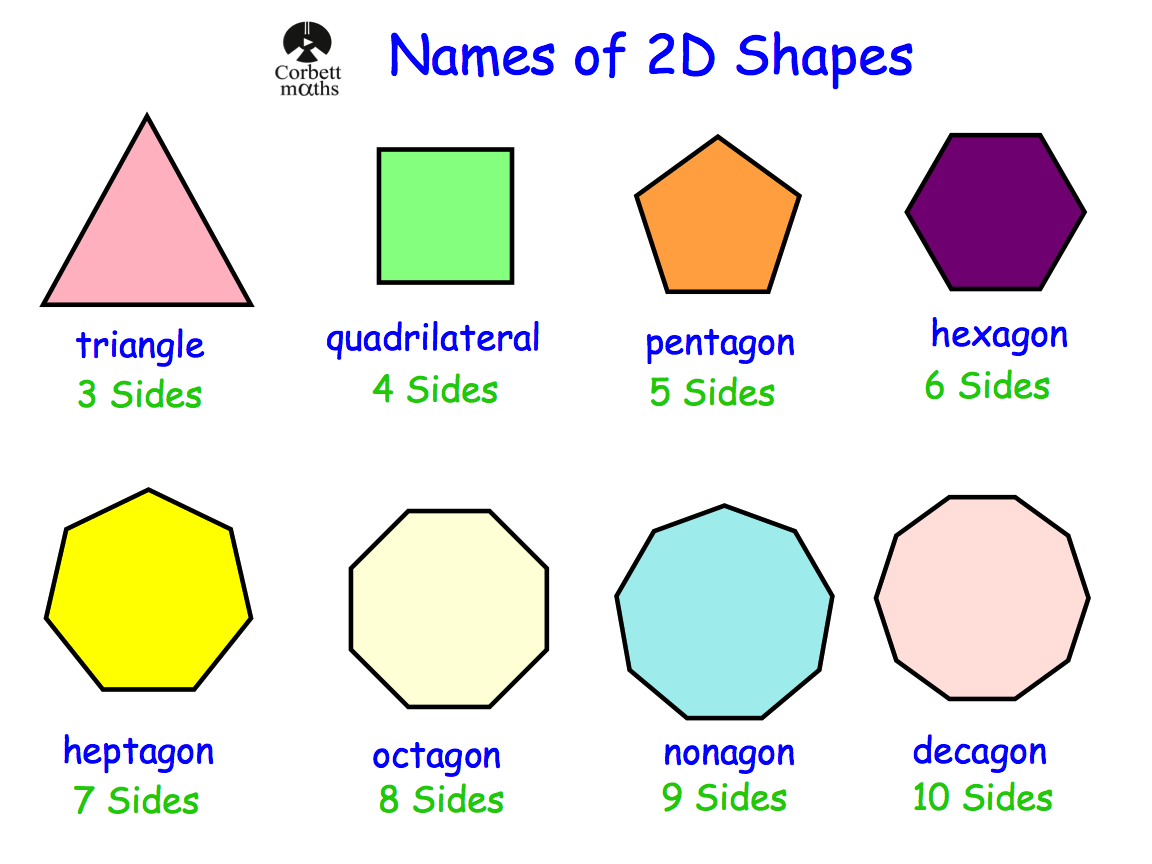


Explore 4th Grade Hexagons Quizzes
Hexagons present Grade 4 students with an engaging introduction to six-sided polygons and their unique geometric properties. These interactive quizzes available through Wayground provide comprehensive assessment opportunities that help students identify hexagons among various shapes, count their sides and vertices, and understand their defining characteristics. Through carefully structured practice questions, students develop spatial reasoning skills while building foundational geometry knowledge that includes recognizing regular and irregular hexagons, understanding symmetry patterns, and applying measurement concepts. The immediate feedback system ensures students can monitor their understanding of these two-dimensional shapes and address misconceptions as they work through progressively challenging problems that reinforce both visual recognition and mathematical terminology. Wayground's extensive collection of teacher-created hexagon quizzes offers educators access to millions of rigorously developed resources that align with Grade 4 mathematics standards and geometric learning objectives. The platform's advanced search and filtering capabilities enable teachers to quickly locate age-appropriate content that matches specific curriculum requirements, while built-in differentiation tools allow for seamless customization based on individual student needs and learning styles. These digital-first quiz formats support flexible classroom delivery methods, whether used for whole-group instruction, small group practice, or independent study sessions. Teachers can effectively integrate these resources into their geometry units for initial concept introduction, ongoing skill reinforcement, targeted remediation for struggling learners, or enrichment activities that challenge advanced students to explore hexagon properties in greater depth.
FAQs
How do I teach hexagons to fourth graders?
Start with the defining attribute: every hexagon is a closed polygon with six straight sides and six vertices. Compare regular and irregular examples, rotate them into unfamiliar positions, and ask students to explain why each shape is or is not a hexagon.
What exercises help Grade 4 students practice hexagons?
Use a mix of shape sorting, side-and-vertex counting, regular-versus-irregular classification, and real-world searches for hexagons. Include nonexamples with curved edges, open sides, or only five sides so students must apply the definition instead of relying on appearance.
What mistakes do students commonly make when identifying hexagons?
Students may think a hexagon must look like a regular honeycomb cell or must sit in one particular orientation. They may also count corners incorrectly on irregular shapes. Have them trace and number each straight side, then confirm that the shape is closed.
How can I use a Wayground hexagon quiz in class?
Assign the quiz as a digital quiz on Wayground for immediate classroom practice, or download the printable PDF for centers, homework, or offline work. Every quiz includes a complete answer key.
How do hexagons fit into the Grade 4 Common Core geometry progression?
Common Core geometry asks Grade 4 students to classify two-dimensional figures by properties such as parallel sides, perpendicular sides, and angle types. Hexagon work builds from identifying six sides and vertices toward comparing different hexagons by their lines, angles, symmetry, and regularity.
How can I differentiate hexagon practice for a mixed-ability class?
Give students who need stronger visual access a version with larger text, wider spacing, or a dyslexia-friendly font. For digital work, Read Aloud can support students with reading needs, while reduced answer choices can make classification questions more manageable without changing the target skill.
What grade do students learn about hexagons?
Students first recognize hexagons in the primary grades, but Grade 4 work becomes more analytical. Fourth graders classify hexagons by attributes, distinguish regular from irregular examples, and connect the shape to broader polygon concepts.

Accessibility
Features
Wayground Super
School & District
Wayground for Business
Create a quiz
Create a presentation
Wayground AI
Subjects
Mathematics
Social Studies
Science
Physics
Chemistry
Biology
About
Our Story
Wayground Blog
Media Kit
Careers
Support
F.A.Q.
Help & Support
Privacy Policy
Terms of Service
Teacher Resources
2026 Wayground


Get our app

