

9th Grade Molecule Quizzes
Test your understanding of molecules with this comprehensive Grade 9 chemistry quiz featuring practice questions and instant feedback. Assess your knowledge of molecular structure, bonding, and properties through self-paced questions designed to reinforce key concepts.

23 questions
2.3 Atoms and Molecules

Quiz
•
9th Grade

12 questions
Organic Molecules and Indicators
Quiz
•
9th Grade

20 questions
SOL 2: Life Molecules 2026
Quiz
•
9th - 12th Grade

22 questions
Covalent Molecules
Quiz
•
9th - 12th Grade
22 questions
Physical Science Ionic & Covalent Bond Quest
Quiz
•
9th - 12th Grade

26 questions
Chemical Reactions and Polarity
Quiz
•
9th - 12th Grade
20 questions
Elements and Compounds Retest
Quiz
•
7th Grade
Browse by grade
Explore 9th Grade Molecule Quizzes
Molecule structure and properties form the foundation of Grade 9 chemistry education, requiring students to develop strong conceptual understanding through targeted assessment and practice questions. These comprehensive quizzes available through Wayground provide systematic coverage of molecular concepts, from basic atomic bonding and molecular geometry to intermolecular forces and chemical reactions. Students engage with carefully crafted practice questions that build understanding of covalent and ionic bonding, molecular polarity, and three-dimensional molecular shapes, while receiving immediate feedback that reinforces correct reasoning and addresses common misconceptions. The assessment format allows educators to evaluate student comprehension of how atoms combine to form molecules and how molecular structure determines chemical and physical properties. Wayground's extensive collection draws from millions of teacher-created resources specifically designed for Grade 9 chemistry instruction, offering robust search and filtering capabilities that help educators locate molecule-focused quizzes aligned with curriculum standards and learning objectives. Teachers can customize quiz content to match their specific instructional needs, adjusting difficulty levels and question types to support differentiation for diverse learners in their classrooms. The platform's flexible digital delivery formats enable seamless integration into various teaching environments, whether for formative assessment during instruction, summative evaluation of molecular concepts, or targeted remediation for students struggling with complex three-dimensional thinking. These comprehensive tools support effective lesson planning while providing enrichment opportunities for advanced students and skill reinforcement for those requiring additional practice with fundamental molecular principles.
FAQs
How do I teach molecular geometry and VSEPR theory to high school chemistry students?
Start by ensuring students have a solid grasp of Lewis structures before introducing VSEPR theory, since molecular shape predictions depend on accurately counting bonding and lone electron pairs. Use physical models or 3D drawing activities to help students visualize geometries like tetrahedral, bent, and trigonal planar. Once students can predict shape, connect geometry to polarity so they understand how molecular structure influences real chemical behavior.
What exercises help students practice drawing Lewis structures correctly?
Effective practice begins with simple diatomic molecules and progresses to polyatomic ions and molecules with expanded octets. Exercises that require students to count valence electrons, place bonds, then distribute lone pairs in a structured sequence reduce systematic errors. Including resonance structure problems and formal charge calculations deepens understanding and prevents students from treating Lewis structures as a purely mechanical drawing task.
What mistakes do students commonly make when identifying molecular formulas and chemical structures?
One of the most frequent errors is confusing molecular formulas with empirical formulas, leading students to misrepresent the actual atom count in a compound. Students also commonly misplace lone pairs when drawing Lewis structures, which cascades into incorrect VSEPR geometry predictions and polarity assessments. Another persistent misconception is assuming that a symmetrical molecular shape always means the molecule is nonpolar, without accounting for electronegativity differences between bonded atoms.
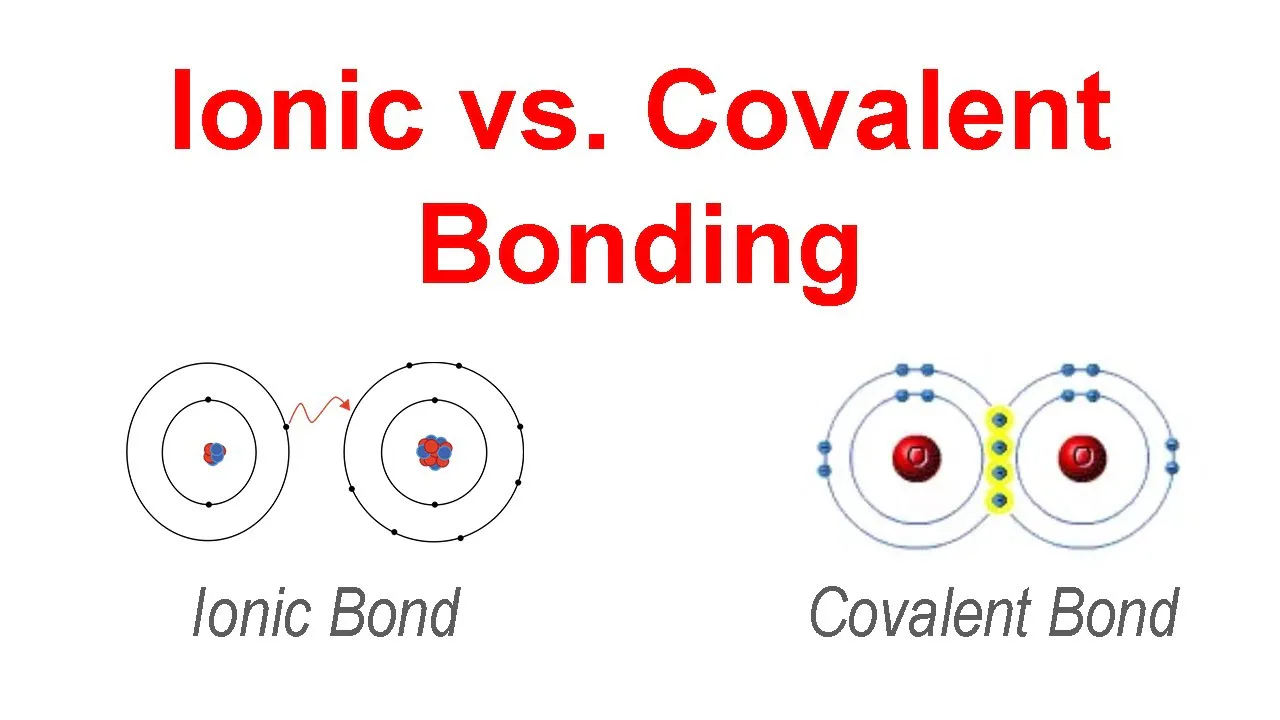
How can I help struggling students understand the difference between ionic and covalent bonding?
Anchor instruction in electronegativity differences: when the difference between two atoms is large, electrons transfer and form an ionic bond; when it is small, electrons are shared and a covalent bond forms. Visual sorting activities where students categorize compound examples by bond type reinforce this distinction. Connecting the concept to observable physical properties, such as melting points and conductivity, gives students a concrete way to verify their reasoning.
How do I use Wayground's molecule quizzes in my chemistry class?
Wayground's molecule quizzes are available as printable PDFs, making them straightforward to distribute for in-class practice, lab preparation, or homework. They are also available in digital formats, so they integrate smoothly into technology-based instruction and remote learning environments. Teachers can host the quizzes as a quiz directly on Wayground, enabling automated grading and immediate student feedback. All quizzes include complete answer keys, which supports independent student review and reduces grading load for teachers.
How can I differentiate molecule quizzes for students with different proficiency levels?
For students who need additional support, Wayground offers built-in accommodation tools including read aloud, reduced answer choices, and extended time, all configurable at the individual student level without notifying the rest of the class. Advanced learners can be assigned problems involving hybridization, molecular orbital theory, or intermolecular forces to extend their understanding beyond foundational concepts. Because accommodation settings are saved per student, teachers do not need to reconfigure them each session, making differentiation practical to maintain over time.

Accessibility
Features
Wayground Super
School & District
Wayground for Business
Create a quiz
Create a presentation
Wayground AI
Subjects
Mathematics
Social Studies
Science
Physics
Chemistry
Biology
About
Our Story
Wayground Blog
Media Kit
Careers
Support
F.A.Q.
Help & Support
Privacy Policy
Terms of Service
Teacher Resources
2026 Wayground


Get our app

