
Resource Type


10th Grade Mutually Exclusive Events Quizzes
Test your understanding of mutually exclusive events with this comprehensive Grade 10 mathematics quiz designed to assess your knowledge through targeted practice questions. Challenge yourself with problems involving probability calculations and event relationships while receiving instant feedback to reinforce your learning.

20 questions
Probability Mutually Exclusive Events

Quiz
•
10th Grade
20 questions
Mutually and Not Mutually Exclusive Events
Quiz
•
10th Grade

20 questions
Determine Mutually Exclusive Events
Quiz
•
10th Grade
20 questions
Probabilities of Mutually Exclusive Events
Quiz
•
10th Grade

20 questions
Probability of Mutually Exclusive Events and Inclusive Events
Quiz
•
10th Grade

20 questions
Mutually Exclusive and Not Mutually Exclusive Events
Quiz
•
10th Grade
20 questions
Probability of Mutually Exclusive Events
Quiz
•
10th Grade
20 questions
Mutually Exclusive Events
Quiz
•
10th Grade
16 questions
Mutually and Not mutually exclusive events
Quiz
•
10th Grade
10 questions
Mutually Exclusive Events
Quiz
•
10th Grade
20 questions
Disjoint Events
Quiz
•
10th Grade
20 questions
Determine Mutually Exclusive Events
Quiz
•
10th - 12th Grade
Explore 10th Grade Mutually Exclusive Events Quizzes
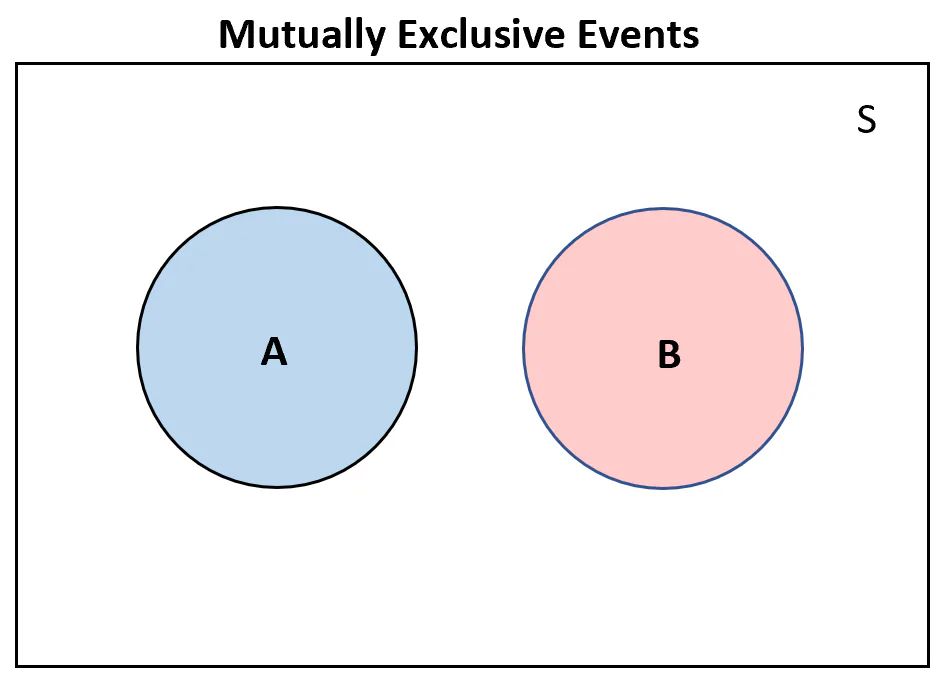
Mutually exclusive events form a fundamental concept in Grade 10 probability and statistics, representing situations where two or more events cannot occur simultaneously. Wayground's comprehensive quiz collection provides targeted assessment tools that help students master this critical probability principle through structured practice questions and immediate feedback. These quizzes develop essential analytical skills by challenging students to identify when events are mutually exclusive, calculate probabilities using the addition rule, and apply these concepts to real-world scenarios. Students gain deeper understanding through varied problem types that require them to distinguish between mutually exclusive and non-mutually exclusive events, strengthening their foundation in probability theory and statistical reasoning. Wayground supports mathematics educators with millions of teacher-created quiz resources specifically designed for probability and statistics instruction. The platform's robust search and filtering capabilities enable teachers to quickly locate Grade 10 mutually exclusive events assessments that align with curriculum standards and learning objectives. Customization tools allow educators to modify existing quizzes or combine questions from multiple sources to create differentiated assessments that meet diverse student needs. The flexible digital delivery format facilitates both formative and summative assessment opportunities, enabling teachers to implement these resources for initial concept introduction, skill reinforcement during guided practice, targeted remediation for struggling learners, and enrichment activities for advanced students ready to explore more complex probability scenarios.
FAQs
How do I teach mutually exclusive events to Grade 10 students?
Start with a single trial, such as rolling one die: getting a 3 and getting a 5 cannot happen on the same roll. Have students compare each pair of events by asking whether their outcomes overlap, then connect no overlap to an intersection probability of zero and the addition rule P(A or B) = P(A) + P(B).
What exercises help students practice mutually exclusive events?
Use a progression of three exercise types: identify whether events can occur together, classify event pairs as mutually exclusive or non-mutually exclusive, and calculate “A or B” probabilities. Dice, cards, and everyday choice scenarios make the distinction concrete.
What mistakes do students make with mutually exclusive events?
Students often assume that different events are automatically mutually exclusive or confuse mutually exclusive with independent. Another common error is adding probabilities without subtracting the overlap when the events are not mutually exclusive.
How can I use a mutually exclusive events quiz in class?
Assign the quiz as a digital quiz on Wayground or download the printable PDF for paper practice. Every quiz includes a complete answer key, and teachers using paper can scan or capture submissions for grading with the Wayground for Teachers app.
How do mutually exclusive events fit into the Common Core math progression?
This topic aligns with Common Core’s approach to compound probability. Students build from describing sample spaces and simple-event probabilities toward using unions, intersections, and the addition rule to analyze whether two events share outcomes.
How can I differentiate mutually exclusive events practice?
Give struggling students a version with wider font spacing or a larger font, then begin with visual sample spaces before moving to calculations. For digital work, extended time can support students who need longer to compare event outcomes, while the rest of the class keeps the default settings.
What grade do students learn mutually exclusive events?
Mutually exclusive events are taught here at Grade 10 as part of probability and statistics. At this level, students typically move beyond recognizing non-overlapping events to applying the addition rule in multi-step and real-world problems.

Accessibility
Features
Wayground Super
School & District
Wayground for Business
Create a quiz
Create a presentation
Wayground AI
Subjects
Mathematics
Social Studies
Science
Physics
Chemistry
Biology
About
Our Story
Wayground Blog
Media Kit
Careers
Support
F.A.Q.
Help & Support
Privacy Policy
Terms of Service
Teacher Resources
2026 Wayground


Get our app

