

11th Grade Orbitals Quizzes
Test your knowledge of atomic orbitals with this comprehensive Grade 11 chemistry quiz designed to assess understanding of orbital shapes, energy levels, and electron configurations. Practice questions with instant feedback help reinforce key concepts about s, p, d, and f orbitals through self-paced assessment.

20 questions
Quantum Mechanical Model & Orbitals

Quiz
•
9th - 12th Grade

15 questions
Energy Levels, Sublevels, and Atomic Orbitals
Quiz
•
9th - 12th Grade

28 questions
Hybrid Orbitals and Molecular Orbitals
Quiz
•
9th - 12th Grade
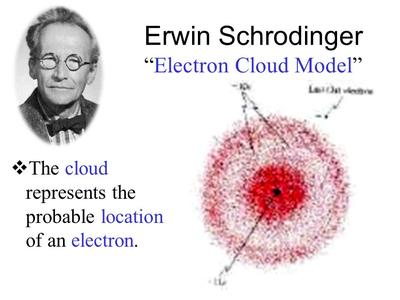
10 questions
Schrodinger Orbital
Quiz
•
9th - 12th Grade
25 questions
Electrons and Orbitals
Quiz
•
10th Grade

25 questions
Electron Orbitals
Quiz
•
10th Grade
Browse by grade
Explore 11th Grade Orbitals Quizzes
Orbitals represent one of the most fundamental concepts in Grade 11 chemistry, forming the foundation for understanding atomic structure, electron configuration, and chemical bonding. The comprehensive quiz collection available through Wayground provides targeted assessment opportunities that help students master orbital theory, including s, p, d, and f orbital shapes, electron filling patterns, and the relationship between orbital energy levels and atomic properties. These practice questions are designed to develop critical analytical skills as students work through complex problems involving Hund's rule, the Aufbau principle, and orbital hybridization. Through immediate feedback and detailed explanations, students can identify knowledge gaps and strengthen their understanding of how electron arrangements influence molecular geometry and chemical reactivity. Wayground supports chemistry educators with access to millions of teacher-created orbital quizzes that can be easily filtered by specific learning objectives and curriculum standards. The platform's robust search capabilities allow instructors to quickly locate assessments covering particular orbital concepts, from basic electron shell models to advanced molecular orbital theory. Teachers can customize existing quizzes or create original assessments that align with their specific Grade 11 chemistry curriculum requirements, incorporating differentiation strategies to support students at various skill levels. The flexible digital delivery system enables seamless integration into classroom instruction, homework assignments, and review sessions, while detailed analytics help educators identify which orbital concepts require additional reinforcement or enrichment activities to ensure comprehensive student mastery.
FAQs
How do I teach atomic orbitals to chemistry students?
Start by grounding students in the Bohr model before transitioning to the quantum mechanical model, emphasizing that orbitals represent probability regions rather than fixed electron paths. Use visual aids to contrast the spherical shape of s orbitals with the dumbbell shape of p orbitals and the more complex geometries of d and f orbitals. Connecting orbital shapes to electron configuration rules — Aufbau principle, Hund's rule, and the Pauli exclusion principle — helps students build a coherent mental framework before moving into hybridization and bonding theory.
What are the most common mistakes students make when learning about orbitals?
One of the most frequent errors is confusing orbitals with orbits, leading students to treat electrons as particles following defined circular paths rather than existing in probabilistic regions of space. Students also commonly misapply Hund's rule by pairing electrons in the same subshell before filling each orbital singly. A third persistent misconception is treating orbital hybridization as a physical transformation rather than a mathematical model used to explain observed molecular geometries.
What practice problems help students master electron configuration and orbital notation?
Effective practice should progress from writing ground-state electron configurations for main-group elements to drawing orbital box diagrams that require applying Hund's rule and the Pauli exclusion principle simultaneously. Students benefit from problems that require identifying valence electrons from configurations and predicting ion configurations by adding or removing electrons. Including exceptions like chromium and copper in practice sets is important for preparing students to handle the nuances of d-orbital filling.
How can I help students visualize the three-dimensional shapes of atomic orbitals?
Three-dimensional orbital shapes are notoriously difficult for students to internalize from two-dimensional diagrams alone, so pairing quiz practice with physical models or interactive molecular visualization software is highly effective. When using quizzes, ask students to label the nodal planes of p orbitals and the lobes of d orbitals explicitly, which forces active engagement with spatial geometry rather than passive copying. Connecting orbital shape to bonding outcomes — such as why p orbital overlap produces pi bonds — gives the geometry functional meaning that aids retention.
How do I use orbitals quizzes from Wayground in my chemistry class?
Wayground's orbitals quizzes are available as printable PDFs, making them easy to distribute for in-class practice, homework, or exam review, and they are also available in digital formats suited for technology-integrated classrooms. You can host any quiz directly as a quiz on Wayground, enabling real-time student responses and immediate feedback without additional setup. Each quiz includes a complete answer key, so teachers can use them for self-paced independent study or assign them as formative checks before moving into hybridization and molecular orbital theory.
How do I differentiate orbitals instruction for students at different proficiency levels?
For students still building foundational understanding, focus practice on s and p orbital shapes, basic electron configuration, and reading orbital diagrams before introducing d and f subshells. Advanced students can be challenged with molecular orbital theory, orbital overlap diagrams, and hybridization problems involving sp3d and sp3d2 geometries. On Wayground, teachers can customize existing quizzes to adjust problem complexity and apply accommodations such as reduced answer choices or read-aloud support for individual students who need additional scaffolding.

Accessibility
Features
Wayground Super
School & District
Wayground for Business
Create a quiz
Create a presentation
Wayground AI
Subjects
Mathematics
Social Studies
Science
Physics
Chemistry
Biology
About
Our Story
Wayground Blog
Media Kit
Careers
Support
F.A.Q.
Help & Support
Privacy Policy
Terms of Service
Teacher Resources
2026 Wayground


Get our app

