


6th Grade Percent Discounts Quizzes
Master percent discounts with engaging Grade 6 quizzes that help students practice calculating sale prices, markdown percentages, and real-world shopping scenarios. These self-paced assessments provide instant feedback to strengthen understanding of discount problems and build confidence in applying percentage concepts to everyday situations.

19 questions
Percent and Ratios

Quiz
•
6th Grade

21 questions
Percents
Quiz
•
6th Grade
20 questions
Part, Whole, & Percent
Quiz
•
6th Grade

20 questions
Part to Part and Part to Whole Percents
Quiz
•
6th Grade

10 questions
Percent Proportion REVIEW
Quiz
•
6th Grade

16 questions
Percent and Integers Quiz
Quiz
•
6th Grade
15 questions
Percents and Decimals
Quiz
•
6th Grade
20 questions
Percent Situations
Quiz
•
6th Grade
21 questions
Benchmark Fractions/Percents/Decimals
Quiz
•
6th Grade
30 questions
Rates and Percents Unit Review
Quiz
•
6th Grade
22 questions
Math 6 Percent Test Review
Quiz
•
6th Grade
13 questions
Mark-up and Discounts
Quiz
•
6th - 7th Grade
Explore 6th Grade Percent Discounts Quizzes
Percent discounts represent a fundamental mathematical concept that Grade 6 students encounter regularly in real-world shopping scenarios and financial literacy contexts. These interactive quizzes through Wayground provide comprehensive assessment opportunities that challenge students to calculate markdown prices, determine original costs from sale prices, and apply percentage reduction formulas across various practical situations. The practice questions systematically build understanding of the relationship between percentages and monetary values, enabling students to develop critical thinking skills around consumer mathematics while reinforcing their computational fluency with decimal operations and fraction-to-percent conversions. Through immediate feedback and varied problem types, students gain confidence in analyzing discount scenarios and making informed purchasing decisions. Wayground supports mathematics educators with access to millions of teacher-created percent discount quiz collections that align with Grade 6 curriculum standards and learning objectives. The platform's robust search capabilities allow teachers to filter resources by difficulty level, problem format, and specific skill focus, ensuring appropriate differentiation for diverse learners in mixed-ability classrooms. Digital delivery options enable seamless integration into interactive whiteboards, student devices, and homework assignments, while customization tools permit educators to modify existing content or blend multiple quiz sets to target individual student needs. These flexible resources prove invaluable for diagnostic assessment, targeted remediation of misconceptions about percentage calculations, and enrichment activities that extend learning beyond basic discount computation to complex multi-step problems involving tax, shipping, and layered promotional offers.
FAQs
What are the expectations for 6th graders learning about percent discounts?
By 6th grade, the expectation is fluency and application. Students should be able to efficiently calculate discounts, tips, and taxes and apply these skills to solve multi-step, real-world consumer math problems.
What's a good strategy for teaching percent discounts in middle school?
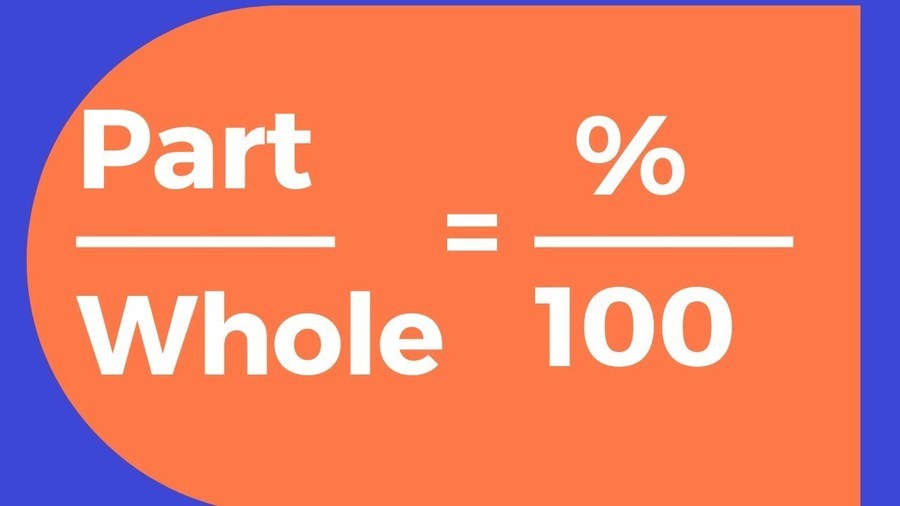
Focus on flexible strategies. Encourage mental math for common percentages (e.g., find 10%, then double it for 20%). For more complex problems, teach students to set up proportions (e.g., part/whole = percent/100), as this method can solve any type of percent problem, including finding the original price or the percent itself.
What types of problems help 6th graders master percent discounts?
To achieve mastery, students need practice with authentic scenarios. This includes problems involving tips, commissions, and sales tax. It's also crucial to include problems with successive discounts, such as an item that is 20% off with an additional coupon for 10% off the sale price.
What common mistake persists into middle school with percent problems?
A persistent error is incorrectly calculating successive discounts. For example, students often add the percentages together (e.g., 20% off + 10% off = 30% off), failing to recognize that the second discount is applied to the already reduced price, not the original price.
How can I use this quiz for practice or assessment?
This resource is versatile for any purpose. You can assign it as a digital quiz on the Wayground platform for automated grading or print the PDF for a traditional paper-and-pencil assignment. In either format, a complete answer key is included for efficient grading or student self-checking.
How does this align with the Common Core for 6th grade?
This topic is a cornerstone of the 6th-grade Common Core standards, specifically within the Ratios and Proportional Relationships (6.RP) domain. It directly addresses the standard requiring students to find a percent of a quantity and solve problems involving finding the whole, given a part and the percent.
How can I differentiate this topic for a mixed-ability 6th-grade class?
Wayground's digital platform makes differentiation simple. For students who need support, you can assign the quiz with extended time per question or with fewer answer choices. This allows the entire class to work on the same core concepts while receiving the appropriate level of challenge and support.

Accessibility
Features
Wayground Super
School & District
Wayground for Business
Create a quiz
Create a presentation
Wayground AI
Subjects
Mathematics
Social Studies
Science
Physics
Chemistry
Biology
About
Our Story
Wayground Blog
Media Kit
Careers
Support
F.A.Q.
Help & Support
Privacy Policy
Terms of Service
Teacher Resources
2026 Wayground


Get our app

