


6th Grade PH Scale Quizzes
Assess your understanding of the PH Scale with this comprehensive Grade 6 Chemistry quiz featuring practice questions and instant feedback. Test your knowledge of acids, bases, and pH measurements through self-paced assessment designed specifically for sixth-grade science students.

14 questions
pH Scale

Quiz
•
6th Grade
10 questions
pH Scale Brainpop Quiz
Quiz
•
6th Grade

10 questions
pH Scale BrainPOP Quiz
Quiz
•
6th Grade

14 questions
PH Scale
Quiz
•
6th Grade

10 questions
Ph Scale
Quiz
•
6th Grade

6 questions
The PH Scale
Quiz
•
6th Grade
7 questions
pH
Quiz
•
6th Grade
12 questions
S2 Chemistry - pH Scale
Quiz
•
6th Grade
15 questions
Understanding the pH Scale
Quiz
•
6th Grade
13 questions
pH Scale
Quiz
•
6th - 8th Grade
32 questions
Unit 3 T1 - Pure Substance, Mixtures, and pH Scale
Quiz
•
6th - 8th Grade
23 questions
Acids, Bases, and pH Scale
Quiz
•
6th - 8th Grade
Explore 6th Grade PH Scale Quizzes
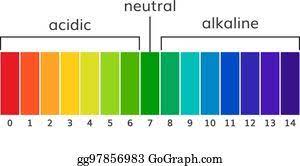
The pH scale serves as a fundamental measurement system in Grade 6 chemistry, helping students understand the acidic and basic properties of various substances they encounter daily. Through comprehensive quiz collections available on Wayground, formerly Quizizz, students engage with targeted practice questions that build their understanding of pH values, ranging from highly acidic solutions at pH 0 to strongly basic solutions at pH 14. These assessment resources develop critical scientific thinking skills by challenging students to identify pH levels of common household items, interpret pH indicator colors, and understand the neutral point at pH 7. The interactive feedback provided through these quizzes reinforces learning by immediately addressing misconceptions and strengthening students' grasp of this essential chemistry concept. Wayground supports educators with access to millions of teacher-created pH scale quiz resources, offering robust search and filtering capabilities that allow instructors to locate materials perfectly aligned with Grade 6 chemistry standards and learning objectives. The platform's differentiation tools enable teachers to customize quiz difficulty levels and question types, accommodating diverse learning needs within their classrooms while maintaining focus on pH scale mastery. These digital-first quiz formats provide flexible delivery options for both individual practice and group assessments, supporting effective lesson planning and enabling targeted remediation for students who struggle with pH concepts. Teachers can utilize these comprehensive quiz collections for skill reinforcement activities, pre-assessment evaluation, and enrichment opportunities that extend learning beyond basic pH identification to more complex applications in real-world chemistry contexts.
FAQs
How do I teach the pH scale to chemistry students?
Start by grounding students in the concept that pH measures hydrogen ion concentration on a logarithmic scale from 0 to 14, where values below 7 are acidic, 7 is neutral, and above 7 are basic. Use everyday substances like vinegar, water, and baking soda to make the concept concrete before moving into calculations. Emphasizing the inverse relationship between hydrogen ion concentration and pH value early on prevents one of the most persistent misconceptions students carry into assessments.
What exercises help students practice reading and interpreting the pH scale?
Effective practice exercises include classifying a list of substances as acids, bases, or neutral; calculating pH from hydrogen ion concentrations; and interpreting pH indicator color charts. Problems that require students to compare the relative acidity or alkalinity of two substances reinforce the logarithmic nature of the scale, which is often underemphasized in introductory instruction. Mixing calculation problems with conceptual classification tasks ensures students develop both procedural fluency and conceptual understanding.
What mistakes do students commonly make when working with the pH scale?
The most common error is treating the pH scale as linear rather than logarithmic, which leads students to underestimate the difference in acidity between, say, a pH of 3 and a pH of 5. Students also frequently confuse the direction of the relationship, believing that a higher hydrogen ion concentration means a higher pH. A third widespread misconception is conflating strength with concentration, leading to errors when comparing strong versus weak acids.
How can I differentiate pH scale instruction for students at different skill levels?
For students who are still building foundational understanding, focus on classification tasks and visual scale activities before introducing any calculations. Advanced learners can be extended into buffer systems and the Henderson-Hasselbalch equation. On Wayground, teachers can apply per-student accommodations such as reduced answer choices to lower cognitive load for struggling learners, or enable read-aloud support for students who need it, without signaling those adjustments to the rest of the class.
How do I use Wayground's pH scale quizzes in my classroom?
Wayground's pH scale quizzes are available as printable PDFs for traditional classroom or homework use, and in digital formats for technology-integrated environments, including the option to host them as a quiz directly on Wayground. Each quiz includes a detailed answer key, supporting independent practice, self-assessment, and efficient teacher grading. The platform's search and filtering tools allow teachers to quickly locate materials targeting specific skills, from basic acid-base classification to logarithmic pH calculations.
How do I explain the logarithmic nature of the pH scale to students who struggle with math?
Rather than leading with the formal logarithm definition, use a concrete comparison: a substance with a pH of 3 is ten times more acidic than one with a pH of 4, and one hundred times more acidic than one with a pH of 5. Repeated exposure to this multiplier pattern through structured practice problems helps students internalize the concept without requiring a deep understanding of logarithms first. Visual number line representations that label the scale with real-world substances can further anchor the idea.

Accessibility
Features
Wayground Super
School & District
Wayground for Business
Create a quiz
Create a presentation
Wayground AI
Subjects
Mathematics
Social Studies
Science
Physics
Chemistry
Biology
About
Our Story
Wayground Blog
Media Kit
Careers
Support
F.A.Q.
Help & Support
Privacy Policy
Terms of Service
Teacher Resources
2026 Wayground


Get our app

