


3rd Grade Repeating Patterns Quizzes
This Grade 3 repeating patterns quiz helps students assess their understanding of identifying, extending, and creating sequences with recurring elements. Practice questions provide instant feedback to strengthen pattern recognition skills through self-paced assessment.

20 questions
Patterns

Quiz
•
3rd Grade
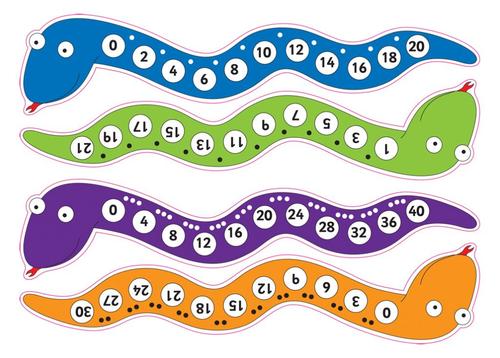
10 questions
Weekly Assessment 4: patterns
Quiz
•
3rd Grade
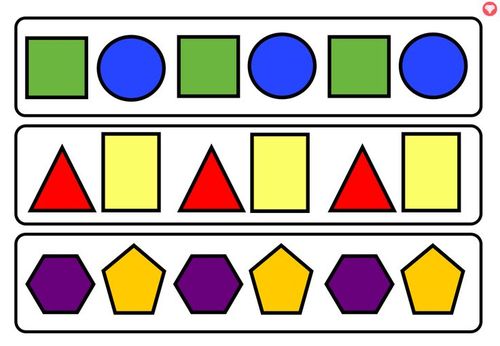
15 questions
Repeating and Growing Patterns Quiz
Quiz
•
3rd Grade

10 questions
Patterns
Quiz
•
3rd Grade

20 questions
Patterns
Quiz
•
3rd Grade

8 questions
Patterns
Quiz
•
3rd Grade
11 questions
Growing and Repeating Patterns
Quiz
•
3rd Grade
10 questions
Patterns in Sequences Quiz (3rd Grade AAP)
Quiz
•
3rd Grade
13 questions
2.3 Addition Patterns
Quiz
•
3rd Grade
10 questions
Patterns Quiz
Quiz
•
3rd Grade
20 questions
Bowers STAAR Wars #4- Mult/Div/Patterns
Quiz
•
3rd Grade
20 questions
Patterns
Quiz
•
3rd Grade
Explore 3rd Grade Repeating Patterns Quizzes
Repeating patterns form a foundational component of mathematical thinking for Grade 3 students, building essential skills in logical reasoning, prediction, and algebraic thinking. Through Wayground's comprehensive collection of repeating patterns quizzes, students engage with carefully designed practice questions that assess their ability to identify, extend, and create patterns using colors, shapes, numbers, and objects. These interactive assessments provide immediate feedback to help young learners understand pattern rules, recognize core units within sequences, and develop the critical thinking skills necessary for more advanced mathematical concepts. The quiz format allows students to demonstrate their understanding through varied question types while receiving targeted support to strengthen their pattern recognition abilities. Wayground supports mathematics educators with access to millions of teacher-created quiz resources specifically designed for Grade 3 repeating patterns instruction. Teachers can efficiently search and filter through extensive quiz collections that align with curriculum standards, ensuring appropriate content matches their instructional goals and student needs. The platform's differentiation tools enable educators to customize quiz difficulty levels, adjust question types, and modify assessment parameters to accommodate diverse learning styles and abilities within their classrooms. These digital-first quiz formats facilitate flexible delivery options for whole-class instruction, small group practice, individual assessment, or homework assignments, while comprehensive analytics help teachers identify knowledge gaps and plan targeted remediation or enrichment activities to reinforce repeating pattern concepts effectively.
FAQs
What types of patterns do third graders work with?
By third grade, students are expected to analyze both repeating and growing patterns, with a strong emphasis on arithmetic patterns involving all four operations. They identify and describe rules in number sequences and use patterns to solve problems, such as finding patterns in the multiplication table.
How do I teach patterns in third grade?
Focus on arithmetic patterns. Present an input/output table (a "function machine") and ask students to determine the rule, such as "multiply by 3." Use the multiplication table as a primary tool, asking students to find and describe patterns in the rows, columns, and diagonals.
What exercises are effective for third-grade pattern skills?
Practice should involve identifying the rule in a number sequence and using it to find missing terms. For example: "Find the rule and complete the pattern: 4, 8, 16, __, 64." Quizzes that connect patterns to real-world scenarios or other math topics are also highly effective.
What are common challenges for third graders with patterns?
A key challenge is articulating the pattern's rule in words or as an operation. A student might be able to continue a sequence but struggle to explain *why* it works, for example, stating that "the rule is to multiply the previous number by 2."
How can I use this third-grade patterns quiz with my students?
Wayground quizzes are available as both printable PDFs and interactive digital activities, accommodating different classroom needs and tech availability. Every quiz includes a complete answer key to streamline grading.
How do patterns support the third-grade math curriculum?
In line with Common Core standards, third grade is where patterns become explicitly linked to multiplication and division. Identifying arithmetic patterns is a key strategy for understanding the properties of operations. For example, recognizing the pattern in multiples of 5 helps students master their 5s times tables.
How can I support diverse learners with this patterns quiz?
For students who need extra help, you can use Wayground's Read Aloud feature for digital assignments or reduce the number of answer choices. For an extra challenge, ask advanced students to create their own multi-step arithmetic patterns and write a description of the rule.

Accessibility
Features
Wayground Super
School & District
Wayground for Business
Create a quiz
Create a presentation
Wayground AI
Subjects
Mathematics
Social Studies
Science
Physics
Chemistry
Biology
About
Our Story
Wayground Blog
Media Kit
Careers
Support
F.A.Q.
Help & Support
Privacy Policy
Terms of Service
Teacher Resources
2026 Wayground


Get our app

