


2nd Grade Shape Attributes Quizzes
Assess your Grade 2 students' understanding of shape attributes with this interactive mathematics quiz designed for self-paced learning. Practice identifying and describing the properties of basic geometric shapes while receiving instant feedback to reinforce key concepts.

8 questions
3D Shape Attributes

Quiz
•
2nd Grade

14 questions
Attributes of Shapes
Quiz
•
2nd Grade

10 questions
2nd Grade Shape Names and Attributes
Quiz
•
2nd Grade

11 questions
Shape Attributes Quiz
Quiz
•
2nd Grade
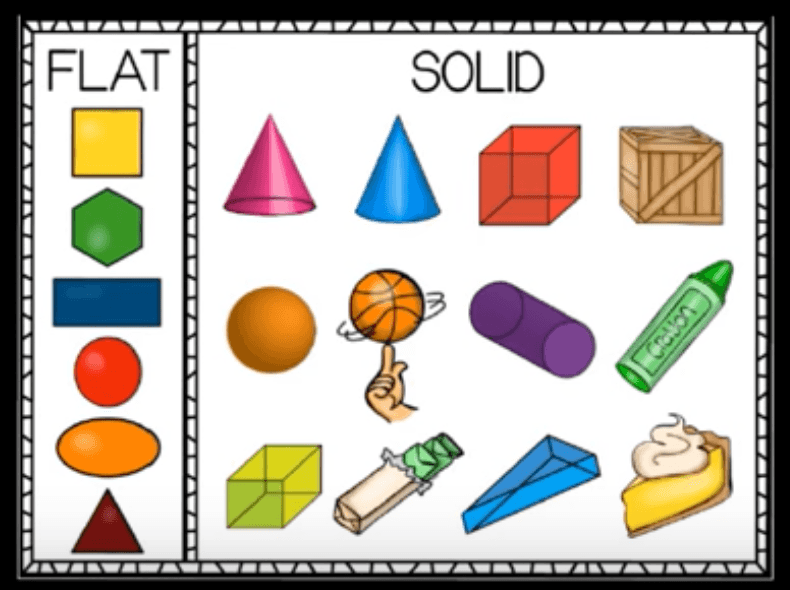
20 questions
2D and 3D Shape Attributes
Quiz
•
2nd Grade

10 questions
Shapes and Their Attributes
Quiz
•
2nd Grade
15 questions
4/09 Math Shapes & Attributes Unit Assessment
Quiz
•
2nd Grade
15 questions
ACAP: Exploring Shapes and Attributes
Quiz
•
2nd Grade
20 questions
2D Shapes and 3D Shapes and Attributes
Quiz
•
2nd Grade
9 questions
3-D Shapes and Attributes 2/17/21
Quiz
•
2nd Grade
20 questions
Similar Shape Attributes
Quiz
•
2nd Grade
7 questions
Geometric Attributes and Properties (2) quiz
Quiz
•
2nd Grade
Browse by grade
Explore 2nd Grade Shape Attributes Quizzes
Shape Attributes for Grade 2 students form a fundamental component of early geometry education, focusing on helping young learners identify, describe, and categorize two-dimensional and three-dimensional shapes based on their defining characteristics. Through comprehensive assessment and practice questions available on Wayground, students develop essential spatial reasoning skills by examining properties such as the number of sides, corners, vertices, and faces that distinguish circles, squares, triangles, rectangles, and basic solids. These interactive quizzes provide immediate feedback to reinforce understanding of how shapes can be classified and compared, building the foundational geometric vocabulary and visual discrimination skills that support more advanced mathematical concepts in later grades. Wayground's extensive collection of millions of teacher-created Shape Attributes quizzes offers educators powerful tools to support differentiated instruction and standards-aligned assessment for Grade 2 geometry concepts. Teachers can efficiently search and filter resources to match specific learning objectives, customize existing quizzes to address individual student needs, and utilize flexible digital delivery formats that accommodate various classroom environments and learning preferences. These comprehensive assessment tools enable educators to effectively plan targeted instruction, identify students requiring additional support or enrichment opportunities, and systematically reinforce shape recognition and attribute identification skills through engaging, interactive practice that builds confidence and mathematical understanding in young learners.
FAQs
What new shape attributes do second graders learn?
In Grade 2, students expand their geometric vocabulary and knowledge. They learn to identify and describe polygons with more sides, such as pentagons and hexagons. They also begin to formally identify the attributes of 3D shapes, using terms like faces, edges, and vertices.
What's an effective way to teach the attributes of 3D shapes?
Use physical models before moving to 2D representations. Give students geometric solids, blocks, or even everyday items like tissue boxes. Have them physically touch and count the faces, edges, and vertices to build a concrete understanding of these abstract terms.
What's a common point of confusion for second graders with shapes?
Students frequently mix up 2D and 3D terminology. They might call a cube a "square" or confuse the terms "side" (for 2D shapes) with "edge" (for 3D shapes). Consistent, precise use of vocabulary is key to helping them differentiate.
How can I use this Grade 2 quiz in my math class?
This quiz is available as a printable PDF, perfect for offline practice that helps reduce student screen time. It can also be assigned as an interactive digital quiz on Wayground for a different learning modality. Either way, a complete answer key is provided for efficient assessment.
How does this Grade 2 topic connect to other math concepts?
The Common Core standards connect Grade 2 geometry directly to multiplication. A key skill is partitioning rectangles into rows and columns of same-size squares and counting them. This activity provides the visual and conceptual foundation for understanding area and array models in Grade 3.
What kind of practice is best for Grade 2 shape attributes?
Practice should require students to apply their knowledge. Good exercises include asking students to draw a shape with a specific number of angles, identify the number of faces on a picture of a cube, or partition a rectangle into three rows and four columns.

Accessibility
Features
Wayground Super
School & District
Wayground for Business
Create a quiz
Create a presentation
Wayground AI
Subjects
Mathematics
Social Studies
Science
Physics
Chemistry
Biology
About
Our Story
Wayground Blog
Media Kit
Careers
Support
F.A.Q.
Help & Support
Privacy Policy
Terms of Service
Teacher Resources
2026 Wayground


Get our app

