

Kindergarten Solid Shapes Quizzes
Help your kindergarten students assess their understanding of solid shapes with this interactive quiz featuring practice questions and instant feedback. This self-paced assessment allows young learners to identify and differentiate between cubes, spheres, cylinders, and other three-dimensional objects they encounter in everyday life.

6 questions
Solid Shapes

Quiz
•
KG
9 questions
Flat and Solid Shapes/ Patterns
Quiz
•
KG

20 questions
3D Shapes vs 2D Shapes
Quiz
•
KG

10 questions
3D Shapes or Solid shapes
Quiz
•
KG - 1st Grade
7 questions
SOLID SHAPES
Quiz
•
KG - 1st Grade

12 questions
Solid Shapes
Quiz
•
KG - 2nd Grade
20 questions
3D Shapes
Quiz
•
NaNth - 2nd Grade
25 questions
Flat and Solid Shapes
Quiz
•
KG - 2nd Grade
7 questions
Building with Solid Figures- Day 8
Quiz
•
KG - 2nd Grade
Explore Kindergarten Solid Shapes Quizzes
Solid shapes form a fundamental building block in kindergarten mathematics education, introducing young learners to the three-dimensional world around them. Wayground's comprehensive collection of solid shapes quizzes provides kindergarten students with engaging assessment opportunities that develop spatial reasoning and geometric recognition skills. These practice questions help children identify, compare, and classify common three-dimensional objects like cubes, spheres, cylinders, and cones through interactive formats designed for early learners. The quizzes offer immediate feedback that reinforces understanding while building confidence in geometric vocabulary and visual discrimination abilities essential for mathematical development. Wayground supports kindergarten teachers with access to millions of teacher-created solid shapes quiz resources that can be easily discovered through robust search and filtering capabilities. The platform's alignment with early childhood mathematics standards ensures that assessments target age-appropriate learning objectives while providing differentiation tools that accommodate diverse learning needs within the kindergarten classroom. Teachers can customize quiz content, adjust difficulty levels, and select from flexible delivery formats optimized for young learners' developmental stages. These resources prove invaluable for lesson planning, identifying students who need additional geometric concept reinforcement, providing enrichment opportunities for advanced learners, and conducting both formative and summative assessments that track kindergarten students' progress in solid shape recognition and spatial understanding.
FAQs
How do I teach solid shapes in kindergarten?
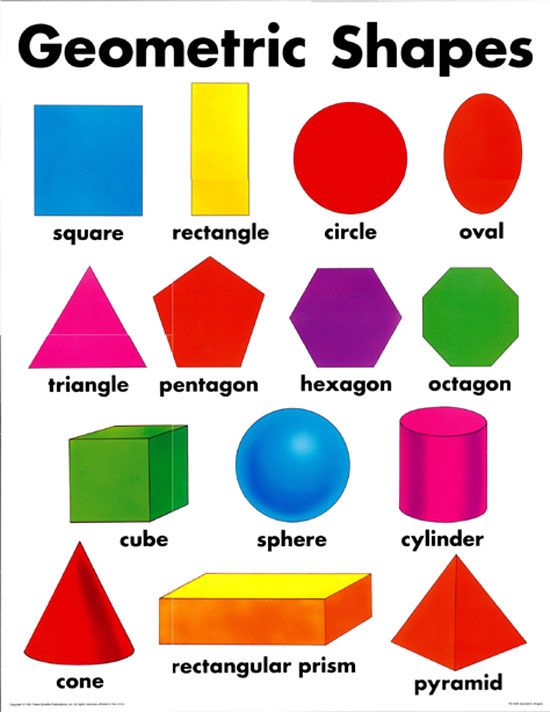
Let children handle familiar objects and name what they notice: a ball rolls, a box stacks, and a can has flat and curved surfaces. Connect those observations to sphere, cube, rectangular prism, cylinder, and cone rather than beginning with definitions alone.
What activities help kindergarten students practice solid shapes?
Try an object hunt, picture-to-shape matching, and sorting by whether an object rolls, slides, or stacks. A quiz can then reinforce the same vocabulary through visual recognition and simple classification.
What solid-shape mistakes are common in kindergarten?
Kindergartners commonly call a sphere a circle or a cube a square because they focus on one visible face. Show the flat shape beside the solid and let students rotate the solid to see that it occupies space and looks different from different angles.
How can I use a kindergarten solid shapes quiz from Wayground?
Host it as a digital quiz on Wayground or print the PDF for an off-screen center, guided lesson, or take-home activity. Each quiz has a complete answer key, and paper work can be scanned or captured for grading in the Wayground for Teachers app.
How does kindergarten solid-shape work align with Common Core?
Common Core kindergarten geometry asks children to identify, describe, compare, model, and compose shapes. Solid-shape practice builds from naming cubes, spheres, cylinders, and cones toward describing whether their surfaces are flat or curved and combining simple solids to make larger structures.
How can I support kindergarten students who struggle with solid-shape vocabulary?
Pair each shape name with a clear picture or classroom object, and use Wayground's Read Aloud support so students can hear directions and terms. Reduced answer choices can make early sorting tasks more manageable without changing the skill being assessed.
What solid shapes should kindergarten students know?
Kindergarten students typically work with cubes, spheres, cylinders, cones, and rectangular prisms. The goal is recognition and simple description in everyday contexts, not formulas or formal measurement.

Accessibility
Features
Wayground Super
School & District
Wayground for Business
Create a quiz
Create a presentation
Wayground AI
Subjects
Mathematics
Social Studies
Science
Physics
Chemistry
Biology
About
Our Story
Wayground Blog
Media Kit
Careers
Support
F.A.Q.
Help & Support
Privacy Policy
Terms of Service
Teacher Resources
2026 Wayground


Get our app

