


6th Grade Writing Organization and Structure Quizzes
Test your Grade 6 writing skills with this comprehensive quiz on writing organization and structure. Practice identifying proper paragraph structure, logical sequencing, and effective transitions while receiving instant feedback to strengthen your organizational writing techniques.
Recommended topics for you

21 questions
Essay Writing 101

Quiz
•
6th - 8th Grade
10 questions
Transitional words and phrases SAT
Quiz
•
5th - 8th Grade

25 questions
Central Idea Relevant Details
Quiz
•
3rd Grade

17 questions
RACE PARAGRAPH CHECK!
Quiz
•
6th Grade

15 questions
Transition Words
Quiz
•
5th - 9th Grade

6 questions
Informative Essays
Quiz
•
6th - 8th Grade
11 questions
Transitional Words and Phrases: Act Style
Quiz
•
6th - 9th Grade
13 questions
6th and 7th grade Essay Structure Quiz
Quiz
•
6th - 7th Grade
20 questions
Sentence variety and conjunctions
Quiz
•
5th - 7th Grade
15 questions
6+1 Traits of a Good Writer
Quiz
•
5th - 7th Grade
18 questions
TDA Structure Review
Quiz
•
6th Grade
10 questions
Paragraph Structure and Main Idea
Quiz
•
6th - 8th Grade
Explore 6th Grade Writing Organization and Structure Quizzes
Writing Organization and Structure forms a critical foundation for Grade 6 students developing coherent and effective written communication skills. Through Wayground's comprehensive quiz collection, students engage with targeted assessment activities that evaluate their understanding of paragraph development, logical sequencing, transitional elements, and structural frameworks essential for clear writing. These practice questions provide immediate feedback on key organizational concepts including topic sentences, supporting details, conclusion formation, and the strategic use of connecting words and phrases that create flow between ideas. Students receive systematic assessment of their ability to recognize well-structured writing patterns and apply organizational principles across various text types and writing purposes. Wayground supports educators with millions of teacher-created quizzes specifically designed to reinforce writing organization and structure concepts through robust search and filtering capabilities that align with curriculum standards and learning objectives. Teachers can easily locate age-appropriate assessment materials, customize question sets to address individual student needs, and differentiate instruction through multiple delivery formats optimized for digital learning environments. These flexible tools enable educators to design targeted interventions for students requiring additional support with organizational skills, provide enrichment opportunities for advanced learners ready to tackle complex structural elements, and conduct ongoing formative assessments that inform instructional planning and identify areas requiring focused remediation in writing development.
FAQs
How do I teach writing organization and structure to students?
Effective instruction in writing organization starts with explicit modeling of structural patterns such as chronological order, cause and effect, compare and contrast, and problem and solution. Teachers should introduce one structure at a time, use mentor texts to show it in action, and then guide students through planning tools like graphic organizers and outlines before they draft. Connecting each structure to a real writing purpose, such as persuasive essays for rhetorical appeals or narrative essays for three-act structure, helps students see organization as a functional tool rather than an abstract rule.
What are the most common mistakes students make with writing organization?
The most frequent errors include weak or missing topic sentences that fail to anchor a paragraph, abrupt transitions that leave readers without logical connectors between ideas, and including irrelevant details that derail the focus of a composition. Students also commonly confuse the purpose of different essay structures, for example treating an informative essay like a narrative. Targeted practice with paragraph correction exercises and transition signal activities can help students identify and self-correct these patterns before they become habits.
What exercises help students practice paragraph structure and transitions?
Paragraph correction tasks, transition sentence activities, and topic sentence identification exercises are among the most effective for building structural awareness. Sentence expansion and sentence variety practice reinforce how individual sentences contribute to paragraph cohesion, while sequencing exercises train students to arrange ideas in a logical order. Pairing these activities with short writing tasks, such as writing a strong introduction or a strong ending, gives students immediate opportunities to apply what they practice.
How can I help struggling writers understand how to organize an essay?
Breaking essay organization into discrete, teachable components, such as separating topic sentence work from transition work from concluding sentence work, reduces cognitive load for struggling writers. Visual scaffolds like paragraph frames and color-coded outlines make structural expectations concrete. On Wayground, teachers can apply accommodations such as Read Aloud, reduced answer choices, and extended time for individual students, ensuring that access to the content is not blocked by decoding or processing challenges while the rest of the class works at the standard pace.
How do I use Wayground's writing organization and structure quizzes in my classroom?
Wayground's writing organization and structure quizzes are available as printable PDFs for traditional classroom use and in digital formats for technology-integrated environments, making them flexible enough for whole-group instruction, small-group remediation, or independent practice. Teachers can also host quizzes as a quiz directly on Wayground, enabling real-time tracking of student responses. The platform's search and filtering tools allow teachers to locate quizzes aligned to specific standards or subtopics, such as rhetorical appeals, transitional devices, or persuasive essay structure, so lesson planning stays targeted and efficient.
How do I teach students to use transitional words and phrases effectively?
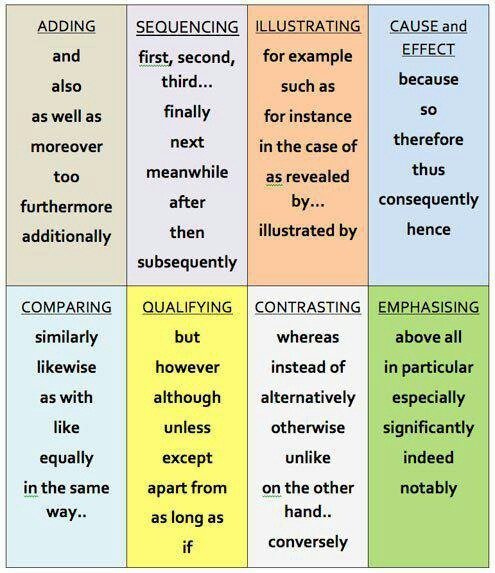
Begin by categorizing transitions by function, such as those that show sequence, contrast, cause and effect, or elaboration, so students understand that word choice reflects a logical relationship, not just stylistic preference. Practice activities that ask students to select the correct transition for a given context are more effective than simple memorization lists because they require students to analyze the relationship between ideas. Once students can identify the function of a transition, move to sentence-level and paragraph-level writing tasks where they must apply the appropriate signal independently.
What writing organization topics should I prioritize at the middle school level?
At the middle school level, foundational priorities include topic sentences, paragraph structure, transitional devices, and the structural conventions of informative, narrative, and persuasive essay forms. As students advance, layering in rhetorical appeals, organizing evidence, sentence variety, and voice in writing builds the sophistication needed for high school writing demands. Logical fallacies and the speaker-listener technique also become increasingly relevant as students engage with argument-based writing across content areas.

Accessibility
Features
Wayground Super
School & District
Wayground for Business
Create a quiz
Create a presentation
Wayground AI
Subjects
Mathematics
Social Studies
Science
Physics
Chemistry
Biology
About
Our Story
Wayground Blog
Media Kit
Careers
Support
F.A.Q.
Help & Support
Privacy Policy
Terms of Service
Teacher Resources
2026 Wayground


Get our app

