
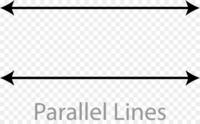
Parallel Line Proofs

Flashcard
•
Mathematics
•
9th - 12th Grade
•
Practice Problem
•
Hard
+1
Standards-aligned

Wayground Content
FREE Resource
Student preview

15 questions
Show all answers
1.
FLASHCARD QUESTION
Front
What is the Vertical Angles Theorem?
Back
The Vertical Angles Theorem states that when two lines intersect, the opposite (or vertical) angles are equal.
Tags
CCSS.HSG.CO.C.9
2.
FLASHCARD QUESTION
Front
What must be proven in a parallel line proof?
Back
In a parallel line proof, you must prove that two lines are parallel based on the relationships of the angles formed by a transversal.
Tags
CCSS.8.G.A.5
3.
FLASHCARD QUESTION
Front
What are Alternate Interior Angles?
Back
Alternate Interior Angles are pairs of angles that are on opposite sides of a transversal and inside the two lines. If the lines are parallel, these angles are equal.
Tags
CCSS.8.G.A.5
4.
FLASHCARD QUESTION
Front
What are Corresponding Angles?
Back
Corresponding Angles are pairs of angles that are in the same position on two different parallel lines cut by a transversal. If the lines are parallel, these angles are equal.
Tags
CCSS.8.G.A.5
5.
FLASHCARD QUESTION
Front
What is the Corresponding Angles Postulate?
Back
The Corresponding Angles Postulate states that if two parallel lines are cut by a transversal, then each pair of corresponding angles is equal.
Tags
CCSS.8.G.A.5
6.
FLASHCARD QUESTION
Front
What is a transversal in geometry?
Back
A transversal is a line that intersects two or more lines at different points.
7.
FLASHCARD QUESTION
Front
How do you determine if two lines are parallel using angle relationships?
Back
If the alternate interior angles are equal or the corresponding angles are equal, then the two lines are parallel.
Tags
CCSS.8.G.A.5
Access all questions and much more by creating a free account
Create resources
Host any resource
Get auto-graded reports

Continue with Google

Continue with Email

Continue with Microsoft
or continue with

%20(1).png)
Apple

Others
By signing up, you agree to our Terms of Service & Privacy Policy
Already have an account?

