
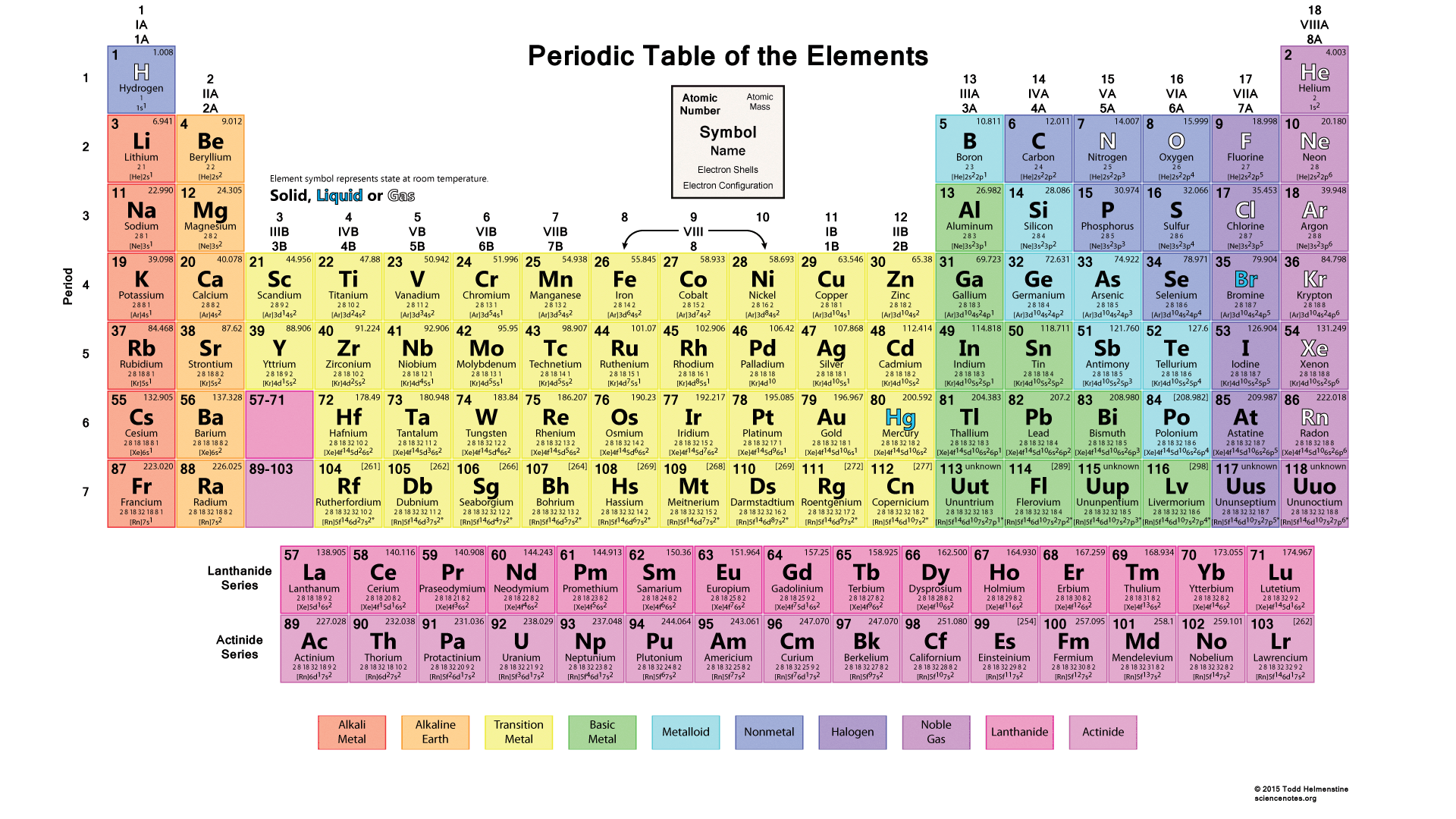
Periodic Table Trends

Flashcard
•
Science
•
9th Grade
•
Practice Problem
•
Hard

Wayground Content
FREE Resource
Student preview

15 questions
Show all answers
1.
FLASHCARD QUESTION
Front
What is ionization energy?
Back
Ionization energy is the energy required to remove an electron from an atom in its gaseous state. It generally increases across a period and decreases down a group in the periodic table.
2.
FLASHCARD QUESTION
Front
Which element has the lowest ionization energy in the following options: Barium, Beryllium, Magnesium, Strontium?
Back
Barium has the lowest ionization energy among the given options.
3.
FLASHCARD QUESTION
Front
What is atomic radius?
Back
Atomic radius is the distance from the nucleus of an atom to the outermost shell of electrons. It generally increases down a group and decreases across a period.
4.
FLASHCARD QUESTION
Front
Which element has the largest atomic radius in the following options: Potassium, Scandium, Gallium, Arsenic?
Back
Potassium has the largest atomic radius among the given options.
5.
FLASHCARD QUESTION
Front
What are isotopes?
Back
Isotopes are atoms of the same element that have the same number of protons but different numbers of neutrons, resulting in different atomic masses.
6.
FLASHCARD QUESTION
Front
How do you determine the natural abundance of isotopes?
Back
Natural abundance is determined by measuring the relative amounts of each isotope in a sample, often using mass spectrometry.
7.
FLASHCARD QUESTION
Front
What is electronegativity?
Back
Electronegativity is a measure of the tendency of an atom to attract a bonding pair of electrons. It generally increases across a period and decreases down a group.
Access all questions and much more by creating a free account
Create resources
Host any resource
Get auto-graded reports

Continue with Google

Continue with Email

Continue with Microsoft
or continue with

%20(1).png)
Apple

Others
By signing up, you agree to our Terms of Service & Privacy Policy
Already have an account?


