Search Header Logo
Mixture and Pure Substance

Mixture and Pure Substance

Assessment

Presentation

Chemistry

11th Grade

Medium

NGSS
HS-PS1-1, HS-PS1-2

Standards-aligned

Created by

Yissel Familia

Used 4+ times

FREE Resource

2 Slides • 64 Questions

1

Mixture and Pure Substance

Slide image

2

Multiple Choice

Question image

What is this?

1

Element

2

Compound

3

Homogeneous Mixture

4

Heterogeneous MIxture

3

Multiple Choice

Question image

Coffee

1

Pure Substance

2

Mixture

4

Multiple Choice

Question image

Water

1

Pure Substance

2

Mixture

5

Multiple Select

Select all the elements. (Pick 3.) H2OH_2O 

1

 H2OH_2O  

2

Nitrogen

3

Oxygen

4

 Cl2Cl_2  

5

NaCl

6

Multiple Choice

What is the smallest unit of matter?

1

atom

2

element

3

molecule

4

compound

7

Multiple Choice

True or False: elements AND compounds are pure substances.

1

True

2

False

8

Multiple Choice

Question image
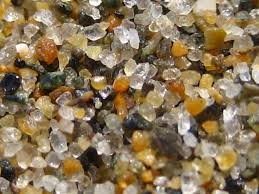
The picture shown here is what type of mixture?
1
homogeneous
2
hetergeneous
3
pure substance
4
element

9

Multiple Choice

A mixture that is uniform and well mixed is _____.

1

homogeneous

2

hetergeneous

3

pure substance

4

compoud

10

Multiple Choice

What is an example of a mixture?

1

iron

2

ice

3

soil

4

gold

11

Multiple Choice

Air is:

1

An element

2

A compound

3

A mixture

4

None of these

12

Multiple Choice

Which of these is a mixture?

1

Laundry Detergent

2

Salt (NaCl)

3

Oxygen (O)

4

Fluorine (Fl)

13

Multiple Choice

Which of these is an element?

1

Salt (NaCl)

2

Water (H20)

3

Oxygen (O)

4

Carbon Dioxide (CO2)

14

Multiple Choice

A pure substance that cannot be broken down into other substances by chemical or physical means. 
1
compound          
2
atom
3
mixture 
4
element

15

Multiple Choice

A group of 2 or more items, that are not chemically combined

1

Pure Substance

2

Mixture

16

Multiple Choice

When there is 2 or more atoms combined together

1

Element

2

Compound

3

Homogeneous Mixture

4

Heterogeneous Mixture

17

Multiple Choice

When there is one type of atom

1

Element

2

Compound

3

Homogeneous Mixture

4

Heterogeneous Mixture

18

Multiple Choice

When there is one substance....

1

Pure Substance

2

Mixture

19

Multiple Choice

Question image

What is it?

1

Pure Substance

2

Mixture

20

Multiple Choice

Question image

What is it?

1

Pure Substance

2

Mixture

21

Multiple Choice

Question image

What is it?

1

Pure Substance

2

Mixture

22

Multiple Choice

Question image

What is it?

1

Element

2

Compound

3

Homogeneous Mixture

4

Heterogeneous Mixture

23

Multiple Choice

Question image

What is it?

1

Element

2

Compound

3

Homogeneous Mixture

4

Heterogeneous Mixture

24

Multiple Choice

Question image

What is it?

1

Element

2

Compound

3

Homogeneous Mixture

4

Heterogeneous Mixture

25

Multiple Choice

Question image
1

Element

2

Compound

3

Homogeneous Mixture

4

Heterogeneous MIxture

26

Multiple Choice

Question image

What is this?

1

Element

2

Compound

3

Heterogeneous MIxture

4

Homogeneous Mixture

27

Multiple Choice

Question image

Chicken noodle soup

1

heterogeneous mixture

2

homogeneous mixture

28

Multiple Choice

Question image

cake batter

1

heterogeneous mixture

2

homogeneous mixture

29

Multiple Choice

Question image

Milk

1

Heterogeneous mixture

2

Homogeneous mixture

30

Multiple Choice

Question image

What is this?

1

Element

2

Compound

3

Homogeneous Mixture

4

Heterogeneous Mixture

31

Multiple Choice

Question image

What is this?

1

Element

2

Compound

3

Homogeneous Mixture

4

Heterogeneous Mixture

32

Intensive and Extensive Properties

Slide image

33

Multiple Choice

Question image

A balloon filled with only helium gas, H2. The balloon contains a _____.

1

Homogeneous mixture

2

Heterogeneous mixture

3

Pure substance

4

Solution

34

Multiple Choice

A student observes that a white crystal substance will start bubbling with added to acetic acid. This reaction is an example of what type of property?

1

Extensive property

2

Intensive property

3

Physical property

4

Chemical property

35

Multiple Choice

A student is observing a new substance. He notices that the substance is a white crystal with a mass of about 2 grams. What type of properties did you observe?

1

Extensive property

2

Intensive property

3

Physical property

4

Chemical property

36

Multiple Choice

_____ is the study of the composition, structure, and properties of matter.

1

Science

2

Chemistry

3

Biology

4

Knowledge

37

Multiple Choice

Mixtures are

1

physically combined and can usually be separated.

2

physically combined and can never be separated.

3

chemically combined.

4

We have no way of knowing how they combine.

38

Multiple Choice

To compress means to be squeezed or pressed together. Why is a gas easily compressible, but solids are not?

1

Gas particles are much smaller.

2

Particles in a solid are not strongly attracted to one another.

3

Molecules in a solid are much larger.

4

Particles in a gas are much farther apart compared to a solid.

39

Multiple Choice

Properties that remain the same regardless of the amount present are called

1

intensive properties

2

extensive properties

3

chemical properties

4

physical changes

40

Multiple Choice

If a mixture is uniform in composition, it is considered to be

1

heterogeneous.

2

molecular.

3

homogeneous.

4

elemental.

41

Multiple Choice

Which is not true about the liquid state of matter?

1

The liquid state has a definite volume and a definite shape.

2

The liquid state takes on the shape of its container.

3

The liquid states has a definite volume and an indefinite shape.

4

The particles in a liquid can easily move past each other.

42

Multiple Choice

In every chemical change, two or more reactants form at least one

1

product

2

gas

3

precipitate

4

reaction

43

Multiple Choice

A change in a substance that does not involve a change in the identity of the substance is called (a)n

1

chemical change.

2

physical change.

3

extensive property.

4

intensive property.

44

Multiple Choice

Which of the following is an intensive property of matter?

1

volume

2

mass

3

energy content

4

density

45

Multiple Choice

Extensive properties

1

include boiling point.

2

do not depend on the amount of matter present.

3

include volume and mass.

4

all depend on the chemical composition of the matter present.

46

Multiple Choice

A compound is

1

a substance that is composed of two or more elements that are chemically bonded.

2

a molecule formed by atoms of the same element.

3

another word for an atom.

4

any substances that can be split apart.

47

Multiple Choice

An element is made of one type of

1

molecule

2

atom

3

compound

4

mixture

48

Multiple Choice

The fundamental building block of matter is the

1

atom

2

molecule

3

cell

4

proton

49

Multiple Choice

Mass is a measurement of

1

how much space an object occupies.

2

how dense an object is.

3

the amount of matter in an object.

4

the volume of an object.

50

Multiple Choice

A piece of ice melts and reacts with sodium

1

Physical Change

2

Chemical Change

51

Multiple Choice

Ice melts

1

Physical Change

2

Chemical Change

52

Multiple Choice

Blue color

1

Physical Property

2

Chemical Property

53

Multiple Choice

Question image

You mixed two liquids and a precipitate formed, what kind of change occured?

1

Physical

2

Chemical

54

Multiple Choice

Which of the following changes is a physical change of matter?

1

water evaporating

2

paper burning

3

a nail rusting

4

a silver spoon tarnishing

55

Multiple Choice

Question image

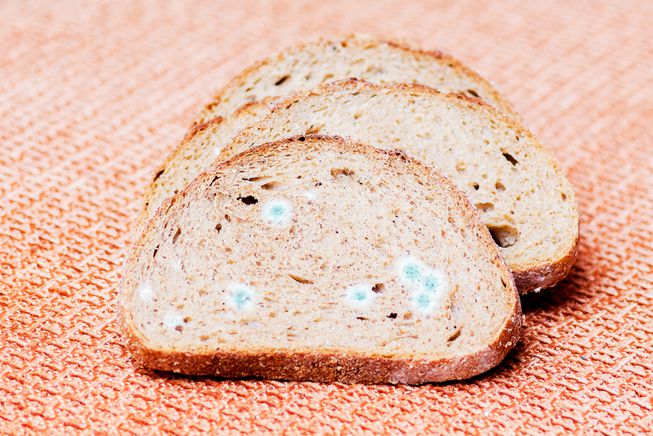
Moldy Bread

1

Physical Change

2

Chemical Change

56

Multiple Choice

Question image

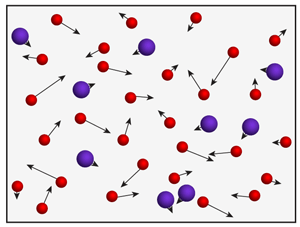
What happens to the atoms of a substance in a chemical change?

1

Atoms get bigger

2

Atoms change their arrangement and motion

3

Atoms get smaller

4

Atoms bond together differently

57

Multiple Choice

Question image

What happens to the atoms of a substance in a physical change?

1

Atoms get bigger

2

Atoms change their arrangement and motion

3

Atoms get smaller

4

Atoms bond together differently

58

Multiple Choice

Question image

What is a sign of a chemical change?

1

Stretching

2

Tearing

3

Compressing

4

Bubbles

59

Multiple Choice

Question image

Texture of Sodium chloride

1

Intensive property

2

Extensive property

60

Multiple Choice

Question image

Mass of Calcium chloride

1

Intensive property

2

Extensive property

61

Multiple Choice

Why are intensive properties used to characterize matter?

1

They do not change with the amount of matter

2

They vary with the amount of matter

3

They are more pronounced than extensive properties

4

None of these are correct

62

Multiple Choice

Which of the following is not an extensive property?

1

volume

2

mass

3

temperature

4

length

63

Multiple Choice

What kind of physical property is this? Color

1

intensive

2

extensive

64

Multiple Choice

Which set of properties, intensive or extensive, are based on the size of a sample?

1

intensive

2

extensive

65

Poll

Did you understand today's lesson?

Yes

No

Few Questions

66

Open Ended

Question image

Post your doubts here

Mixture and Pure Substance

Slide image

Show answer

Auto Play

Slide 1 / 66

SLIDE