Unit 2 Populations Review
Presentation
•
Biology
•
10th - 12th Grade
•
Medium
+7
Standards-aligned
Used 4+ times
FREE Resource
19 Slides • 31 Questions
1
Unit 2 Populations Review
2
Module 18 The Abundance And Distribution of Populations
Levels of Complexity
Population Density
Population Size
Population Distribution
Density Dependent vs. Independent Factors
3
Population Distribution
Random - No Correlation
Uniform - Common in predatory birds and plants that secrete toxic chemical
Clumped - common in prey species, and plants when resources are limited
4
Density Dependent and Independent Factors
Density Dependent
Factors that depend on # of individuals - competition based factors
Density Independent - Factors that do not depend on distribution of individuals
Usually natural or human caused disturbances
5
Multiple Choice
6
Multiple Choice
What is happening at the 'A' on the graph?
the population overshoots above the carrying capacity
the population stops growing
growth begins to slow down due to limited resources
growth is speeding up due to an abundance of resources
7
Multiple Choice
8
Multiple Choice
A population is...
All members of one species in one area
All members of all species that live in one area
All of the living and nonliving things in an area
None of these
9
Multiple Choice
10
Module 19 Population Growth Models
Exponential Growth Model
Logistic Growth Model
Carrying Capacity
Reproductive Strategies
Survivorship Curves
11
Carrying Capacity
The number of individuals that an environment can sustain
Die- Offs
Overshoot
Logistic Growth
12
13
14
Multiple Choice
15
Multiple Choice
16
Multiple Choice
17
Multiple Choice
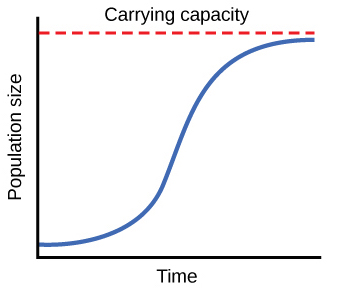
What point on the graph represents the carrying capacity?
A
B
C
D
18
Multiple Choice
19
Module 20 Community Ecology
Competitive Exclusion
Resource Partitioning
Predation
Parasitism
Commensalism
Mutualism
Keystone Species and Ecosystem Engineer
20
Competitive Exclusion
Happens when one species outcompetes another for a shared resource
21
Resource Partitioning
When a resource is divided based on differences in behavior or morphology
Example - Woodpeckers
22
Multiple Choice
A species that plays a far more important in its community than its relative abundance might suggest.
Keystone Species
Pioneer Species
Indicator Species
Exotic Species
23
Multiple Choice
24
Multiple Choice
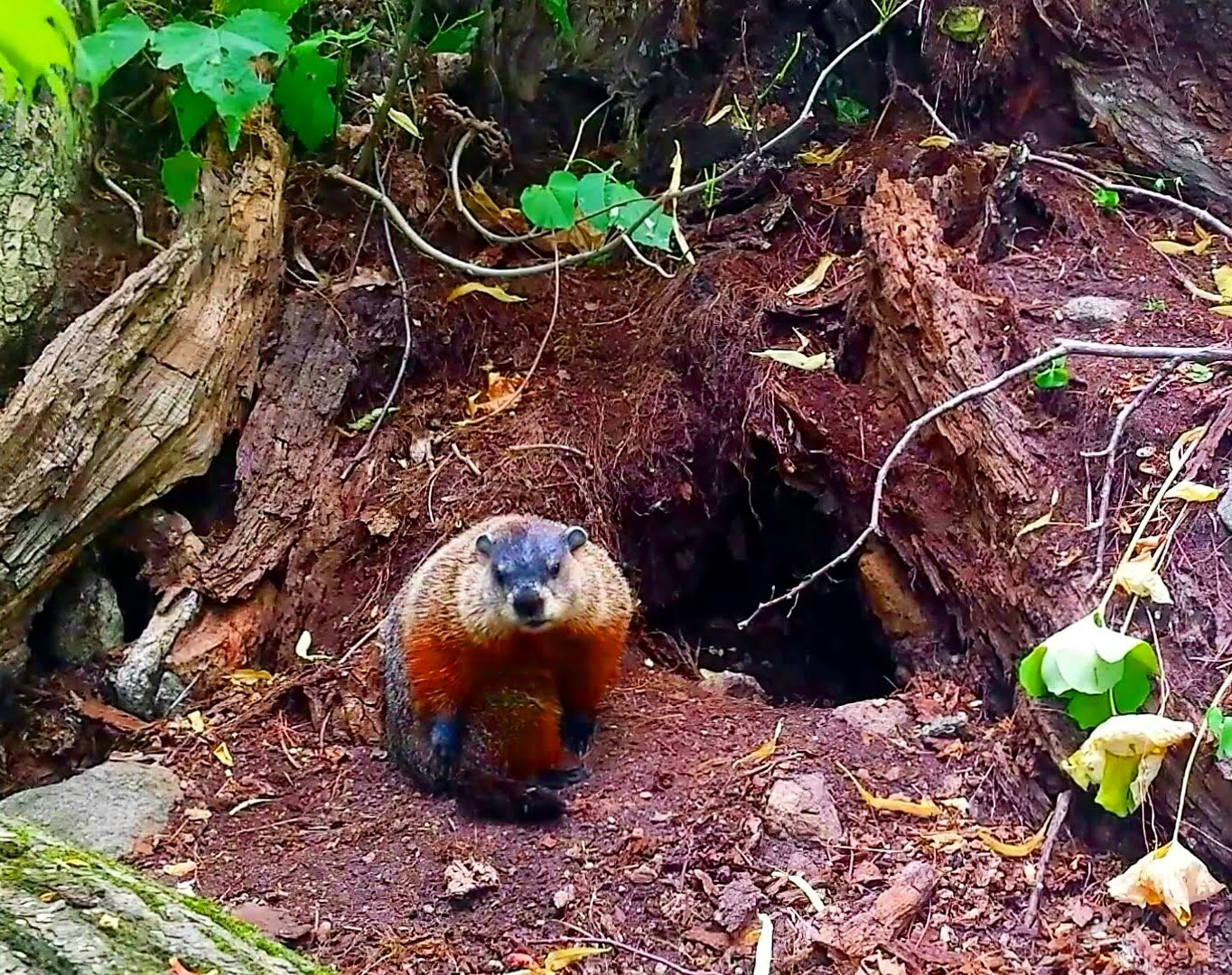
Type of symbiosis: Skunks often live in burrows that have been dug and abandoned by woodchucks.
commensalism
mutualism
parasitism
predation
25
Multiple Choice
26
Module 21 Ecological Succession
Primary Succession
Secondary Succession
Pioneer Species
Climax Community
Island Biogeography
27
28
Multiple Choice
What is the term that describes a steady and stable community?
peak community
turf community
climax community
disturbed community
29
Multiple Choice
Which of the following is the correct order of ecological succession?
grass - shrubs - lichens - trees
lichens - shrubs - grasses - trees
lichens - grasses - shrubs - trees
grasses - lichens - shrubs - trees
30
Multiple Choice
What is an example of an area that is likely to undergo primary succession?
Glaciers melt and leave exposed rock
Plants die from drought and decompose
Land is bulldozed and soil remains
31
Multiple Choice
Primary succession occurs in an area that has:
Has Soil
Has No Soil
Has Some Soil
none of these
32
Multiple Choice
___ are the first organisms to colonize an area and begin the process of ecological succession.
foundational organisms
introductory organisms
primary organisms
pioneer species
33
Module 22 Human Population Numbers
Immigration vs. Emmigration
Births vs. Deaths
Population Math Equations
Fertility and Mortality Rates
Age Structure Diagrams
Aging and Disease
34
Population Math Equations
Population Growth Percent (Immigration + Births) - (Emigration + Deaths) / Total Population
or (CBR - CDR) / 1000 = decimal x 100 = %
Doubling time = Rule of 70
Exponential Growh
P=Pi e (rt)
Crude Birth and Death Rates = (# of Births or Deaths) / Total Population x 1000
35
Age Structure Diagrams
Help demographers make predictions
Show the % of a population at different age groups
36
Terms to Review
Replacement Level Fertility - the fertility rate required to replace a population. Different for developed vs developing countries
Total Fertility Rate - estimated # of children each female will have in a population
Life Expectancy
Infant and Child Mortality
37
Multiple Choice
Which of the following pairs of indicators best reflects the availability of health care in a country?
Crude death rate and growth rate
Crude death rate and crude birth rate
Growth rate and life expectancy
Infant mortality rate and life expectancy
Infant mortality rate and crude death rate
38
Multiple Choice
A particular country has a Total Fertility Rate equal to replacement level fertility and emigration equal to immigration. Which of the following must be true?
The population will begin shrinking within ten years, based on the Rule of 70.
The population must be stable.
The population will begin growing as soon as TFR = 2.1.
Infant mortality must also be less than Crude Death Rate.
There is not enough information to tell.
39
Multiple Choice
Using the rule of 70, a population growing at 10% would double in
7 years
10 years
17 years
15 years
not enough information to tell
40
Multiple Choice
Which of the following countries best exemplifies phase 4 of a demographic transition?
Argentina
China
India
Mexico
Japan
41
Multiple Choice
A metropolitan region of 100,000 people has 2000 births, 500 deaths, 200 emigrants, and 100 immigrants over a 1-year period. Its population growth rate is
1.2 percent.
1.4 percent
1.6 percent.
1.8 percent.
2.0 percent.
42
Module 23 Economic Development, Consumption and Sustainability
The Demographic Transition
Family Planning
IPAT Equation
Local vs. Global Impacts
43
44
Multiple Choice
45
Multiple Choice
46
Multiple Choice
47
Multiple Choice
48
Multiple Choice
49
Multiple Choice
Which of the following characteristics are typical of developed countries?
I High technology use
II Low GDP
III Small-scale sustainable agriculture
I only
II only
I and III only
II and III only
I, II and III
50
Multiple Choice
An island of the coast of Costa Rica where 500 birds of a particular species live. Population biologists determined that this bird population was isolated with no immigration or emigration. After 1 year the scientists were able to count 60 births and 10 deaths.
EQUATIONS:
Doubling time = 70/Growth rate %
Rate of change = (present population - (past pop/past))/time * 100
Growth Rate = r = (CBR-CDR)/10
The doubling for this population would be...
10 years
13.3 years
24.2 years
63.6 years
126 years
Unit 2 Populations Review
Show answer
Auto Play
Slide 1 / 50
SLIDE

Similar Resources on Wayground
47 questions
HAP1 Anatomical Terms and Body Cavities
Presentation
•
10th - 12th Grade
46 questions
Plasma membrane
Presentation
•
9th Grade - University
40 questions
Plant Systems
Presentation
•
9th - 12th Grade
48 questions
Unit 4 Lesson 1 Bohr's Models and Lewis Dot Structures
Presentation
•
10th - 12th Grade
45 questions
Unit 4B Pt2
Presentation
•
9th - 12th Grade
41 questions
Cell's Organelles
Presentation
•
9th - 12th Grade
41 questions
Air Pollution Lesson
Presentation
•
9th - 12th Grade
47 questions
Valence electrons
Presentation
•
10th - 12th Grade
Popular Resources on Wayground
20 questions
STAAR Review Quiz #3
Quiz
•
8th Grade
20 questions
Equivalent Fractions
Quiz
•
3rd Grade
6 questions
Marshmallow Farm Quiz
Quiz
•
2nd - 5th Grade
20 questions
Main Idea and Details
Quiz
•
5th Grade
20 questions
Context Clues
Quiz
•
6th Grade
20 questions
Inferences
Quiz
•
4th Grade
19 questions
Classifying Quadrilaterals
Quiz
•
3rd Grade
12 questions
What makes Nebraska's government unique?
Quiz
•
4th - 5th Grade
Discover more resources for Biology
20 questions
Food Chains and Food Webs
Quiz
•
7th - 12th Grade
20 questions
Genetics 2026
Quiz
•
10th Grade
10 questions
Exploring Evidence of Evolution
Interactive video
•
6th - 10th Grade
15 questions
STAAR Review Quizziz 3
Quiz
•
10th Grade
16 questions
AP Biology: Unit 2 Review (CED)
Quiz
•
9th - 12th Grade
20 questions
Codominance and Incomplete Dominance
Quiz
•
9th - 10th Grade
15 questions
Photosynthesis and Cellular Respiration
Quiz
•
10th Grade
10 questions
Evolutionary Fitness and Natural Selection Worksheet
Quiz
•
10th Grade