Search Header Logo
Ecology Part 1-4 Review

Ecology Part 1-4 Review

Assessment

Presentation

Science

6th - 9th Grade

Practice Problem

Medium

NGSS
MS-LS2-3, MS-LS2-2, MS-LS2-4

+3

Standards-aligned

Created by

Crystal Winner

Used 46+ times

FREE Resource

14 Slides • 32 Questions

1

Ecology Part 1-4

Slide image

2


Energy flows through an ecosystem in one direction from the sun or chemical compounds to autotrophs (producers) and then to various heterotrophs (consumers).

3

Slide image

4

Multiple Choice

Question image
An organism that needs to eat other organisms to obtain energy is known as a:
1
Autotroph
2
Producer
3
Consumer
4
Mutualist

5

Multiple Choice

Question image
The largest group of organisms found in a food web would be:
1
Primary Consumers
2
Producers
3
Decomposers
4
Tertiary Consumers

6

Multiple Choice

Question image
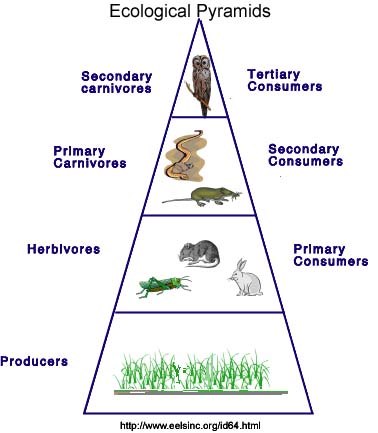
In the energy pyramid below, which organism has the least amount of energy available?
1
Producers
2
Herbivores
3
Carnivores
4
Top Predator

7

Multiple Choice

Question image
In the energy pyramid here, which organisms have the most energy available?
1
Producers
2
Carnivores
3
Herbivores
4
Top Predator

8

Niche

  • An organisms role in their environment

  • For example: like a job, like a worker in a factory has a job to do

9

Multiple Choice

What is a habitat?

1

Where an organism lives.

2

What an organism eats.

3

A organisms role, or job, in its ecosystem.

10

Multiple Choice

What is a niche?

1

Where an organism lives.

2

An organisms role, or job, within its ecosystem.

3

What an organism eats.

11

Multiple Choice

A whale's niche would be which of the following?

1

eating plankton and krill.

2

eating sharks and dolphins.

3

eating hamburgers and fries.

4

eating other whales.

12

Multiple Choice

A squirrels niche would be _________________.

1

hunting prey and providing meat for other squirrels.

2

searching for fish to eat in the ocean.

3

staying busy storing nuts and seeds for winter.

4

help decompose other animals and plants.

13

Multiple Choice

A niche ________________.

1

is the function that an organism performs in the food web of that community.

2

includes everything else the organism does and needs in its environment.

3

is specific to each individual animal and plant.

4

All of the above.

14

Biogeochemical cycles 

Elements, compounds, and other forms of matter are passed from one organism to another and from one part of the biosphere to another; Connect biological, geological and chemical aspects

15

Water, Carbon, Nitrogen

Water: Water is constantly moving between

the atmosphere & Earth.

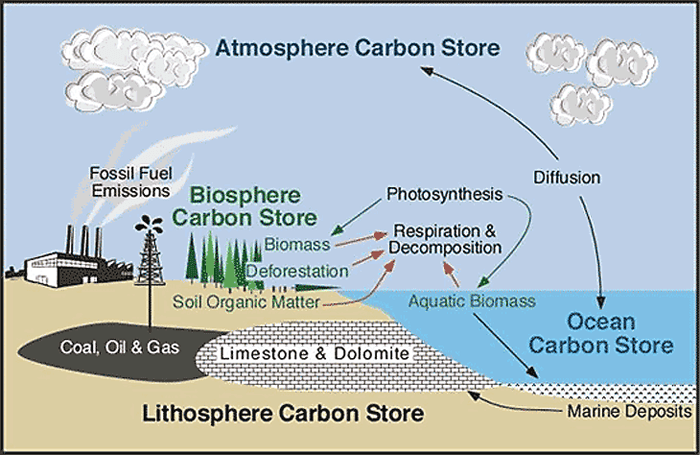
Carbon: Carbon plays many roles – 4 main processes move carbon:

•Biological processes, such as photosynthesis, respiration and decomposition

•Burial and decomposition of dead organisms and their conversion under pressure (fossil fuel)

•Geochemical processes, such as erosion and volcanic activity release CO2

•Mining, cutting and burning forests, burning fossil fuels

Nitrogen: The atmosphere is the main reservoir of nitrogen; it also cycles through the soil and tissues of living organisms.

16

Slide image

17

Slide image

18

Slide image

19

Multiple Choice

All living things contain carbon.

1

True

2

False

20

Multiple Choice

Carbon can be found in

1

the ocean and seas

2

rock and mantle of the Earth

3

the atmosphere

4

all of these are correct

21

Multiple Choice

Death and decomposition are part of many life cycles. What else helps return nitrogen and carbon to the ground?

1

animal waste

2

lightning

3

rain

4

DNA

22

Multiple Choice

Question image

Which of the following is represented by this picture?

1

the water cycle

2

the carbon cycle

3

the nitrogen cycle

4

the hydrogen cycle

23

Multiple Choice

Question image

Which of the following is represented in this picture?

1

the water cycle

2

the carbon cycle

3

the nitrogen cycle

4

the hydrogen cycle

24

Multiple Choice

Question image

Which of the following is represented in this picture?

1

the water cycle

2

the carbon cycle

3

the nitrogen cycle

4

the hydrogen cycle

25

Symbiosis

Any relationship in which two species live closely together

26

Mutualism

  • both species benefit  from relationship


27

Commensalism

  • Onse species bennefits while the other species is unaffected

28

Parasitism

  • Parasitic species bennefits while the host species is harmed.

29

Multiple Choice

Question image
A sparrow will build its nest under the nest of an osprey. The smaller birds get protection because other predators will not mess with the osprey. The osprey are not helped nor harmed by the sparrow.
1
parasitism
2
commensalism
3
mutualism

30

Multiple Choice

Question image
Remoras attach themselves to a shark’s body. They then travel with the shark and feed on the leftover food scraps from the shark’s meals. The relationship neither harms nor benefits the shark. 
1
parasitism
2
commensalism
3
mutualism

31

Multiple Choice

Question image
Yucca flowers are pollinated by yucca moths. The moths lay their eggs in the flowers where the larvae hatch and eat some of the developing seeds. Both species benefit. 
1
parasitism
2
commensalism
3
mutualism

32

Multiple Choice

Question image

Aphids are tiny insects that live on and eat the leaves of plants, removing vital nutrients from the plants.

1

Predation

2

Parasitism

3

Commensalism

4

Mutualism

33

Multiple Choice

A relationship between two organisms in which both organisms benefit. 
1
Mutualism 
2
Competition
3
Parasitsm 
4
Commensalism 

34

Multiple Choice

Which symbols best describe parasitism?
1
+,+
2
+,-
3
+,0
4
-,0

35

Multiple Choice

Question image
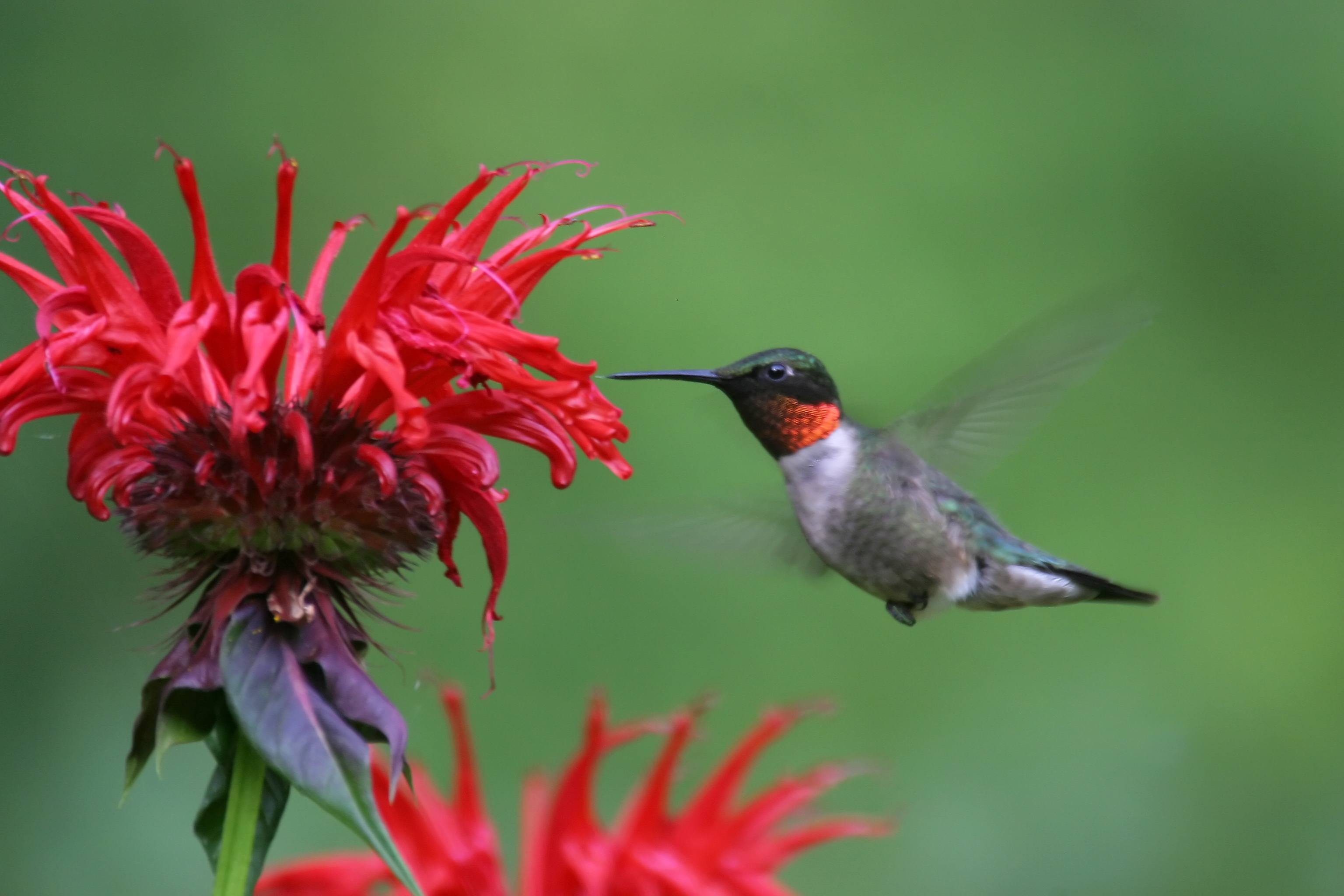
What type of symbiosis?  Hummingbirds feed on nectar from flowers.  The flowers are pollinated by hummingbirds as they move from flower to flower.
1
commensalism
2
mutualism
3
parasitism
4
predation

36

Multiple Choice

Question image
Cattle egrets forage (feed) in fields among cattle. The egret gets easy access to flying insects stirred up by the cattle, and the cattle don't care if they are there or not.
1
mutualism
2
commensalism
3
competition
4
parasitism

37

Ecosystems

  • Biotic- All the living things in an area

  • Abiotic- All the nonliving things in an area EX. light, soil, water, air, nutrients

38

Multiple Choice

Which of the following is a biotic factor?

1

sun

2

temperature

3

soil

4

grass

39

Multiple Choice

Which of the following is NOT a biotic factor?

1

Coyote

2

air

3

elephant

40

Multiple Choice

Question image

All living things or organisms in an ecosystem are

1

None

2

biotic factors

3

abiotic factors

41

Multiple Select

Question image

Select ALL the biotic factors

1

Rotten log

2

water

3

dragon fly

4

bacteria

5

lily pad

42

Multiple Choice

Temperature is a _________factor

1

Biotic

2

Abiotic

3

living

4

cool

43

Multiple Choice

Biotic can be defined as

1

the living parts of an environment

2

non-living parts of an environment

3

rocks and water

4

snakes and water

44

Multiple Choice

Abiotic can be defined as?

1

An organism that is alive

2

Non-living parts of the environment

3

Living Parts of the environment

4

A new kind of Pokemon that lives with Pikachu

45

Multiple Choice

What is the difference between Abiotic and Biotic 
1
one of them is living the other is non living 
2
One of them is a cycle other one is chain 
3
none of the above 
4
both 

46

Multiple Choice

Is abiotic a non living or a living
1
non living 
2
living

Ecology Part 1-4

Slide image

Show answer

Auto Play

Slide 1 / 46

SLIDE