Common Assessment 3 Review Lesson
Presentation
•
Science, Fun
•
6th Grade
•
Medium
+7
Standards-aligned
Bobby Menendez
Used 7+ times
FREE Resource
22 Slides • 36 Questions
1
Common Assessment 3 Review Lesson
2
Poll
How was everyone's three day weekend? (in an emoji)
3
Topics Tested
Potential & Kinetic Energy
Thermal Energy & Heat Transfer
Conductors and Insulators
Methods of Heat Transfer
Thermal Equilibrium
Energy Transformations
Energy Resources
4
5
6
7
Multiple Choice
On a roller coaster ride, where will the kinetic energy be greatest?
At the bottom of the biggest hill
When going around a corner
When going upside down
8
Multiple Choice
Click to look at the picture.
The picture is an example of _____ .
gravity
potential energy
kinetic energy
9
Multiple Choice
Which statement is true about this image?
Kinetic energy is converted to potential energy.
Potential energy is always the same as kinetic energy.
Potential energy is converted to kinetic energy.
Potential energy is never equal to kinetic energy.
10
Multiple Choice
Which object on the shelf has the greatest potential energy?
the red vase on the second shelf
the blue vase on the top shelf
the white box on the bottom shelf
11
Multiple Choice
12
Multiple Choice
At which point is potential energy greatest?
W
X
Y
Z
13
14
15
16
17
Multiple Choice
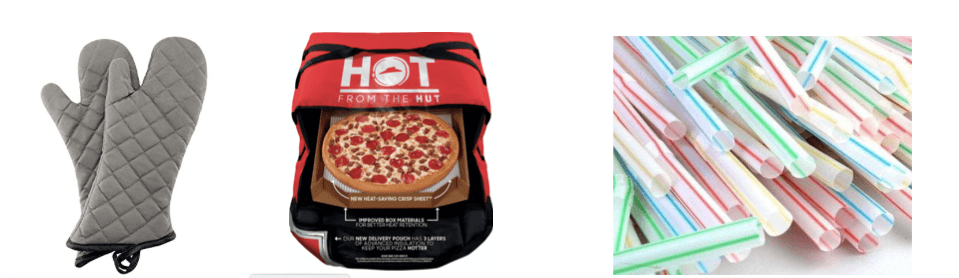
______________ are materials that RESIST the flow of heat or thermal energy.
Conductors
Insulators
18
Multiple Choice
These are examples of
Conductors
Insulators
19
Multiple Choice
These are examples of
Insulators
Conductors
20
Multiple Choice
Copper wire is a good example of a _____________.
Conductor
Insulator
Metal
Thermometer
21
22
23
24
25
Multiple Choice
In the situation illustrated, how will heat energy move? Heat energy will be transferred from –
the water to the hot plate by convection.
the water to the hot plate by conduction.
the hot plate to the water by conduction.
26
Multiple Choice
Heat will always transfer from the ___________ object to the ________ object.
The hottest object to the coolest object.
The coolest object to the hottest object.
The solid object to the liquid object.
27
Multiple Choice
In this example, explain the movement of thermal energy in the glass.
Heat is moving from the lemonade to the glass
Heat is moving from the lemonade to the ice
Cold is moving from the ice to the lemonade
28
29
Multiple Choice
Boiling Water
Conduction
Convection
Radiation
30
Multiple Choice
The way the heat is moving from the hot coffee is called...
convection
radiation
insulation
31
Multiple Choice
32
Multiple Choice
How does heat move?
from a warmer to a cooler object
from a cooler to a warmer object
toward a hot object
away from a cold object
33
Multiple Choice
How does heat move?
In many directions
from warm places to cooler places
from cold places to warm places
Both B and C
34
Multiple Choice
35
Multiple Choice
What is a transfer of heat energy by electromagnetic waves through space?
conduction
convection
radiation
36
Multiple Choice
37
38
39
Multiple Choice
If you have a big beaker of liquid at a 100 degrees and submerge a smaller beaker in it with water at 30 degrees, which could be a final temperature reached after a period of time?
More than 100 degrees
Less than 30 degrees
Between 100 and 30 degrees
40
41
42
Multiple Choice
Identify the energy transfer
kinetic to mechamical
light to thermal
potential to kinetic
electrical to magnetism
43
Multiple Choice
Identify the energy transfer
mechanical to sound
chemical to electrical
sound to mechanical
thermal to sound
44
Multiple Choice
_____________ energy is transferred from the man to the lawnmower as he pushes it.
Chemical
Sound
Radiant
Mechanical
45
Multiple Choice
Which type of energy transformation occurs when a flashlight shines?
chemical → thermal → electrical
chemical → electrical → light
thermal → chemical → light
46
Multiple Choice
What happens to the temperature if I add ice cubes to a glass of soda
The heat transfers from the coke to the ice
The heat transfers from the ice to the coke
47
48
49
50
Multiple Choice
How do wind turbines affect the environment.
Birds and bats may be injured.
Cuts the clouds which affects the water cycle.
Hits trees around them which blows up the wind turbine.
They are perfect for the environment.
51
Multiple Choice
This natural resource is...
nonrenewable wind
renewable solar
renewable wind
52
Multiple Choice
Which one of these is nonrenewable?
coal
wind
water
geothermal
53
Multiple Choice
Which example is NOT a renewable resource?
Trees
Wind
Solar
Uranium (Nuclear)
54
Multiple Choice
These are examples of a Fossil fuel - fuels produced by deposits of ancient plants and animals
wind,solar,geothermal
oil,coal,natural gas
wind,biofuels,geothermal
55
Multiple Choice
Energy conservation is
making efforts to use less energy
making efforts to use more energy
56
Multiple Choice
True or false: Two advantages of wind turbines is that they do not emit carbon dioxide and do not require sunlight
True
False
57
Multiple Choice
Energy can never be created or destroyed only transformed
True
False
58
Congrats you're all done! Review Virtual Lessons covering Energy for more study materials. Test is on Wednesday and Thursday.
Common Assessment 3 Review Lesson
Show answer
Auto Play
Slide 1 / 58
SLIDE

Similar Resources on Wayground
55 questions
Graphing Motion
Presentation
•
6th Grade
53 questions
SCIENCE YEAR 7 REVIEW PACKET HW
Presentation
•
6th Grade
53 questions
Science 6 Soil
Presentation
•
6th Grade
54 questions
Unit 1: SCAPE. Lesson. SS. 6th Grade
Presentation
•
6th Grade
51 questions
Rocks & Minerals
Presentation
•
6th Grade
54 questions
6th- Types and Reading graphs Day 3
Presentation
•
6th Grade
52 questions
Density lesson
Presentation
•
6th Grade
51 questions
Solar Radiation
Presentation
•
6th Grade
Popular Resources on Wayground
20 questions
STAAR Review Quiz #3
Quiz
•
8th Grade
20 questions
Equivalent Fractions
Quiz
•
3rd Grade
6 questions
Marshmallow Farm Quiz
Quiz
•
2nd - 5th Grade
20 questions
Main Idea and Details
Quiz
•
5th Grade
20 questions
Context Clues
Quiz
•
6th Grade
20 questions
Inferences
Quiz
•
4th Grade
19 questions
Classifying Quadrilaterals
Quiz
•
3rd Grade
12 questions
What makes Nebraska's government unique?
Quiz
•
4th - 5th Grade
Discover more resources for Science
19 questions
Introduction to Properties of Waves
Presentation
•
6th - 8th Grade
16 questions
Interactions within Ecosystems
Presentation
•
6th - 8th Grade
45 questions
Food Webs
Quiz
•
6th - 8th Grade
15 questions
Punnett Squares
Quiz
•
6th Grade
20 questions
Energy Transformations
Quiz
•
6th - 8th Grade
23 questions
Cartoon Trivia
Quiz
•
6th Grade
20 questions
Levels of Organization
Quiz
•
6th Grade
20 questions
Cells! Cell Theory and Characteristics of Eukaryotes/Prokaryotes
Quiz
•
6th Grade