Search Header Logo
8.3 Cell Transport-Diffusion

8.3 Cell Transport-Diffusion

Assessment

Presentation

Biology

9th Grade

Practice Problem

Medium

NGSS
HS-LS1-3, HS-PS1-5, MS-PS1-4

Standards-aligned

Created by

Chris Larson

Used 21+ times

FREE Resource

8 Slides • 22 Questions

1

8.3 Cell Transport-Passive Transport

media

2

Homeostasis

  • Constant Physical/Chemical State

  • What Your Body is Use To

  • Membrane Regulates Movement

3

Passive Diffusion

  • No Energy Required

  • High to Low Movement

  • Continuous Movement Until Net Movement is Equal*

  • No Special Channels Needed

media

4

Facilitated Diffusion

  • No Energy Needed

  • High to Low Movement

  • Go Through Special Channels

  • Molecules Too Large to Fit w/o Help

media

5

Multiple Choice

Diffusion is the movement of molecules from an area of _____ concentration to an ______ concentration

1

High, low

2

Low, high

3

Low, low

4

High, high

6

Multiple Choice

When does diffusion stop?

1

After a day and a night

2

When the particles are evenly spread out

3

When there are no particles left

4

When all the particles leave the system

7

Multiple Choice

What does a 'region with high concentration' mean?

1

An area with a SMALL number of particles

2

An area with a LARGE number of particles

3

An area with an UNEVEN number of particles

4

An area with no particles

8

Multiple Choice

The movement of particles is __________, resulting in the particles being spread throughout the container

1

Structured

2

In a straight line

3

Random

4

In curved, way motions

9

Multiple Choice

How do the particles move in diffusion?

1

From a region of low concentration to a region of high concentration

2

From a region of high concentration to a region of low concentration

3

From a region of low concentration to a region of low concentration

4

From a region of high concentration to a region of high concentration

10

Multiple Choice

What is a solvent

1

The one doing the dissolving

2

The substance dissoved in another substance

11

Multiple Choice

What is a solute?

1

A substance dissolved in another substance

2

the substance doing the dissolving

12

Multiple Choice

What is a difference between diffusion and facilitated diffusion?

1

movement of particles from [high] to [low]

2

a protein "helper"

3

movement of particles from [low] to [high]

4

energy

13

Multiple Choice

What is the movement of particles with the concentration gradient using protein "helpers"?

1

diffusion

2

facilitated diffusion

3

active transport

4

enzymatic reactions

14

Multiple Choice

An example of diffusion is

1

CO2 and O2 exchange in the lungs

2

Glucose transport

3

Na+ / K+ Pumps

4

Exocytosis

15

Multiple Choice

Passive Transport uses ____ energy

1

no

2

a lot of

3

a little bit of

4

some

16

Multiple Choice

Diffusion & Facilitated Diffusion are both __________ transport.

1

Passive

2

Active

3

Easy

4

Free

17

Multiple Choice

Diffusion & Facilitated Diffusion are both __________ transport.

1

Passive

2

Active

3

Easy

4

Free

18

Osmosis

  • Facilitated Diffusion of Water

  • Aquaporins-Protein Channels

  • Water Can Move But Solute Can't

  • Solute-Substance that Dissolves

  • Sugar/NaCl Would Be the Solute

  • Solids can't move thru membrane​

  • Solvent-The solute dissolves into It

  • Liquid* part of the solution​

  • Water is the Universal Solvent

media

19

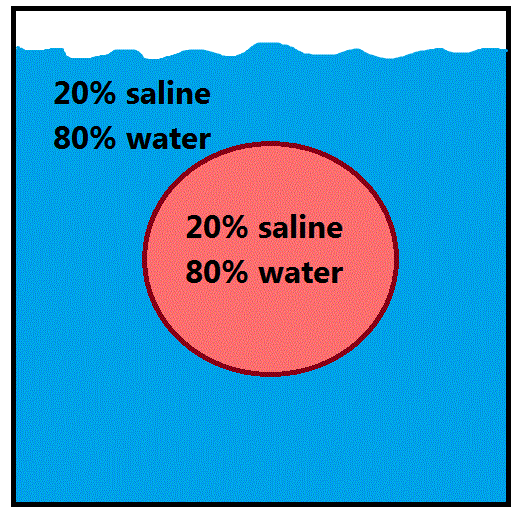
Isotonic

  • Water % is the same on the outside as the Water % inside

  • Zero NET Movement

  • Normal Cell Size

  • Optimal size for Cell Functions​

media

20

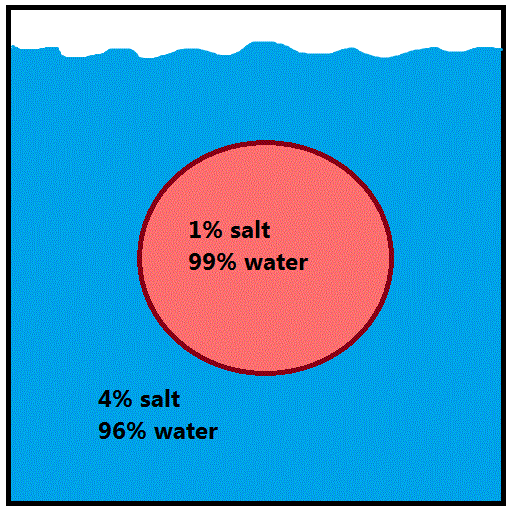
Hypotonic = Hippo Cheeks

  • Higher Water on Outside 95%

  • Lower Solute (NaCl) on Outside​ 5%

  • ​Lower Water on the Inside 20%

  • Higher Solute (NaCl) on Inside 80%

  • Water will enter the cell = Bigger Cell

    Only the Water can move NOT the NaCl

  • Bloated cells not as effective​

media

21

Hypertonic = Hyper Kid

  • Higher Water % on the Inside 85%

  • Lower Solute (NaCl) Inside 15%​

  • Lower Water % on the Outside 10%

  • Higher Solute (NaCl) Outside 90%​

  • Water will leave the cell = Shrink

  • Only the Water can move NOT NaCl

  • Dehydrated cells not as effective ​

media

22

Multiple Choice

Question image
The cells seem to be shriveled and dehydrated what type of solution are they most likely in?
1
Hypertonic
2
Isotonic
3
Hypotonic
4
Inertonic

23

Multiple Choice

Question image

Which cell is in an isotonic environment?

1

A

2

B

3

C

4

None of them are isotonic

24

Multiple Choice

Question image

Which cell is in a hypertonic environment?

1

A

2

B

3

C

4

None of them are hypertonic

25

Multiple Choice

Question image
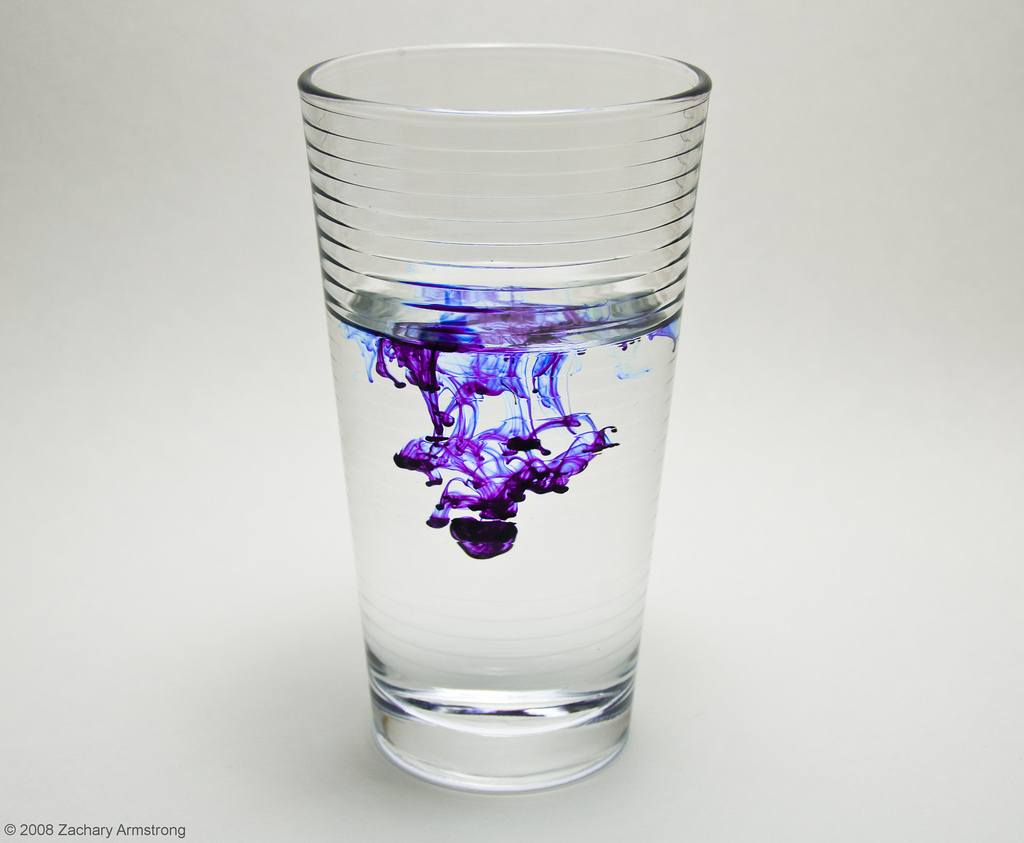
Where is there a low concentration of dye?
1
at the bottom of cup
2
in the color
3
at the top of cup 
4
no concenteraion gradient

26

Multiple Choice

During osmosis
1
water moves from high to low concentration
2
large or oddly shaped molecules move across a cell membrane
3
water moves when energy is used
4
proteins are built

27

Multiple Choice

Osmosis is the movement of _____ across a membrane.
1
food
2
energy
3
oxygen
4
water

28

Multiple Choice

Question image
A blood cell is placed into the jar, as seen. Where will the water go?
1
Into the cell
2
Out of the cell
3
Equally in & out - it's isotonic
4
The water is a lie

29

Multiple Choice

Question image

Where will the water go?

1

Into the cell

2

Out of the cell

3

Equally in & out - it's isotonic

4

There is no water

30

Multiple Choice

Question image

Where will the water go?

1

Into the cell

2

Out of the cell

3

Equally in & out - it's isotonic

4

There is no water

8.3 Cell Transport-Passive Transport

media

Show answer

Auto Play

Slide 1 / 30

SLIDE