

Compound and Simple Interest

Presentation
•
Mathematics
•
12th Grade
•
Practice Problem
•
Medium
Standards-aligned

Jane Halcrow
Used 175+ times
FREE Resource
5 Slides • 5 Questions
1
Compound and Simple Interest
2
Formula for Simple Interset

3

4
Compound Interest Formula
"n" is the new piece
Sometimes the question will tell you how many times. Other Times, you have to understand the terms
Annually = 1 time
Semi-annually = 2 times
Quarterly = 4 times
Monthly = 12 times

5

6
Multiple Choice

A bank is offering 2.5% simple interest on a savings account. If you deposit $5,000, how much interest will you earn in three years?
7
Multiple Choice

A bank is offering 7% annual compound interest on a savings account. If you deposit $1,500, how much interest will you earn in three years?
8
Multiple Choice

Sarah borrowed $18,000 for 4 years at an annual simple interest rate of 7%. What is the total amount she will repay for the car loan?
9
Multiple Choice
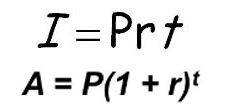
Ricco deposits $500 in an account that earns 2.5% interest compounded annually for 3 years. Wally deposits $500 in an account that earns 5.1% interest compounded annually for 2 years. Who will earn the greatest amount of interest?
10
Multiple Choice
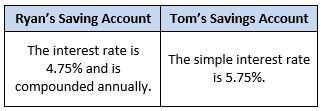
Both Ryan and Tom open their accounts with an initial deposit of $3500. They are both planning a six-year investment and will withdraw their money after 6 years. Who will have a greater balance in six years? How much more will that person have?
Compound and Simple Interest
Show answer
Auto Play
Slide 1 / 10
SLIDE

