

Joints (Musculoskeletal System)

Presentation
•
Science, Biology
•
6th - 9th Grade
•
Medium

Cameron Reid
Used 67+ times
FREE Resource
16 Slides • 10 Questions
1
Joints
7th Grade Science - Ms. Reid

2
Vocabulary Review
Joint - a place where two bones meet
Ligament - tissue which connects two bones
Tendon - tissue which connects a muscle to a bone

3
Multiple Choice
4
Multiple Choice
5
Cartilage
firm, smooth, white connective tissue
found at the ends of bones and in between joints
infants have a lot of cartilage, which is replaced by bone as they grow

6
Open Ended
7
Joint Classification
Immovable (fixed) - cranium
Slightly movable (cartilaginous) - vertebrae
Movable (synovial) - hip

8
Fill in the Blanks
9

types of movable (synovial) joints
10
Hinge Joints
allows bones to swing in 1 direction, only
similar to hinges on a door
Examples: knee, elbow, finger joints, toe joints, part of ankle

11

Like doors, hinge joints can move in 1 direction, such as left to right OR up and down.
12

This is the hinge joint in the knee.
13
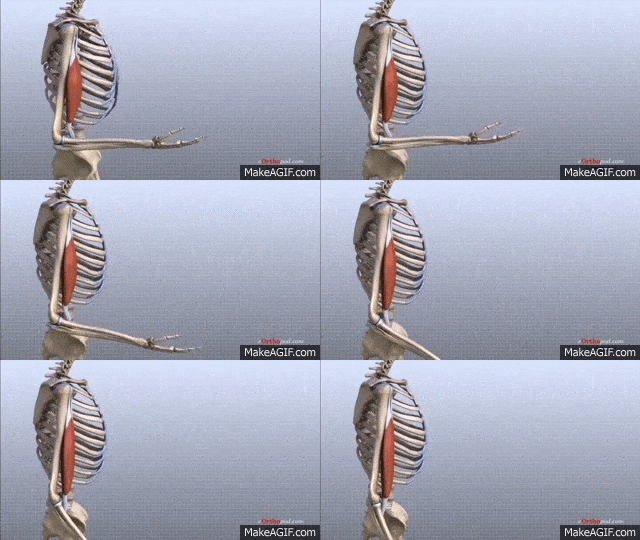
This is the hinge joint in the elbow.
14
Multiple Select
15
Ball-and-socket Joint
the most flexible joint
allows for almost all movement
ball-like end of a bone fits into a cup-like socket of another
Examples: shoulder, hip

16

How a ball-and-socket joint can move
17

Because it is a ball-and-socket joint, your hip can move in many ways.
18

Your shoulder can also move up & down, move left & right, twist, and pivot!
19
Multiple Select
20
Pivot Joint
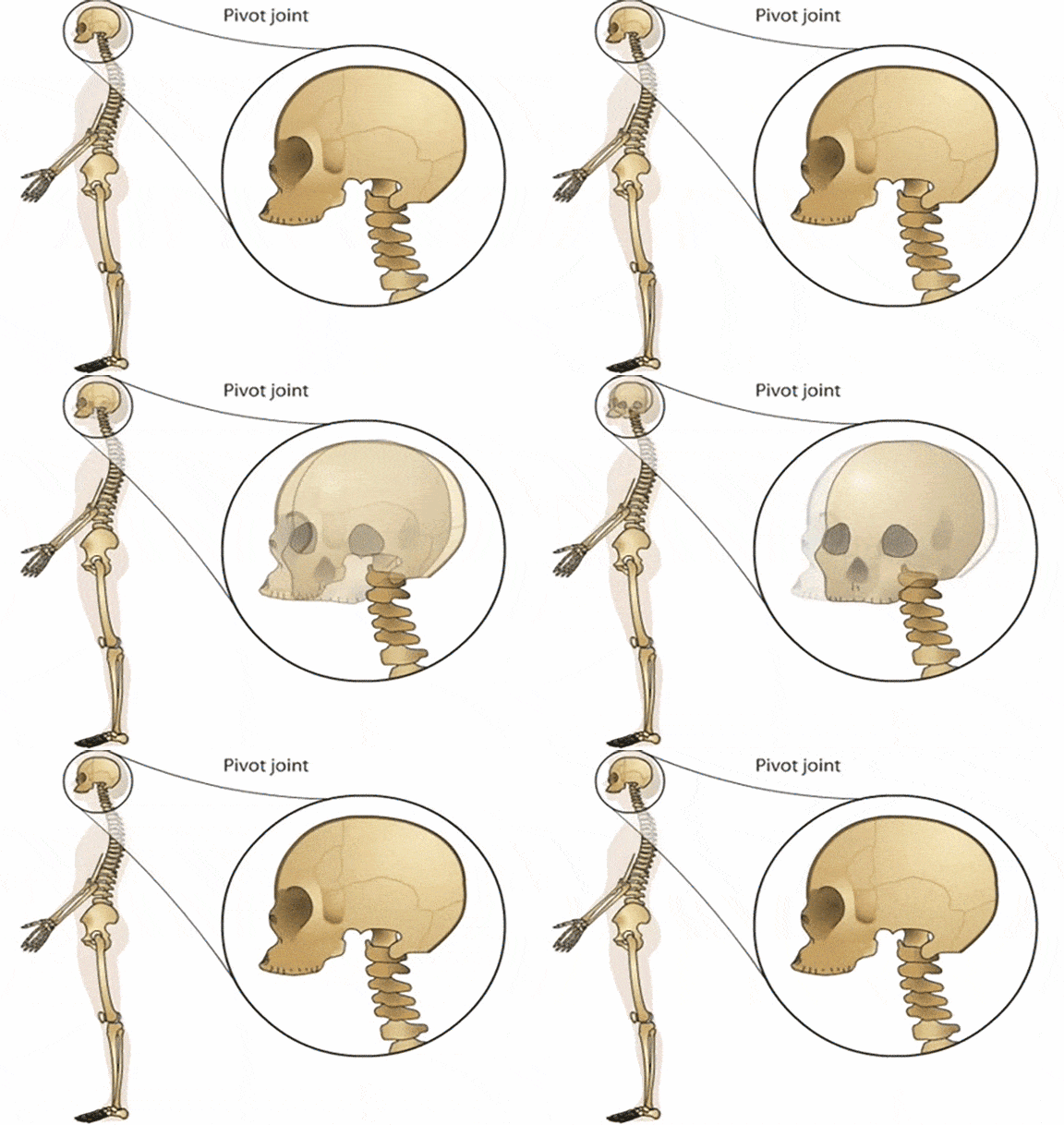
one bone twists around another
allows side-to-side or turning movement
Examples: top vertebrae meeting the cranium (neck)
21

How a pivot joint moves
22
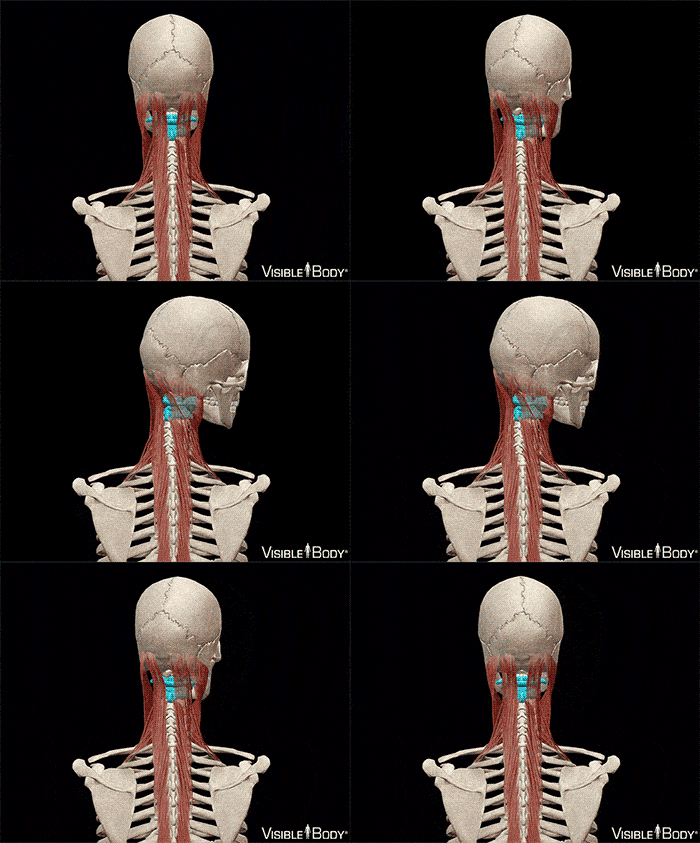
The top of the spine meets the cranium in a pivot joint.
23
Fill in the Blanks
24
Multiple Choice
25
Multiple Choice
26
Multiple Choice
Joints
7th Grade Science - Ms. Reid
Show answer
Auto Play
Slide 1 / 26
SLIDE

