Search Header Logo
11.1 Cell Growth, Division and Reproduction

11.1 Cell Growth, Division and Reproduction

Assessment

Presentation

•

Biology

•

9th Grade

•

Medium

•
NGSS.MS-LS3-2, NGSS.MS-LS1-2, CCSS.6.G.A.4

+8

Standards-aligned

Created by

Chris Larson

Used 6+ times

FREE Resource

10 Slides • 36 Questions

1

11.1 Cell Growth, Division and Reproduction

Slide image

2

Limits to Cell Size

  • Too Small = Lack of Organelles and Material to Perform the Job

  • Too Small = Traffic Issue Due to Lack of Room Needed to do Job

  • Too Big = Less Efficient Removing Waster and Getting Nutrients

  • Too Big = DNA Demand Too Great

  • Goldilocks = Homeostasis

Slide image

3

Cell's Volume = Demand/Material-Waste

  • Determines the Amount of Material Needed to Function (Big=More)

  • Determines the Amount of Waste the Cell Produces (Big=More)

  • Determines the Amount of Organelles a Cell Needs (Big=More)

  • Still Have Only 1 Nucleus so DNA Demand is High With Big Cells

  • Big Cells Produce Too Much Waste and Take Too Long to Remove It

  • Big Cells Need Too Much Material and Take Too Long to Get It

  • Small Cells Don't Have Enough Resources to be Productive

4

Cell's Surface Area = Supply / Absorption

  • Determine the Amount of Nutrients a Cell Can Get Into the Cell

  • Determine the Amount of Waste a Cell Can Get Rid Of

  • Volume (Demand) Increases Faster Than Surface Area (Supply)

  • Bigger Cells Can Absorb More BUT Demand is Greater Than Supply

  • Cells Need To Be Small BUT Not Too Small - Goldilocks Size

5

Multiple Choice

Which type of cell is easier to get Oxygen in and waste out?
1
small cell
2
large cell

6

Multiple Choice

Which type of cell will make greater demands for DNA?
1
small cell
2
large cell

7

Multiple Choice

What does not grow with the cell?
1
DNA
2
Vacoules
3
Mitochondria
4
None of the above

8

Multiple Choice

The amount of nutrients needed is determined by...
1
The cell's volume
2
The cell's surface area
3
The cell's Rough ER
4
The cell's Smooth ER

9

Multiple Choice

The absorption of nutrients is determined by...
1
The cell's volume
2
The cell's surface area
3
The cell's ribosomes
4
The cell's DNA

10

Multiple Choice

Which increases at a faster rate as cell size gets larger?
1
SA
2
V
3
The SA and V increase at the same rate

11

Multiple Choice

As a cell becomes larger

1

it places fewer demands on its DNA.

2

it does not need molecules for cell growth.

3

it is less efficient at moving waste materials across the cell membrane.

4

it is more efficient at moving nutrients across the cell membrane.

12

Multiple Choice

How would the time it takes for nutrients to reach the center of the cell change as a cell gets smaller?
1
It does not affect the rate of diffusion
2
increases
3
decreases

13

Multiple Choice

Which cells are more efficient at obtaining nutrients?

1

Small Cells

2

Medium Size Cells

3

Large Cells

4

X-Large Cells

14

Multiple Choice

Which cells are more efficient at obtaining nutrients?

1

Small Cells

2

Medium Size Cells

3

Large Cells

4

X-Large Cells

15

Calculating Volume

  • Length x Width x Height

  • Increases at faster rate than SA

  • Demand grows faster than supply

Slide image

16

Calculating Surface Area

  • Length x Width x Number of Sides

  • SA Grows Slower Than Volume

  • Supply Lags Behind Demand During Cell Growth

Slide image

17

Surface Area:Volume

  • Volume Increases Faster than SA

  • Demand V Greater than Supply SA

  • Want a Large SA:V Ratio 6:1

  • Smaller Cells are More Efficient

Slide image

18

Multiple Choice

Question image

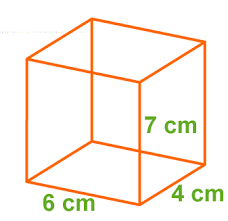
What is the volume of this cube?

1

168 cm2

2

168 cm3

3

17 cm3

4

168 mm3

19

Multiple Choice

What is the Volume of a Cube with side lengths of 7 meters?

1

49 cubic meters

2

343 cubic meters

3

28 cubic meters

4

42 cubic meters

20

Multiple Choice

Question image
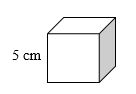
Find the surface area of the cube.
1
150 cm2
2
125 cm2
3
60 cm2
4
30 cm2

21

Multiple Choice

Question image
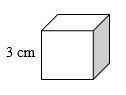
Find the surface area of this cube.
1
18 sq cm
2
36 sq cm
3
54 sq cm
4
60 sq cm

22

Multiple Choice

Question image
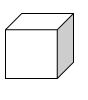
How many faces are on a cube?
1
3
2
4
3
5
4
6

23

Multiple Choice

The surface area of a cube whose edge equals to 3cm is:

1

62 sq.cm

2

30 sq.cm

3

54 sq.cm

4

90 sq.cm

24

Multiple Choice

High Surface area to volume ratio allows cells to do what quickly?
1
Move materials around inside the cell
2
Move materials in and out of the cell 
3
Communicate to other cells
4
Divide

25

Multiple Choice

How can surface area (SA) be increased? 
1
Grow larger
2
Divide into smaller pieces

26

Multiple Choice

Define Surface area
1
The total area on the surface of an object
2
Length X Width 
3
6 X (length X width)
4
Add up the sides and divide by 4

27

Multiple Choice

Question image

Which cells are more efficient at obtaining nutrients?

1

Small Cells

2

Medium Size Cells

3

Large Cells

4

X-Large Cells

28

Multiple Choice

Question image
Microvilli are tiny projections that extend off the cell to increase the Surface Area.  What purpose might that serve? 
1
Increased absorption
2
Better communication among cells
3
Maintain homeostasis 
4
Decreased oxygen use

29

Multiple Choice

Question image
This image shows how materials move into various sized cells in a given amount of time.... why does one square cell have more pink coloring than the others? 
1
The surface area was too larger to get through
2
The volume of the other cells was too large for the dye to get through
3
There was not enough surface area for the dye to get through
4
The volume was too low for the dye to stay in the square

30

Multiple Choice

Question image

How can surface area (SA) be increased?

1

Grow larger

2

Divide into smaller pieces

31

Multiple Choice

Question image

How can surface area (SA) be increased?

1

Grow larger

2

Divide into smaller pieces

32

Cell Division...

  • ...Increases the Surface Area:Volume Ratio = More Efficient Cell

  • ...Efficient Exchange of Materials and Removal of Waste

  • ...Supply (Surface Area) Can Meet Demand (Volume)

  • ...One Nucleus = 1 Set of Instructions for the Cell

  • ...Reduces the Number of Organelles That Need Instructions

  • ...Decreases DNA Demand = No Information Overload

33

Multiple Choice

The process by which a cell divides into two daughter cells is called

1

cell division

2

metaphase

3

interphase

4

mitosis

34

Multiple Choice

What is information overload?

1

Overload of information

2

DNA grows to large for the cell

3

DNA goes super RNA mode and gets too buff to be contained in the cell so it has to burst out and causes continuous internal combustion

4

Cell grows too large for DNA

35

Multiple Choice

What is information overload?

1

Overload of information

2

DNA grows to large for the cell

3

DNA goes super RNA mode and gets too buff to be contained in the cell so it has to burst out and causes continuous internal combustion

4

Cell grows too large for DNA

36

Asexual Reproduction

  • Identical Offspring From 1 Parent

  • Produce Large Numbers Quickly

  • Simple, Efficient and Effective

  • No Mixing of Genes=Less Diversity

  • Diversity Comes From Mutations

  • Better For Stable Environments

Slide image

37

Sexual Reproduction

  • Requires 2 Parents to Mix Genes

  • Genetically Diverse From Parents

  • Mom Gives 1/2 DNA Dad Gives 1/2

  • Allele Frequency Can Change

  • Better For Change Environments

  • Increased Diversity = Better Odds of Surviving Changing Conditions

Slide image

38

Multiple Choice

Which statement best describes the process of asexual reproduction?
1
new organisms are usually genetically identical to the parent
2
the reproductive cycle involves the production of games
3
nuclei of sex cells fuse to form a zygote
4
it involves the production of genetic copies 

39

Multiple Choice

How does the DNA of the offspring formed from asexual reproduction compare to the parent?

1

none of the DNA is transferred to the offspring

2

half of the DNA is transferred to the offspring

3

the DNA of the offspring is identical to the DNA of the parent

4

none of these are correct

40

Multiple Choice

How does the DNA of the offspring formed from asexual reproduction compare to the parent?

1

none of the DNA is transferred to the offspring

2

half of the DNA is transferred to the offspring

3

the DNA of the offspring is identical to the DNA of the parent

4

none of these are correct

41

Multiple Choice

Produce many offspring in short period of time

1

asexual reproduction

2

sexual reproduction

42

Multiple Choice

Which is NOT an advantage of asexual reproduction?

1

simple and efficient

2

produces large number of offspring quickly

3

increases genetic diversity

4

requires one parent

43

Multiple Choice

The production of genetically identical offspring from a single parent

1

asexual reproduction

2

sexual reproduction

44

Multiple Choice

Which type of reproduction requires more time?
1
Sexual
2
Asexual
3
A and B
4
None of the above

45

Multiple Choice

Which type of reproduction makes a Diverse Offspring

1

Sexual

2

Asexual

46

Multiple Choice

Which type of reproduction makes a Diverse Offspring

1

Sexual

2

Asexual

11.1 Cell Growth, Division and Reproduction

Slide image

Show answer

Auto Play

Slide 1 / 46

SLIDE