- Resource Library
- Science
- Physics
- Inclined Plane
- Test Review Distance Time, Speed Time, And Inclined Planes

Test review distance-time, speed-time, and inclined planes
Presentation
•
Science
•
6th Grade
•
Practice Problem
•
Medium
Standards-aligned
Leticia Diaz
Used 10+ times
FREE Resource
27 Slides • 40 Questions
1
Test review distance-time, speed-time, and inclined planes
2
3
4
5
6
7
8
9
10
11
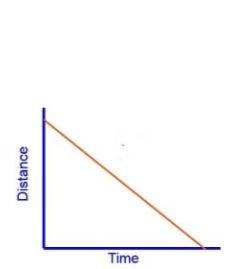
Multiple Choice
In this distance-time graph, what is the graph showing?
Return to start (at a constant speed)
Constant speed away from start
At rest (stationary)
Acceleration
12
Multiple Choice
In this distance-time graph, what is the graph showing?
Constant speed away from start
At rest (stationary)
Acceleration
Deceleration
13
Multiple Choice
In this distance-time graph, what is the graph showing?
Constant high speed
Stopped (at rest)
Acceleration
Deceleration
14
Multiple Choice
In the distance-time graph, what is happening at A?
Stationary
Accelerating
Slower steady speed; moving away from the starting position
Steady speed; returning to start position
15
Multiple Choice
In the distance-time graph, during which segment is the object stationary?
A
B
C
D
16
Multiple Choice
In this distance-time graph, the motion of the vehicle is
Increasing speed
At a constant speed
Decreasing speed
Stationary
17
Multiple Choice
In this distance-time graph, which line represents an object moving at a slower speed?
A
B
18
Multiple Choice
In this distance-time graph, which runner stopped for a rest?
Albert
Bob
Charlie
19
Multiple Choice
In this distance-time graph, which line represents an object moving at a faster speed?
A
B
20
Multiple Choice
In this distance-time graph, this graph demonstrates an object that is -
Increasing speed (acceleration)
At a constant speed
Decreasing speed
Stationary
21
Multiple Choice
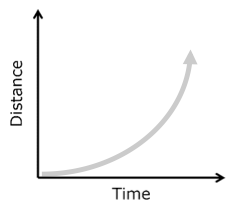
In this distance-time graph, what is this line of this graph showing?
moving away from starting point at a constant speed
moving back towards the starting point at a constant speed
acceleration (getting faster)
deceleration (getting slower)
22
Multiple Choice
In this distance-time graph, what is happening at E?
Stationary
Accelerating
Fast steady speed; moving away from the starting position
Returning to start position
23
Multiple Choice
In this distance-time graph, how do you know that A to B had a faster constant velocity than C to D?
It was not as steep
The AB line was steeper
The CD line was curved
24
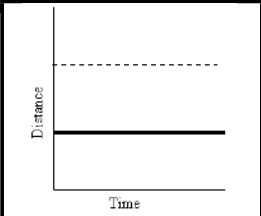
Multiple Choice
In this distance-time graph, the line with the dashes is traveling at a
faster speed
slower speed
25
Multiple Choice
In this distance-time graph, what does this graph represent?
Constant speed
Acceleration
Not moving (at rest)
26
Multiple Choice
In this distance-time graph, what is this object doing?
moving at a constant speed away from start and then stops
increasing speed and then stops
decreasing speed and then constant speed
moving at a constant speed away from start and then constant speed
27
Multiple Choice
Match the description to the correct distance-time graph:
"The car is coming back."
28
Multiple Choice
Match the description to the correct distance-time graph:
"The car is stopped."
29
30
31
32
33
34
35
36
Multiple Choice
In this speed-time graph, what is the graph showing?
slowing down (deceleration)
Constant speed
Acceleration
37
Multiple Choice
In this speed-time graph, what is this graph showing?
Fast constant speed
Decelerating
At rest
Accelerating
38
Multiple Choice
In the speed-time graph, identify the movement of the vehicle.
Accelerating
At rest (stopping)
Constant speed
Decelerating
39
Multiple Choice
In this speed-time graph, what is it showing?
Acceleration
Slow constant speed
Deceleration
At rest
40
Multiple Choice
In this speed-time graph, describe the motion between 10 and 15 seconds?
constant speed
at rest
acceleration
deceleration
41
Multiple Choice
In this speed-time graph, during segment Y, the object is -
Increasing speed
Decreasing speed
Stationary (at rest)
Moving at constant speed
42
Multiple Choice
In this speed-time graph, during which segment is the object travelling at constant speed?
X
Y
Z
43
Multiple Choice
In this speed-time graph, during which segment is the object decreasing speed?
X
Y
Z
44
Multiple Choice
In this speed-time graph, during which segment is the object increasing speed?
X
Y
Z
45
Multiple Choice
In this speed-time graph, the motion of the vehicle is
At a constant speed
Increasing speed (acceleration)
Decreasing speed (deceleration)
Stationary (at rest)
46
Multiple Choice
In this speed-time graph, the motion of the vehicle is
At a constant speed
Increasing speed
Decreasing speed
at rest (stationary)
47
Multiple Choice
In this speed-time graph, what happened during B to C point?
deceleration
constant speed
at rest
acceleration
48
Multiple Choice
In this speed-time graph, what happened during C to D point?
not moving
increasing speed at a constant rate
moving at a constant speed
moving at 0 m/s2 acceleration
49
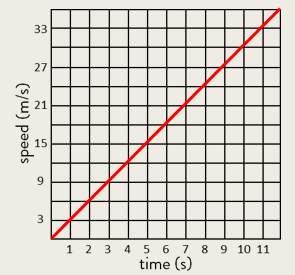
Multiple Choice
In this speed-time graph, what is represented by this graph?
constant speed
not moving
speed increasing
speed increasing at a constant rate
50
Multiple Choice
In this speed-time graph, what happened during E to F point?
not moving
increasing speed at a constant rate
constant speed
acceleration
51
Multiple Choice
In this speed-time graph, what is happening in this graph from point A to B?
The object is accelerating.
The object is not moving.
The object is decelerating.
The object is moving at a constant speed.
52
53
54
55
56
57
58
59
60
61
62
Multiple Choice
What is a disadvantage of using a longer inclined plane to lift a heavy object?
The object must be moved a greater distance.
It takes less effort to move the object.
Many objects are difficult to lift straight up.
Heavy object usually take up more space.
63
Multiple Choice
Which inclined plane requires the most effort to push the ball to the top?
64
Multiple Choice
What happens as the incline increases in distance?
effort increases
effort decreases (less effort with a longer inclined plane)
effort stays the same
65
Multiple Choice
Why is an inclined plane an example of a simple machine?
because it is a machine
because it makes work harder
because it makes the work easier
because it sounds cool
66
Multiple Choice
How does distance change the effort when using an inclined plane?
as distance increases, effort decreases
as distance decreases, effort decreases
as distance increases, effort increases
nothing, they both stay the same
67
Multiple Choice
What is a disadvantage of using a longer inclined plane to lift a heavy object?
The object must be moved a greater distance.
It takes less effort to move the object.
Many objects are difficult to lift straight up.
Heavy object usually take up more space.
Test review distance-time, speed-time, and inclined planes

Show answer
Auto Play
Slide 1 / 67
SLIDE

Similar Resources on Wayground
56 questions
Compression or Longitudinal Waves Lesson
Presentation
•
6th Grade
56 questions
Parts of a Wave: Transverse and Longitudinal Waves
Presentation
•
6th Grade
64 questions
Simple Machines and Efficiency Review
Presentation
•
6th Grade
60 questions
Ocean Currents w/Questions for Interactive Notebook
Presentation
•
7th Grade
64 questions
5.7AB Teacher Presentation Force
Presentation
•
5th Grade
60 questions
Pronouns
Presentation
•
6th Grade
63 questions
8th-T3 L2: Earth's Movement in Space
Presentation
•
6th - 8th Grade
56 questions
Longitudinal vs Transverse Waves
Presentation
•
6th Grade
Popular Resources on Wayground
10 questions
Fire Safety Quiz
Quiz
•
12th Grade
20 questions
Equivalent Fractions
Quiz
•
3rd Grade
20 questions
Main Idea and Details
Quiz
•
5th Grade
20 questions
Context Clues
Quiz
•
6th Grade
20 questions
Inferences
Quiz
•
4th Grade
36 questions
6th Grade Math STAAR Review
Quiz
•
6th Grade
19 questions
Classifying Quadrilaterals
Quiz
•
3rd Grade
12 questions
What makes Nebraska's government unique?
Quiz
•
4th - 5th Grade
Discover more resources for Science
19 questions
Introduction to Properties of Waves
Presentation
•
6th - 8th Grade
16 questions
Interactions within Ecosystems
Presentation
•
6th - 8th Grade
20 questions
Rocks and The Rock Cycle
Quiz
•
6th Grade
15 questions
Punnett Squares
Quiz
•
6th Grade
20 questions
Newton's Laws of Motion
Quiz
•
6th Grade
20 questions
Cells! Cell Theory and Characteristics of Eukaryotes/Prokaryotes
Quiz
•
6th Grade
16 questions
Inheritance and Genetic Variation
Presentation
•
6th - 8th Grade
10 questions
Human Impact #2
Quiz
•
6th - 8th Grade