

Search Header Logo
Color Variation in Rock Pocket Mice Over Time (Day 1)

Color Variation in Rock Pocket Mice Over Time (Day 1)

Assessment

Presentation

Science

9th - 12th Grade

Easy

Created by

Christine Demers

Used 3+ times

FREE Resource

16 Slides • 2 Questions

1

Let's warm up for class!


Read the scenario on the next slide and decide who you agree with.
Slide image

2

Changing Environment

Two friends were talking about adaptations. They each had different ideas about what happens when an organism’s environment changes so that it is very different from the organism’s existing environment.


This is what they said:

·      Leslie: “I don’t think individual organisms can adapt to changes in their environments.”

·      Jordan: “I think individual organisms can adapt to changes in their environments if they need to.”

Whom do you most agree with? Choose your answer on the next slide!! Be prepared to explain why you agree.

3

Poll

Who do you agree with ?

LESLIE: “I don’t think individual organisms can adapt to changes in their environments.”

JORDAN: “I think individual organisms can adapt to changes in their environments if they need to.”

4

Open Ended

Explain why you agreed with Leslie or Jordan.

5

Explanation to "Changing Environment


  • Leslie has the best idea "I don't think individual organism can adapt to changes in their environments"

  • Organisms can adapt over time, but individuals do not INTENTIONALLY adapt to change during their lifetimes.

  • Either they are BORN ADAPTED, or they may die if they are not born with the genetic variation that will help them ADAPT to the change.

  • This is NATURAL SELECTION

6

Mini Lesson

"Color Variation in Rock Pocket Mouse"


The next few slides will introduce you to today's activity.


Observations, Collecting Data, Making Predictions.

7

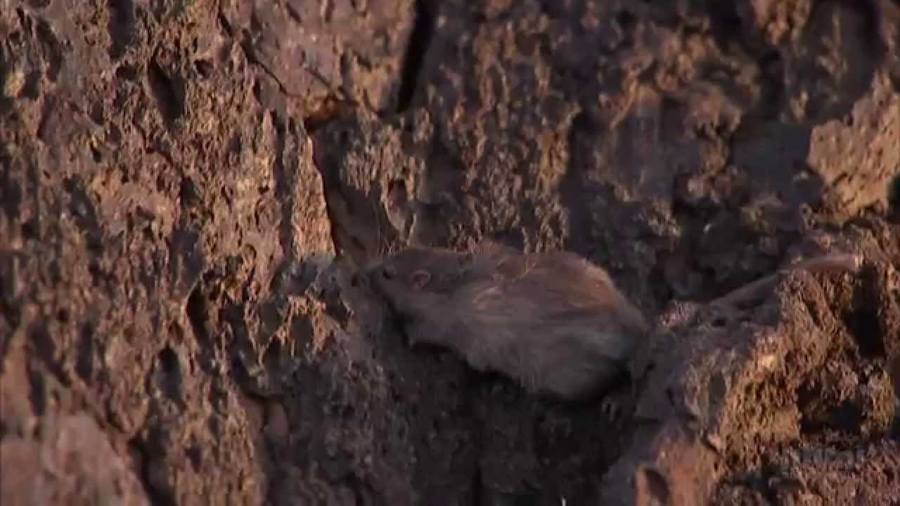
Rock Pocket Mouse Lab

"Color Variation over time in Rock Pocket mouse populations."
Slide image

8

Introduction

A typical rock pocket mouse is about 170 millimeters long from its nose to the end of its tail, shorter than an average pencil. And at just 15 grams, this tiny mouse weighs about as much as a handful of paper clips.


Rock pocket mice, however, have had an enormous impact on science.

What’s so special about them?  


9

Two Varieties

You can find populations of rock pocket mice all over the Sonoran Desert in the southwestern United States. There are two common varieties of these mice — a light-colored variety and a dark-colored variety.

Slide image

10

Two Substrates

There are also two major colors of substrate, or surface materials, that make up the desert floor. Most of the desert is covered in light-colored sand and rock. However, there are also patches of dark volcanic rocks that formed from cooling lava flows. These patches of dark-colored substrate are often separated by several kilometers of light colored substrate.  

Slide image

11

Pre-Lab Activity

The illustrations on the next slides represent snapshots of rock pocket mouse populations. Each quadrant illustration shows the color variation at two different locations, A and B, at a particular moment in time. (Note: The images are out of order.) 


Count the number of light-colored and dark-colored mice present at each location at each moment in time. Record your counts in a chart

12

Card 1

Count the mice of each color variety in each location and enter on data sheet.

Slide image

13

Card 2

Count the mice of each color variety in each location and enter on data sheet.

Slide image

14

Card 3

Count the mice of each color variety in each location and enter on data sheet.

Slide image

15

Card 4

Count the mice of each color variety in each location and enter on data sheet.

Slide image

16

Put the cards in Order

2. Rank the illustrations what you think is the correct order from oldest to most recent. 


3. Explain how you decided which illustration represents the most recent rock pocket mouse population and why you positioned the others in the sequence as you did.


(Record on your data sheet)

17

Student Activity

  • Go to Unified Classroom Tab "Rock Pocket Mouse Lab" in Class Pages.

  • Click on the Pictures of the Mouse Populations to make observations on all 4 cards

18

End of Day One

  • Observations

  • Collect Data (counting the mouse populations)

  • Record data on your Data sheet

  • Put cards in the order that you think they occurred. (Oldest to most recent)

Let's warm up for class!


Read the scenario on the next slide and decide who you agree with.

Slide image

Show answer

Auto Play

Slide 1 / 18

SLIDE
