Search Header Logo
Respiratory System

Respiratory System

Assessment

Presentation

Science

11th Grade

Practice Problem

Medium

NGSS
HS-LS2-5, MS-LS1-3, HS-LS1-3

+1

Standards-aligned

Used 22+ times

FREE Resource

24 Slides • 16 Questions

1

Respiratory System
Slide image

2

Slide image

3

Slide image

4

Slide image

5

Multiple Choice

Question image
When you breathe, your lungs take in ___ and remove ___. 
1
air/oxygen
2
oxygen/carbon dioxide 
3
carbon dioxide/waste 
4
waste/air 

6

Slide image

7

Multiple Choice

Question image

NUMBER 2:

1

Pharynx

2

Bronchi

3

Alveoli

4

Lungs

8

Slide image

9

Multiple Choice

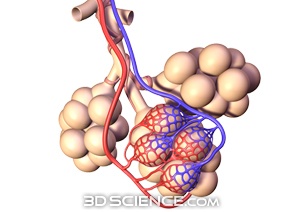
What are the sacs called that exchange carbon dioxide for oxygen in your blood?

1

Alvioli

2

Ravioli

3

Tavoli

4

Stromboli

10

Multiple Choice

What is another name for your windpipe?

1

Trachea

2

Sternum

3

Diaphram

4

Carotid

11

Slide image

12

Multiple Choice

Inspiration is produced by a _____________ in the pressure in the thoracic cavity and in the air passages of the lungs.

1

decrease

2

increase

3

consistency

13

Multiple Choice

Inspiration occurs as the volume of the thoracic cavity

1

decreases

2

increases

3

stays the same

14

Slide image

15

Slide image

16

Slide image

17

Slide image

18

Multiple Choice

In the process of breathing, during what stage does the movement of the diaphragm enlarge the thoracic cavity?
1
Internal respiration
2
External respiration
3
Inspiration
4
Experation

19

Multiple Choice

What structure is a passageway for both food and air?
1
Pharynx
2
Bronchus
3
Trachea
4
Larynx

20

Slide image

21

Slide image

22

Slide image

23

Slide image

24

Slide image

25

Slide image

26

Slide image

27

Slide image

28

Multiple Choice

respiratory volume that moves into & out of the lungs, during quiet/ passive breathing; approximately 500 ml

1

Tidal Volume (TV)

2

Inspiratory Reserve Volume (IRV)

3

Expiratory Reserve Volume (ERV)

4

Residual Volume (RV)

29

Multiple Choice

•the amount of air that can be inspired forcibly (2100 -3200 mL)

1

Tidal Volume (TV)

2

Inspiratory Reserve Volume (IRV)

3

Expiratory Reserve Volume (ERV)

4

Residual Volume (RV)

30

Multiple Choice

•the amount of air that can be evacuated from the lungs after tidal expiration…forcibly (approx. 1200 ml).

1

Tidal Volume (TV)

2

Inspiratory Reserve Volume (IRV)

3

Expiratory Reserve Volume (ERV)

4

Residual Volume (RV)

31

Multiple Choice

– the remaining air in the lungs (~1200ml), even after strenuous expiration that helps keep the alveoli calm & prevents the lungs from collapsing

1

Tidal Volume (TV)

2

Inspiratory Reserve Volume (IRV)

3

Expiratory Reserve Volume (ERV)

4

Residual Volume (RV)

32

Multiple Choice

•total amount of air that can be inspired after tidal expiration (i.e. IC = TV + IRV)

1

Inspiratory Capacity (IC)

2

Functional Residual Capacity (FRC)

3

Vital Capacity (VC)

4

Total Lung Capacity (TLC)

33

Multiple Choice

represents the amount of air remaining in the lungs AFTER tidal expiration (i.e. FRC = ERV + RV)

1

Inspiratory Capacity (IC)

2

Functional Residual Capacity (FRC)

3

Vital Capacity (VC)

4

Total Lung Capacity (TLC)

34

Multiple Choice

total amount of exchangeable air; both forced & passive inspiration & expiration

(approx. 4800 ml)

1

Inspiratory Capacity (IC)

2

Functional Residual Capacity (FRC)

3

Vital Capacity (VC)

4

Total Lung Capacity (TLC)

35

Multiple Choice

sum of ALL lung volumes (approx. 6000mL)

1

Inspiratory Capacity (IC)

2

Functional Residual Capacity (FRC)

3

Vital Capacity (VC)

4

Total Lung Capacity (TLC)

36

Slide image

37

Slide image

38

Slide image

39

Slide image

40

Slide image

Respiratory System

Slide image

Show answer

Auto Play

Slide 1 / 40

SLIDE