

7.3 – The Senses

Presentation
•
Biology
•
9th Grade
•
Practice Problem
•
Medium

Nour Babaa
Used 23+ times
FREE Resource
23 Slides • 15 Questions
1
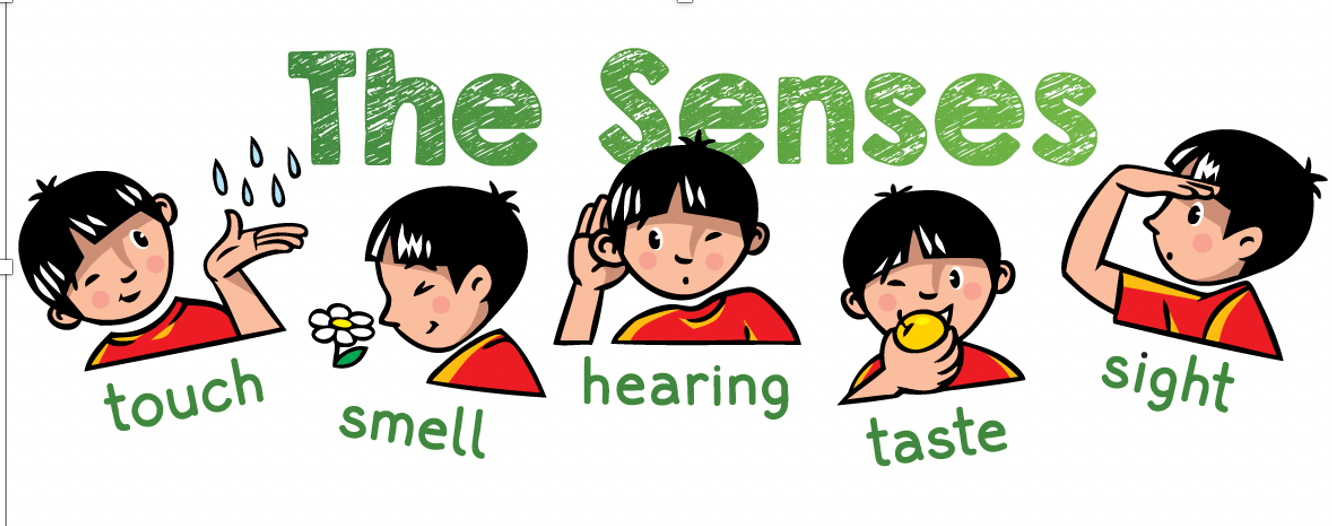
7.3 – The Senses
2
3
4
Sense Organ Receptors

5
6
Multiple Choice
7
Taste and Smell
Signals from these receptors work together to create a combined effect in the brain.
Try eating while holding your nose. You will find that your food loses much of its flavor.

8
Sight
Light first enters the eye through a transparent, yet durable, layer of cells called the cornea.
The cornea helps to focusthe light through an opening called the pupil.
The size of the pupil is regulated by muscles in the iris the colored part of the eye.

9
Multiple Choice
10
Multiple Choice
11
Multiple Choice
12
Sight
Behind the iris is the lens, which inverts the image and projects it on to the retina.
The image travels through the vitreous humor, which is a colorless, gelatin-like liquid between the lens and the retina.
The retina contains numerous receptor cells called rods and cones.

13
Sight
Rods are light-sensitive cells that are excited by low levels of light.
Cones function in bright light and provide information about color to the brain.
These receptors send action potentials to the brain via the neurons in the optic nerve
The brain then interprets the specific combination of signals received from the retina and forms a visual image.

14
Multiple Choice
15
Multiple Choice
16
Multiple Choice
17
18
Hearing and Balance
Hearing and balance are the two major functions of the ear.
specialized receptors in the ear can detect both the volume and the highness and lowness of sounds.
Canals in the inner ear are responsible for your sense of balance, or equilibrium

19
Hearing
Sound waves cause particles in the air to vibrate .
The vibration causes the eardrum - at the end of the ear canal - to vibrate
These vibrations travel through three bones in the middle ear: the malleus, the incus and the stapes.

20
Hearing
As the stapes vibrates, it causes the oval window - a membrane that separates the middle ear from the inner ear - to move back and forth.
In the inner ear, a snail-shaped structure called the cochlea is filled with fluid and lined with tiny hair cells.
Vibrations cause the fluid inside the cochlea to move like a wave against the hair cells.

21
Hearing
The hairs cells respond by generating nerve impulses in the auditory nerve and transmitting them to the brain.

22
Multiple Choice
23
Multiple Choice
24
Multiple Choice
25
Multiple Choice
26
27
Balance
The inner ear also contains organs for balance, including three semicircular canals.
Semicircular canals Transmit information about body position and balance to the brain
The three canals are positioned at right angles to one another, and they are fluid-filled and lined with hair cells.

28
Balance
When the position of your head changes, fluid within the semicircular canals moves.
This causes the hair cells to bend, which in turn sends nerve impulses to the brain.
The brain then is able todetermine your position and whether your body is still or in motion.

29
Multiple Choice

Some rides at amusement parks cause a person to become dizzy when the ride stops. Which structure in the diagram is most likely involved with the dizzy feeling?
30
Multiple Choice
31

32
Types of sensory receptors in the skin (temperature, pressure, pain)
Different sensory receptors in the body respond to touch, temperature, and pain.
All of these receptors are found in your skin, but some are also found in other areas.

33
Types of sensory receptors in the skin (temperature, pressure, pain)
Thermo-receptors: aresensory cells that respond to heat and cold
Pressure receptors: at least seven types of sensory receptors that respond to different levels of pressure

34
Types of sensory receptors in the skin (temperature, pressure, pain)
Pain receptors: are found throughout the body, respond to physical injuries like cutting or tearing, as well as to chemicals released during infection or inflammation.

35
Multiple Choice
36
Multiple Choice
37
Different taste receptors and their locations on the tongue
There are five different types of taste these receptors can detect which are recognized:
1.salt,
2.sweet,
3.sour,
4.Bitter
5.umami.

38
Different taste receptors and their locations on the tongue
Eachtype of receptor has a different manner of sensory transduction: that is, of detecting the presence of a certain compound and starting an action potential which alerts the brain.

7.3 – The Senses
Show answer
Auto Play
Slide 1 / 38
SLIDE

