

Chapter 4: Life-forms and their adaptations review

Presentation
•
Science
•
3rd Grade
•
Practice Problem
•
Easy
+2
Standards-aligned

Bianca Ramos
Used 5+ times
FREE Resource
14 Slides • 11 Questions
1
Chapter 4: Life-forms and their adaptations review
Teacher Bianca Ramos
March 16th, 2021
2
3
Multiple Choice
4
Multiple Choice
5
Multiple Choice
6
Behavioral adaptation
This refers to changes in the behavior (how they act or what they do) that help life-forms to survive. Example the chimpanzee uses twigs as tools. Birds migrate when it's cold. Possums play dead when they feel in danger. Here is a picture of the chimpanzee.

7
Behavioral adaptation
This refers to changes in the behavior (how they act or what they do) that help life-forms to survive. Example the possum playing dead because it feels in danger.

8
Morphological Adaptation
These are changes to life-forms’ external structures. That’s how they are able to blend into their surroundings, imitate the shapes, and copy the colors of other animals and plants. Example The woodpecker’s beak enables it to get food.

9
Morphological Adaptation
These are changes to life-forms’ external structures. That’s how they are able to blend into their surroundings, imitate the shapes, and copy the colors of other animals and plants. Example Desert foxes have large ears to help them with heat radiation.

10
Physiological adaptation
These are changes that take place inside organisms. For example, these adaptations allow some organisms to regulate their temperature and others to save water. Example Whales’ livers have adapted to metabolize excess salt in sea water.

11
Physiological adaptation
These are changes that take place inside organisms. For example, these adaptations allow some organisms to regulate their temperature and others to save water. Example Snakes have venom to protect themselves from attacks.

12
Multiple Choice
13
Multiple Choice
14
Mimicry
A morphological adaptation that occurs when plants and animals imitate the shape of other organisms. They are copying other organisms. For example, the bee orchid. A plant that imitates the shape of a bee to call the attention of bees.

15
Mimicry
A morphological adaptation that occurs when plants and animals imitate the shape of other organisms. They are copying other organisms. For example, the leaf-tailed gecko, it looks like a leaf so that it can hide from predators.

16
Camouflage
A morphological adaptation that enables organisms to blend into their surroundings. Their colors help them "disappear" where they are. For example, the flowering stone, the leaves look like stones and it help the plant blend into its surroundings.

17
Camouflage
A morphological adaptation that enables organisms to blend into their surroundings. Their colors help them "disappear" where they are. For example, the snow leopard that can hide and blend with the snow.

18
Multiple Choice
19
Multiple Choice
20
Multiple Choice
21
Hibernation
Hibernation is a physiological adaptation. Physiological adaptations enable (let) animals adapt to the temperature of the place they live.
The brown bears get through the winter by retiring to their dens (the shelter of a wild animal) to reduce their physical activity and save energy.
Hibernation is a state similar to sleep. Animals conserve their energy when they hibernate.
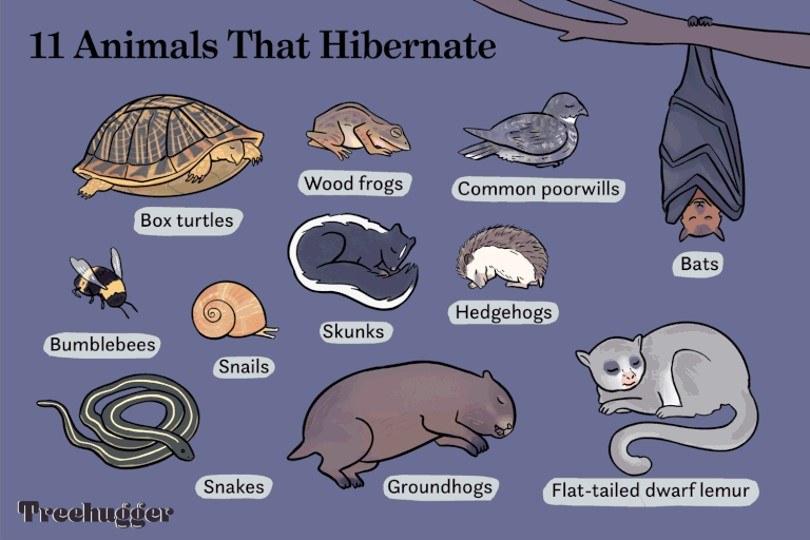
22
Aestivation
The state of aestivation is similar to hibernation and allows animals to conserve energy while they wait for the temperature to drop and the humidity to rise.
Animals, like snails, that have to survive in hot, or dry conditions go into the state of aestivation. They hide in their shells to protect themselves from the heat and sunlight.

23
Multiple Choice
24
Multiple Choice
25
Multiple Choice
Chapter 4: Life-forms and their adaptations review
Teacher Bianca Ramos
March 16th, 2021
Show answer
Auto Play
Slide 1 / 25
SLIDE


