Search Header Logo
  1. Resource Library
  2. Science
  3. Biology
  4. Ecological Relationships
  5. Ecological Relationships
Ecological Relationships

Ecological Relationships

Assessment

Presentation

Science

9th Grade

Medium

NGSS
HS-LS2-6, HS-LS4-2, MS-LS2-4

+5

Standards-aligned

Created by

Monica Paredes

Used 84+ times

FREE Resource

12 Slides • 15 Questions

1

Ecological Relationships
Slide image

2

Slide image

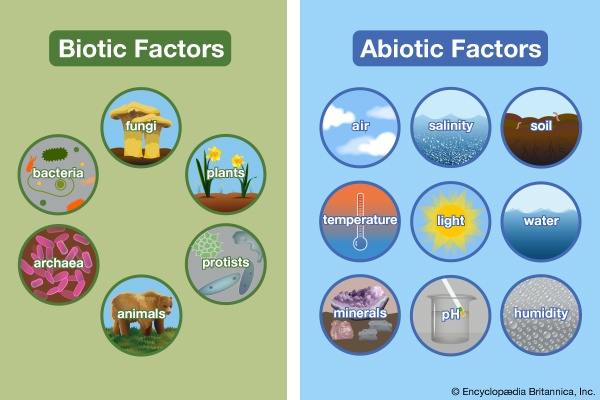
Review of Biotic vs. Abiotic

3

Multiple Select

Below is a list of factors in an ecosystem. Select all the abiotic factors.

1

Shelter

2

Water

3

Protists

4

Sunlight

5

Prokaryotes

4

Slide image

Review of Ecological Levels of Organization

5

Multiple Choice

Which of the following scenario best describes an ecosystem?

1

A pack of wolves that live in the same area

2

A single protist

3

Rabbits hopping around trees burrowing through soil

4

Birds, mice, and trees inhabiting the same area

6

Multiple Choice

Question image

An ecosystem is best depicted by which letter?

1

A

2

B

3

C

4

D

7

Carrying Capacity and Limiting Factors

  • Carrying capacity (K) - the maximum population size that can be supported in a particular area without destroying the habitat.

  • Limiting factors - resources or other factors in the environment that can lower the population growth rate. They determine the carrying capacity of a population.

Slide image

8

Examples of Biotic and Abiotic Limiting Factors

- Food

- Nutrients

- Water

- Shelter

- Space

- Mates

- Competition

- Predation

- Disease

- Human Activity

Slide image

9

Multiple Choice

Question image

What valid conclusion can you draw about the total deer population from the graph shown?

1

The total deer population increased gradually over time

2

An increase of limiting factors occured in the year 1900

3

A decline in food sources occured from years 1750-1900

10

Multiple Choice

Question image

View the graph above. Which of the following statements best describes why population growth stabilizes as it reaches the carrying capacity?

1

not enough shelter

2

lack of limiting resources

3

not enough solar energy

4

abundant limiting resources

11

12

Ecological Relationships

  • Predator-Prey (Predation)

  • Competition

  • Symbiotic

13

Predator-Prey Relationship

  • A predator is an organism that eats another organism.

  • The prey is the organism which the predator eats.

  • Predator and prey often coevolve together.

Slide image

14

Competition

  • Interspecies Competition - members of the same species in an ecosystem compete for limited resources such as water, food, shelter, & mates

  • Intraspecies Competition- members of different species in an ecosystem compete for limited shared resources such as food, shelter, water

15

Symbiotic Relationship

  • Symbiosis- close and long term relationship/interaction between two different biological organisms

  • Mutualism- relationship between two organisms of a different species in which both benefit

  • Commensalism - relationship between two organisms of a different species; only one organism benefits and the other is unaffected

  • Parasitism- relationship between two organisms of a different species; one organism benefits and the host organism is harmed

16

17

Check for Understanding!

Answer the next 10 questions using the information you learned in this lesson

18

Multiple Choice

What ecological relationship is depicted between Pumba (warthog) and the bugs?

1

Competition, because pumba is in competition with the bugs for food sources

2

Mutualistic, because Pumba and the bugs benefit each other

3

Predator-Prey, because Pumba is a predator that consumes bug as prey

19

Multiple Choice

Question image

Remoras are small fish that attach to larger marine animals such as sharks. Leftover food from the shark's prey nourishes the remora fish. The shark remains largely unaffected. The ecological relationship between the whale and remora fish is known as -

1

Commensalism

2

Mutualism

3

Predator-Prey

4

Parasitism

20

Multiple Choice

Marlin and his son, Nemo, are clownfish that live in a sea anemone. Clownfish benefit by receiving protection and shelter from the sea anemone. The clownfish, in return, scares away predators of the sea anemone and provides nutrients for the sea anemone through its excrement (waste). The symbiotic relationship between Nemo and the sea anemone is known as -

1

parasitism

2

commensalism

3

predator-prey

4

competition

5

mutualism

21

Multiple Choice

The flock of white seagulls that are fighting over a single food source (Nemo & Dory) depicts which ecological relatioship?

1

Intraspecies Competition

2

Mutualism

3

Parasitism

4

Commensalism

22

Multiple Choice

Question image

Read the following scenario and determine which ecological relationship is depicted -


Mistle toe plants are common house decorations around the holidays. Mistle toes are plants that attach themselves to hosts such as a tree. Once attached, the mistletoes begin to tap into the vascular system of trees and draws out vital nutrients and water from the host tree. The host tree is harmed over time and may result in stunted growth.

1

Predator-Prey

2

Parasitism

3

Commensalism

4

Mutualism

23

Multiple Choice

Phainopeplas are small birds that inhabit the American southwest. Mistletoe plants are the primary source of food for Phainopeplas.These small birds have a specialized digestive tract for eating the berries of mistletoe plants. The seeds in the berries pass through the digestive tract of the Phainopeplas and are dispersed to other trees through the bird's waste. The seeds then begin to sprout on the trees. The ecological relationship between the Phainopeplas and the mistletoe plants can be described as -

1

commensalism because both the bird and mistletoe plant benefit in this symbiotic relationship

2

parasitism because the birds consume mistletoe plants as their main source of food and the mistletoe population declines over time

3

mutualism because the mistletoe plants are the main source of food for the birds and the birds serve as an agent of mistletoe seed dispersal

24

Multiple Choice

The pearlfish receives protection from predators by living inside a sea cucumber. The sea cucumber is not affected during this interaction. This ecological relationship is known as -

1

predator-prey because the pearlfish is prey to the sea cucumber

2

mutualism because only the pearlfish benefits in this ecological relationship

3

parasitism because the pearlfish causes harm to the host sea cucumber

4

commensalism because only the pearlfish benefits while the sea cucumber is not affected

5

competition because the sea cucumber and pearlfish often fight for living space

25

Multiple Choice

A pair of red, male kangaroos are seen fighting over a potential mate. The ecological relationship between the two male kangaroos shown is -

1

Commensalism

2

Mutualism

3

Predator-Prey

4

Competition

26

Multiple Select

The video clip depicts two whales of the same species chasing after and fighting for the food source (penguins). The two ecological relationships depicted in this scene are -

1

Interspecies Competition

2

Mutualism

3

Parasitism

4

Predator-Prey relationship

5

Intraspecies Competion

27

Multiple Choice

Question image

If the rabbit and deer live in the same ecosystem, what valid conclusion can you draw from the interactions shown in the food web ?

1

A disease that kills off all trees will result in a rapid decline in both the rabbit and deer population

2

Rabbits and deer are in a mutualist relationship because they share food sources

3

They may be in competition for some limiting resources such as food

Ecological Relationships

Slide image

Show answer

Auto Play

Slide 1 / 27

SLIDE