Search Header Logo
Biology EOC Review 1

Biology EOC Review 1

Assessment

Presentation

Biology

9th - 10th Grade

Medium

NGSS
HS-LS1-4, HS-LS1-7, HS-LS3-2

+10

Standards-aligned

Created by

Caitlin Riding

Used 88+ times

FREE Resource

52 Slides • 48 Questions

1

Biology EOC Review 1

Scientific Method, Macromolecules, Cells, Cellular Energy, & Cell Cycle

Slide image

2

Scientific Method

  • The scientific method involves making observations and asking questions. Scientists form hypotheses based on these observations and then develop controlled experiments to collecting and analyze data. Using this data, they are able to draw conclusions and form questions for new scientific research

  • Independent variables (IV): These are the factors or conditions that you manipulate in an experiment. Your hypothesis is that this variable causes a direct effect on the dependent variable. 

  • Dependent variables (DV): These are the factor that you observe or measure. As you vary your independent variable you watch what happens to your dependent variable.

3

Multiple Choice

An experiment is performed on plants to see how different liquids affect plant growth. Each plant in the experiment is given a different liquid; water, apple juice, or milk. Each plant has the same amount of soil, sunlight, and listens to the same music. In this investigation, the independent variable is ...

1

The type of plant

2

The amount of sunlight

3

The type of music

4

The type of liquid

4

Slide image

5

Slide image

6

Slide image

7

Slide image

8

Slide image

9

Slide image

10

Slide image

11

Slide image

12

Slide image

13

Multiple Choice

Question image
What elements are common to all 4 biomolecules?
1
Carbon, hydrogen, nitrogen
2
Carbon, Nitrogen, Phosphorus
3
Carbon, Hydrogen, Oxygen
4
Carbon, Hydrogen, Phosphorus

14

Multiple Choice

What are the single sugars that are the building blocks of carbohydrates?
1
monosaccharides
2
disaccharides
3
polysaccharides
4
amino acid

15

Multiple Choice

Question image
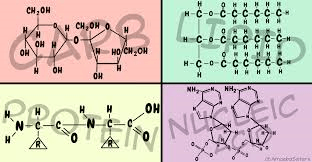
Which major macromolecule is being represented in this image? 
1
carbohydrate
2
lipid
3
protein
4
nucleic acid

16

Multiple Choice

Question image
These molecules represent which organic molecule?
1
proteins
2
lipids
3
nucleic acids
4
carbohydrates

17

Multiple Choice

Question image
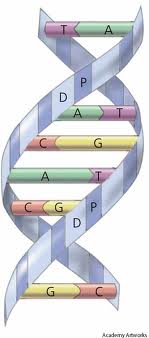
Which 2 molecules forms the sides (backbone) of the DNA ladder?
1
deoxyribose and adenine
2
deoxyribose and a hydrogen bond
3
sugar and the nucleus
4
deoxyribose (sugar) and phosphate

18

Multiple Choice

Question image

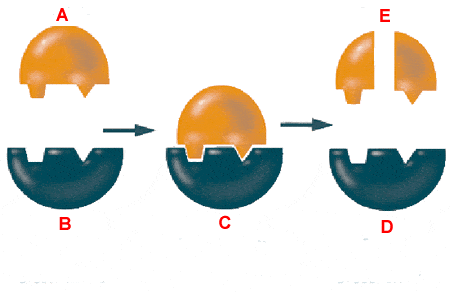
Enzymes catalyze reactions by ___________ Activation Energy.

1

Increasing

2

Decreasing

19

Multiple Choice

What happens when enzymes are heated to a high temperature?

1

The enzymes die.

2

The shapes of the enzyme are altered or denatured

3

The enzymes' amino acid sequence changes.

4

The enzymes remain the same

20

Multiple Choice

Which of these is NOT true?
1
Enzymes can denature (change shape) when the temperature gets too high.
2
Enzymes can only be used once in a chemical reaction. 
3
Extreme pH can denature enzymes.
4
Enzymes speed up chemical reactions. 

21

Multiple Choice

Question image

What is structure D?

1

Substrate

2

Active site

3

Enzyme

4

Products

22

Slide image

23

Slide image

24

Slide image

25

Slide image

26

Slide image

27

Slide image

28

Slide image

29

Slide image

30

Slide image

31

Slide image

32

Slide image

33

Slide image

34

Slide image

35

Slide image

36

Slide image

37

Multiple Choice

This structure produces protein in the cell.
1
Ribosomes
2
Cytoplasm
3
Nucleus
4
Lysosomes

38

Multiple Choice

This structure packages and distributes proteins throughout the cell. 
1
Golgi Body
2
Lysosome
3
Ribosome
4
Mitochondria

39

Multiple Choice

This small structures break down materials in the cell.
1
Cholorplasts
2
Ribosomes
3
Lysosomes
4
Golgi Body

40

Multiple Choice

Which is true of prokaryotic and eukaryotic cells?
1
Prokaryotic cells are larger than eukaryotic cells.
2
Eukaryotic cells do not have nuclei, and prokaryotic cells do have nuclei.
3
Prokaryotic cells lack membrane-bound organelles, and eukaryotic cells contain membrane-bound organelles.
4
Eukaryotic cells are simpler than prokaryotic cells.

41

Multiple Choice

All eukaryotes and prokaryotes are surrounded by a _____.

1

cell wall

2

cell membrane

3

cell envelope

4

loving, supportive family

42

Multiple Choice

All eukaryotes and prokaryotes are surrounded by a _____.

1

cell wall

2

cell membrane

3

cell envelope

4

loving, supportive family

43

Slide image

44

Slide image

45

Slide image

46

Slide image

47

Slide image

48

Slide image

49

Slide image

50

Slide image

51

Slide image

52

Slide image

53

Multiple Choice

The cell membrane regulates what goes in and out of the cell by only allowing certain substances to pass through. Substances can cross the membrane by either passive or active transport. Active transport includes

1

diffusion.

2

the sodium-potassium pump.

3

osmosis.

4

transport NOT using cell energy..

54

Multiple Choice

Active transport requires ______, moves materials from __________________, and goes _______ the concentration gradient.
1
No energy, low to high, against
2
ATP, high to low, with
3
ATP, low to high, with
4
ATP, low to high, against

55

Multiple Choice

A cell will __________________ in a hypotonic solution.
1
swell and perhaps burst (lyse)
2
shrink
3
the size of the cell will not change
4
the size of the cell will change from large to small and from small to large

56

Multiple Choice

A cell will _____________________ in a hypertonic solution.
1
swell
2
shrink
3
will not change
4
will explode

57

Multiple Choice

Active transport requires
1
energy
2
the nucleus
3
chloroplasts
4
lysosomes

58

Multiple Choice

Question image

1

Passive Transport

2

Active Transport

59

Slide image

60

Slide image

61

Slide image

62

Slide image

63

Slide image

64

Slide image

65

Slide image

66

Multiple Choice

Question image

The diagram below shows the relationship between photosynthesis and cellular respiration and the organelles in which they occur. Which statement describes how photosynthesis and cellular respiration are interrelated?

1

Oxygen is produced during cellular respiration and stored during photosynthesis.

2

Carbon dioxide and water released by cellular respiration are used in photosynthesis.

3

Photosynthesis releases the energy that is stored during the process of cellular respiration.

4

Glucose is used during cellular respiration to produce food that is broken down during photosynthesis.

67

Multiple Choice

Question image

Which of the following structure is where cellular respiration (Kreb's Cycle and Electron Transport Chain) occurs in the cell?

1

nucleus

2

cytoplasm

3

mitochondria

4

vacuoles

68

Multiple Choice

In each phase of cellular respiration there is a certain amount of chemical energy harvested in the form of ATP. On a perfect day, with everything running at 100% efficiency, how many molecules of ATP can we harvest from 1 molecule of glucose in the prescence of oxygen?

1

38

2

23

3

4

4

2

69

Multiple Choice

During which phase of cellular respiration is the most ATP harvested?

1

Glycolysis

2

Krebs Cycle

3

Electron Transport Chain

4

Citric Acid Cycle

70

Multiple Choice

Energy is released from ATP when
1
a phosphate group is added
2
adenine bonds to ribose
3
ATP is exposed to sunlight
4
a phosphate group is removed

71

Multiple Choice

What is the formula for photosynthesis?

1

CO2 + H2O + O2 -----------------> C6H12O6

2

C6H12O6 + CO2 + LE -----------------> H2O + O2 (+energy)

3

C6H12O6 + O2 + LE-----------------> CO2 + H2O (+energy)

4

CO2 + H2O + LE -----------------> C6H12O6 + O2

72

Multiple Choice

What is the formula for cellular respiration?

1

CO2 + H2O + O2 --------------------> C6H12O6 + ATP

2

C6H12O6 + CO2 -----------------> O2 + H2O + ATP

3

C6H12O6 + O2 -----------------> CO2 + H2O + ATP

4

CO2 + H2O -----------------> C6H12O6 + O2

73

Multiple Choice

If your body runs out of oxygen, it will begin to perform ______.

1

alcohol fermentation

2

photosynthesis

3

lactic acid fermentation

74

Multiple Choice

The process carried out by yeast that causes bread to rise is

1

alcoholic fermentation

2

lactic acid fermentation

3

cellular respiration

75

Slide image

76

Slide image

77

Slide image

78

Slide image

79

Slide image

80

Slide image

81

Slide image

82

Slide image

83

Slide image

84

Multiple Choice

Which of the following is the most significant difference between mitosis and meiosis?

1

chromosomes are duplicated before mitosis

2

Meiosis is not followed by cytokinesis

3

homologous pairs of chromosomes are split up in meiosis

4

crossing over occurs in mitosis

85

Multiple Choice

Which of the following does NOT lead to genetic variation?

1

random fertilization

2

crossing over during meiosis

3

division of chromosmes during anaphase of mitosis

4

mutation

86

Multiple Choice

Human ___ are diploid, and human ___ are haploid.

1

sex chromosomes...autosomes

2

autosomes...sex chromosomes

3

somatic cells...gametes

4

gametes...somatic cells

87

Multiple Choice

If there are 22 chromosomes in the nucleus of a toad skin cell, a toad egg would contain ____ chromosomes.

1

22

2

44

3

11

4

33

88

Multiple Choice

Human body cells have 46 chromosomes. How many chromosomes do gamete (egg and sperm) cells have?

1

12

2

23

3

46

4

92

89

Multiple Choice

Gamete (sperm and egg) cells are produced by ________________

1

Mitosis

2

Cellular respiration

3

Oxidation

4

Meiosis

90

Multiple Choice

Mitosis is NOT used for

1

Growth

2

Asexual reproduction

3

Replace damaged cells

4

Sexual reproduction

91

Multiple Choice

The time between cell divisions in the life cycle of the cell is called
1
anaphase
2
interphase
3
prophase
4
metaphase

92

Multiple Choice

Question image
Why would it be important to replicate DNA before a cell divides in mitosis or meiosis?
1
In order for genetic information to be transferred into daughter cells.
2
In order for the cell to be able to increase in size.
3
In order for the DNA to be contained in the nucleus.
4
In order for the cell to re-order the DNA sequencing in the new cells.

93

Multiple Choice

Question image
1
Anaphase
2
Cytonkinesis
3
Interphase
4
Prophase

94

Multiple Choice

Question image
1

Prophase

2

Interphase

3

Anaphase

4

Telophase

95

Multiple Choice

Question image
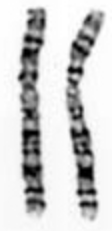
A pair of identical chromosomes shown in a karyotype, one inherited from mom, and one inherited from dad are called
1
sister chromotids
2
centromeres
3
homologous chromosomes
4
autosomes

96

Multiple Choice

What is the role of the spindle during mitosis?
1
It divides the cell in half.
2
It duplicates the DNA.
3
It breaks down the nuclear membrane.
4
It helps separate the chromosomes.

97

Multiple Choice

In which phase of mitosis does the nucleus disappear, centrioles move to the poles, and chromosomes condense into sister chromatids?
1
Prophase
2
Metaphase
3
Anaphase
4
Telophase

98

Multiple Choice

Question image
In mitosis, the two resulting cells are
1
different from the starting cell and identical to each other.
2
different from the starting cell and different from each other.
3
identical to the starting cell and different from each other.
4
identical to the starting cell and identical to each other.

99

Multiple Choice

The phase of mitosis in which the sister chromatids separate from each other
1
prophase
2
metaphase
3
anaphase
4
telophase

100

Multiple Choice

What is the sequence of stages during the cell cycle?

1

G1 → S → G2 → mitosis → cytokinesis

2

mitosis → G1 → G2 → cytokinesis → S

3

G1 → G2 → S → mitosis → cytokinesis

4

G1 → G2 → mitosis → cytokinesis → S

Biology EOC Review 1

Scientific Method, Macromolecules, Cells, Cellular Energy, & Cell Cycle

Slide image

Show answer

Auto Play

Slide 1 / 100

SLIDE