Search Header Logo
Chapter 10- Chemical Bonding

Chapter 10- Chemical Bonding

Assessment

Presentation

Chemistry

University

Medium

NGSS
HS-PS4-1, HS-PS1-1, MS-PS1-1

+2

Standards-aligned

Created by

Luis Bello

Used 17+ times

FREE Resource

37 Slides • 33 Questions

1

Chapter 10- Chemical Bonding

media

2

media

3

media

4

media

5

Multiple Select

If the amplitude increases, the energy of the wave:

1

increases

2

decreases

3

stays the same

6

Multiple Choice

Question image

What is a wavelength?

1

How many waves pass a certain point?

2

The distance from one wave crest to another

3

The entire length of a wave

7

Multiple Choice

Question image
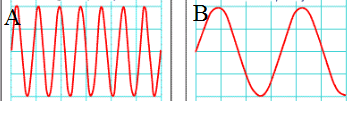
Which wave has a greater frequency?
1
A
2
B

8

Multiple Choice

Question image

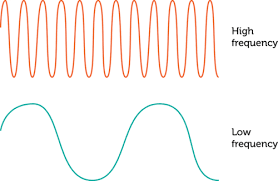
If a wave has a greater frequency, what happens to the wavelength?

1

increases

2

decreases

3

stays the same

9

Multiple Choice

Question image
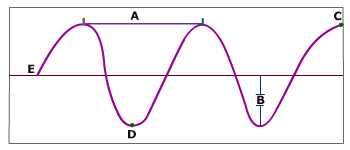
Which letter represents amplitude?
1
A
2
B
3
C
4
D

10

Multiple Choice

Question image
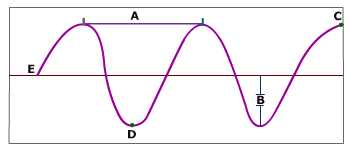
Which letter represents wavelength?
1
A
2
B
3
C
4
D

11

Multiple Choice

Question image

What does the arrow in the picture represent?

1

wavelength

2

echolocation

3

amplitude

4

peak

12

Multiple Choice

How many protons are in the element, "Sodium?"
1
23
2
11
3
13
4
14

13

Multiple Choice

an atom with atomic number 6 would have how many protons 
1
6
2
12
3
3
4
cannot be determined 

14

Multiple Choice

Question image

What is the correct set of quantum numbers for the last entering electron of magnesium?

1

n=2 l=0 ml=0 ms=-1/2

2

n=3 l=0 ml=0 ms=-1/2

3

n=3 l=1 ml=-1 ms=+1/2

4

n=3 l=0 ml=0 ms=+1/2

15

Multiple Choice

Question image

What orbital does the last entering electron of chlorine belong?

1

2s2

2

2p5

3

3p5

4

4d5

16

Multiple Choice

Question image

What is the correct electron configuration of silicon?

1

1s2 2s2 2p6 3p4

2

1s2 2s2 3p6 4s2 3d2

3

1s2 2s2 2p6 3s2 3p2

4

1s2 2s2 3p6 3s2 4p2

17

Multiple Choice

Question image

What type of sublevel has the this shape?

1

s

2

p

3

d

4

f

18

media

19

media

20

media

21

media

22

media

23

Multiple Choice

Question image
Which of the following is the correct Lewis dot structure for the molecule fluorine (F2)?
1
A
2
B
3
C
4
D

24

Multiple Choice

Which is the correct molecular structure for carbon dioxide?

1
2
3
4

25

Multiple Choice

Question image

How many total valence electrons are participating in bonding in the molecule above?

1

8

2

4

3

2

4

3

26

Multiple Choice

CO2 has how many lone pairs?

1

0

2

1

3

2

4

3

5

4

27

Multiple Choice

NH3 has how many lone pairs?

1

0

2

1

3

2

4

3

28

media

29

media

30

media

31

media

32

media

33

media

34

35

media

36

Second part...

By Luis Bello

37

38

media

39

media

40

media

41

Octet Rule

42

media

43

The octet rule states that atoms tend to form compounds in ways that give them eight valence electrons and thus the electron configuration of a noble gas. 

An exception to an octet of electrons is in the case of the first noble gas, helium, which only has two valence electrons. 

  • Atoms form compounds in ways that give them eight valence electrons.

  • Metals tend to lose electrons to achieve this configuration.

  • Nonmetals tend to gain electrons to achieve this configuration.

44

Cation Formation

Cations are the positive ions formed by the loss of one or more electrons.  The most commonly formed cations of the representative elements are those that involve the loss of all of the valence electrons.  Consider the alkali metal sodium (Na). 

It has one valence electron in the third principal energy level.  Upon losing that electron, the sodium ion now has an octet of electrons from the second principal energy level.

  • Cations form when an atom loses one or more electrons.

  • The resulting cation has the electron configuration of the noble gas atom in the row above it in the periodic table.

45

Anion Formation

Anions are the negative ions formed from the gain of one or more electrons.  When nonmetal atoms gain electrons, they often do so until their outermost principal energy level achieves an octet.  This process is illustrated below for the elements fluorine, oxygen, and nitrogen.

  • Anions are negative ions formed by accepting electrons.

  • The outermost principal energy level usually is an octet.

46

media

47

VSEPR Chart | Valence Shell Electron Pair Repulsion Theory

WHAT IS VSEPR THEORY?

The valence shell electron pair repulsion (VSEPR) theory is a model used to predict 3-D molecular geometry based on the number of valence shell electron bond pairs among the atoms in a molecule or ion.

This model assumes that electron pairs will arrange themselves to minimize repulsion effects from one another. In other words, the electron pairs are as far apart as possible.

48

media

49

media

50

VSEPR SHAPES

The VSEPR model is useful for predicting and visualizing molecular structures.

The structures are linear, trigonal planar, angled, tetrahedral, trigonal pyramidal, trigonal bipyramidal, disphenoidal (seesaw), t-shaped, octahedral, square pyramidal, square planar, and pentagonal bipyramidal.

51

52

media

53

media

54

media

55

​Metallic Bond

Pure metals are crystalline solids, but unlike ionic compounds, every point in the crystal lattice is occupied by an identical atom

The electrons in the outer energy levels of metal are mobile and capable of drifting from one metal atom to another. 

This means that the metal is more properly viewed as an array of positive ions surrounded by a sea of mobile valence electrons

Electrons that are capable of moving freely throughout the empty orbitals of the metallic crystal are called delocalized electrons

A metallic bond is the attraction of the stationary metal cations to the surrounding mobile electrons.

56

Multiple Choice

Question image
What is the number of electrons that an atom needs to be stable?
1
2
2
8
3
10
4
12

57

Multiple Choice

What type of bond shares a pair of electrons?
1
atomic
2
hydrogen
3
covalent
4
ionic

58

Multiple Choice

Unequal sharing of a pair of electrons within a bond is
1
ionic
2
polar covalent
3
nonpolar covalent
4
hydrogen

59

Multiple Choice

Why do elements share electrons at all?
1
They want to be stable
2
They are greedy and always want more
3
Positive and negative forces attract
4
The electrons just do what they want

60

Multiple Choice

Hydrogen bonding occurs between 
1
Hydrogen and zinc
2
Hydrogen and oxygen
3
Hydrogen and lithium
4
Hydrogen and helium

61

Multiple Choice

Which of the following bonds has an atom that steals electrons from another atom?
1
ionic
2
polar covalent
3
nonpolar covalent
4
hydrogen

62

Multiple Choice

According to VSEPR, molecules adjust their shapes to keep which of the following as far away as possible?
1
Pairs of valence electrons
2
Inner shell electrons
3
Mobile Electrons
4
Electrons closest to the nucleus

63

Multiple Choice

Which of the following molecular shapes would have a bond angle of 180 Degrees?
1
Bent
2
Trigonal Planar
3
Tetrahedral
4
Linear

64

Multiple Choice

What is the measure of a tetrahedral bond angle?
1
90 Degrees
2
109.5 Degrees
3
120 Degrees
4
180 Degrees

65

Multiple Choice

Question image
Which molecule would have this shape?
1
BF3
2
CH4
3
PCl5
4
CO2

66

Multiple Choice

The bond angle for a trigonal planar molecule is 
1
90 Degrees
2
109.5 Degrees
3
120 Degrees
4
180 Degrees

67

Multiple Choice

Question image

The ------ model helps predict the shape of a molecule.

1

VESPR

2

Electron

3

Lewis

68

Multiple Choice

The ability of the metal to be drawn into wires.

1

Moving Electrons

2

Malleability

3

Ductility

69

Multiple Choice

What are charged particles that form when atoms gain or lose electrons?

1

Particle Atoms

2

Ions

3

Atomic Ions

4

Bonds

70

Multiple Choice

What do you call a bond that forms when electrons are transferred from one atom to another?

1

Compound Bond

2

Ionic Bond

3

Crystal Bond

4

Atom Bond

Chapter 10- Chemical Bonding

media

Show answer

Auto Play

Slide 1 / 70

SLIDE