Search Header Logo
CFE Review (Comp 3)

CFE Review (Comp 3)

Assessment

Presentation

Science

8th Grade

Medium

NGSS
MS-PS1-5, MS-PS1-2, MS-PS2-4

+10

Standards-aligned

Created by

Hilda Rivera

Used 11+ times

FREE Resource

20 Slides • 38 Questions

1

CFE Review (Comp 3)
Slide image

2

Slide image

3

Slide image

4

Multiple Choice

Ethan is observing chemical and physical properties of a substance. He heats a substance and observes that the substance turns from a brown solid to a black powder. He refers to several chemistry journals that claim this represents a chemical reaction. From his observation and research, he concludes that the substance goes through a chemical change when heated.


How can Ethan best defend his conclusion?

1

by demonstrating that the substance will eventually melt if the temperature continues to increase

2

by verifying that the substance is now made up of different molecules than before it was heated

3

by verifying that the substance is made up of only one type of element

4

by demonstrating that the substance is less dense after it is heated

5

Multiple Choice

Question image
In an investigation into the uptake of a protein by cells, scientists immersed two cell types in solutions of this protein. The investigation was carried out at two different temperatures and the percentage of the protein taken up by the two cell types was recorded over 10 minutes. The data was presented in a table, as shown above. Which one of the following conclusions is supported by the data?
1
The rate of uptake of this protein at 25 °C is not affected by cell type.
2
The percentage of this protein taken up by Cell type 1 is not affected by temperature.
3
The rate of uptake of this protein by Cell type 2 is faster at 37 °C than at 25 °C.
4
If the experiment continued for another 10 minutes, the percentage of this protein taken up by Cell type 1 would increase.

6

Multiple Choice

Question image
Carmen conducted an experiment to determine if listening to different types of music would affect a person’s pulse. Her hypothesis was that pulse rate would change with different types of music. Each person listened to seven different selections of music for 30 seconds each. Each person’s pulse was taken before the music and then after each 30-second interval of music. The pulses were taken again after the music selections were completed. Based on her experiment, Carmen concluded that a person’s pulse rate changed when the person listened to different types of music. What is Carmen missing from her experiment?
1
a question
2
a hypothesis
3
a control group
4
a description of the experiement

7

Multiple Choice

Helen is studying the growth of two different types of plants. She planted two of each type of plant in locations with different levels of sunlight: full sun, partial shade, and full shade. For five weeks, Helen records the number of new leaves on each plant.

Which of the following statements correctly describes the independent and dependent variables in Helen's experiment?

1

The independent variable is the kind of plant, and the dependent variable is the amount of sunlight.

2

The independent variable is the amount of sunlight, and the dependent variable is the number of new leaves.

3

The independent variable is the amount of sunlight, and the dependent variable is the kind of plant.

4

The independent variable is the number of new leaves, and the dependent variable is the amount of sunlight.

8

Multiple Choice

Question image
Unprotected exposure to the sun’s rays is a factor in the development of skin cancer. Which   of the following is an example of empirical evidence that supports this hypothesis?
1
a model of a skin cell showing where DNA is in the cell
2
a skin cancer survivor’s recollection that he had a bad sunburn as a child
3
data demonstrating a relationship between amount of sun exposure and incidences of skin cancer
4
an advertisement for a sun block product that claims it protects skin for ultraviolet rays

9

Multiple Choice

Question image
At one point in time, many people thought disease was caused by fate or by incorrect behavior. Following the invention of the microscope, bacteria were discovered. After this, a new theory of what causes disease arose that was known as the germ theory.  Why was the original theory modified? 
1
It quickly became obvious that germs cause disease.
2
The person who invented the microscope became ill.
3
New evidence prompted revision to the original ideas.
4
The proponents of the germ theory had political power.

10

Slide image

11

Multiple Choice

Astronomers classify stars according to their

1

distance from Earth.

2

color, size, and absolute brightness.

3

age and parallax.

4

all of the above

12

Multiple Choice

Question image
What color of star is the hottest?
1
Blue
2
Red
3
Yellow
4
Orange

13

Multiple Choice

Question image
Which star has the lowest temperature?
1
A
2
B
3
C
4
D

14

Multiple Choice

Question image

Which star has the lowest luminosity?

1

A

2

B

3

C

4

D

15

Slide image

16

Multiple Choice

Which statement best describes stars?

1

large planets that are composed mostly of gases

2

celestial bodies made up of gas that give off light

3

faint dots of light that can be seen from Earth’s surface

4

objects that form in the outer parts of the solar system

17

Multiple Choice

One physical property of a star is absolute brightness. Which of the following is used in determining the absolute brightness of a star?

1

how bright the star actually is

2

how bright the star appears to be from the Earth

3

the number of prominences the star makes

4

the direction the star rotates

18

Multiple Choice

Question image

The chart below displays the names of different stars and their colors. Which of the groups below best orders the stars from hottest to coolest?

1

A. Antares, Spica, Sun, Aldebaran

2

B. Sun, Spica, Antares, Aldebaran

3

C. Spica, Sun, Aldebaran, Antares

4

D. Antares, Aldebaran, Sun, Spica

19

Multiple Choice

One physical property of a star is apparent magnitude. Which of the following is used in determining the apparent magnitude of a star?

1

A. the constellation the star is in

2

B. the distance the star is from Earth

3

C. the number of times the star rotates

4

D. the number of prominences the star makes

20

Multiple Choice

Linda examined the sizes of several different stars. She listed them in order from smallest to largest. Which of the following stars would Linda list first?

1

Polaris, 30 solar radii

2

Aldebaran, 44.2 solar radii

3

Sirius B, 0.008 solar radius

4

Barnard’s Star, 0.15 solar radius

21

Slide image

22

Multiple Choice

Question image
Physical or Chemical Change?  Logs burning in a campfire.
1
Physical Change
2
Chemical Change

23

Multiple Choice

Which of the following indicates a chemical change?
1
Change in state of matter
2
Temperature change
3
Change in size 
4
Change in shape

24

Multiple Choice

Paper is burned and the mass of the ash is less than the mass of the original paper. Which is true?

1

The ash has less volume than the paper

2

Some of the matter is destroyed during the reaction

3

The mass of the ash cannot be accurately determined

4

Some of the products of the reaction were given off as a gas

25

Multiple Choice

On a camping trip, Mrs. Benavides roasts a marshmallow in the campfire. She notices that the roasted marshmallow smells and tastes differently than the uncooked marshmallows. What change has taken place, and how does Mrs. Benavides know?
1
a chemical change because the marshmallow changed in taste, color and smell
2
no change because the marshmallow is not a new substance
3
only a physical change because the marshmallow changed in size
4
a chemical change because the marshmallow only changed in pH level

26

Slide image

27

28

Slide image

29

Slide image

30

Slide image

31

Multiple Choice

Evidence collected by Italian scientist Galileo Galilei gradually convinced others that the ___________model was correct

1

geocentric

2

heliocentric

3

big bang

4

solar system

32

Multiple Choice

The earth centered view of the universe
1
Galaxy
2
Geocentric
3
Astonomy
4
Heliocentric

33

Multiple Choice

Question image
This image shows the:
1
Geocentric Solar System
2
Heliocentric Solar System

34

Slide image

35

Multiple Choice

Two factors effecting the magnitude of the force of gravity between 2 objects are...
1
mass and distance 
2
mass and matter
3
distance and weight 
4
weight and mass

36

Multiple Choice

Gravity is the force objects put on each other because of their ______.
1
Mass
2
Friendliness
3
Acceleration
4
Speed

37

Multiple Choice

Question image
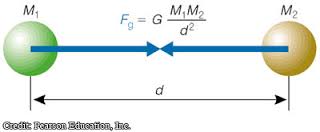
Complete the following statement: The farther away two planets are the _______ the gravitational force between them.
1
more
2
same
3
dosen't matter
4
less

38

Multiple Choice

Force of gravity is inversely proportional to
1
Mass
2
Weight
3
Distance
4
Time

39

Multiple Choice

What states that "every object in the universe attracts every other object"?
1
Law of Universal Gravitation
2
Newton's First Law of Motion
3
My mother
4
Inertia & gravity

40

Slide image

41

Multiple Choice

Question image
A boiling pot with a lid on it to keep in the energy is what type of system?
1
Closed System
2
Open System

42

Multiple Choice

Question image
This type of system allows matter to flow freely in and out...
1
Closed System
2
Open System

43

Multiple Choice

What will weigh more when a chemical change is complete?  The reactants before the chemical reaction, or the product after the reaction is complete?
1
They both will weigh the same
2
The product always weighs more than the reactant
3
The reactant will weigh more than the product
4
They both will loose mass after the reaction

44

Multiple Choice

In a reaction A + B ----> C,  reactant A has 5g and product  C has 9g. How many grams does reactant B should have? 
1
4g
2
5g
3
9g
4
14g

45

Multiple Choice

A chemical reaction is balanced when
1
both sides have the same elements
2
Both sides have the same  number of atoms
3
Same subscripts
4
Same coefficients

46

Multiple Choice

Matter can not be created nor destroyed: it can only be
1
Destroyed a little bit
2
Invisible
3
Transformed, changed
4
None of the above

47

Slide image

48

Multiple Choice

A valid experiment

1

Has more than 1 independent variable

2

Has multiple dependent variables

3

Tests the thing you want to test

4

Has an uncontrolled variable

49

Multiple Choice

An experiment is reliable if

1

The experiment is done 3 times with big differences in results

2

You made a mistake in one trail but did not change it in the next

3

The same/similar results are obtained from 3 or more trials

4

It takes the same amount of time to complete each trail

50

Multiple Choice

The independent variable

1

Changes due to other factors

2

The change that you are making on purpose

3

Is an individual step of the experiment

4

Can be different when repeating the same experiment

51

Multiple Choice

The dependant variable

1

Is the thing you measure

2

Depends on the people/place doing the experiment

3

Must not change during the experiment

4

Is the thing you change on purpose

52

Multiple Choice

The independent variable

1

Changes due to other factors

2

The change that you are making on purpose

3

Is an individual step of the experiment

4

Can be different when repeating the same experiment

53

Slide image

54

Slide image

55

Slide image

56

Slide image

57

Slide image

58

Slide image

CFE Review (Comp 3)

Slide image

Show answer

Auto Play

Slide 1 / 58

SLIDE