


Figurative Language
Presentation
•
English
•
7th - 8th Grade
•
Easy
+5
Standards-aligned
Kathryn Yue
Used 164+ times
FREE Resource
14 Slides • 6 Questions
1
Figurative Language
A figure of speech is language that isn't LITERAL, straightforward, or factual. It's quite the opposite, in fact.
2
Multiple Choice
What would I mean if I said "It's raining cats and dogs"?
cats and dogs are falling from the sky
cats and dogs are crying
it's raining really hard
3
I don't mean LITERALLY raining cats and dogs!
It's a figure of speech!
Instead of saying "Wow, it's raining hard out there," I can use figurative language and say "It's raining cats and dogs!"
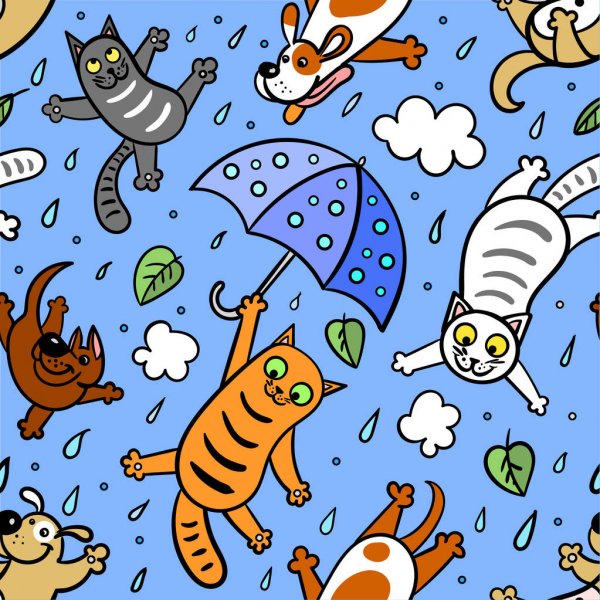
4
Okay, BUT WHY?!
First, it's just more interesting.
Second, figures of speech can amplify what we're trying to communicate.
If you say something silly like that, people will probably pay more attention... and be more likely to remember it.
That's what we call RHETORICAL FORCE.
5
PERSONIFICATION
is a figure of speech that pretends that something that isn't human has human qualities or abilities.
6
Personification
The sky was weeping.
The sunflowers turned their faces to the sun.
Ms. Yue's stomach growled.
The birds sang in celebration.
7
Open Ended
Come up with your own example of personification!
8
ALLUSION
is when we refer to something without metioning it directly.
(like an inside joke)
In general, we make allusions to things that the reader knows about, too. These would be stories that MANY know and are familiar with.
9
Like the Bible: "I'm going into the lions den."
Someone might say this on their way into a meeting. They don't really mean the meeting is full of lions. They really mean they're going into a tough situation by referring to a story from the Bible - the story of Daniel who was put into a den of angry lions by an angry king.
10
Or like classic literature: "He's an old Scrooge."
The writer isn't saying the person's name is Scrooge or even that they're old. What they mean is that this person doesn't like spending money. This is a LITERARY ALLUSION to Charles Dickens' famous story A Christmas Carol.
11
Or mythology: "While Kate is a talented player, her quick temper is her Achilles' heel."
Achilles was invincible, but there was one spot on his heel where he was vulnerable. He died when an arrow struck his heel. While Kate's only flaw is her temper, it can have big consequences.
12
VERBAL IRONY
is when we say the opposite of what we mean. It seems a strange thing to do, but it makes the material more interesting and can actually emphasize what we really mean to say.
Like sarcasm!
13
For example!
If someone asks you if you want to go outside, but it's raining cats and dogs, you might say:
"Of course I would! There's nothing I'd like more than getting soaked in the rain!"
When you use verbal irony, you aren't just saying no. You're explaining why you wouldn't like to go outside by contrasting it with the opposite idea.
14
PUNS!
A pun is a joke that uses the different meanings of a word or a play on words that sound alike.
William Shakespeare was the master of puns!
15
From Romeo & Juliet
MERCUTIO: "Nay, gentle Romeo, we must have a dance."
ROMEO: "Not I, believe me. You have dancing shoes/With nimble soles; I have a soul of lead..."
16
17
Multiple Choice
If you wanted to say something that was literally true, would you use a figure of speech?
Yes
No
18
Multiple Choice
What type of speech is in the following sentence?
"our old house groaned and whined during the storm."
Personification
Pun
Irony
Allusion
19
Multiple Choice
If an illusion refers to something that happened in a book or novel, what kind of allusion is it?
Literary
Biblical
Mythological
20
Multiple Choice
What kind of allusion does the following sentence make?
"I think the god of thunder lives in the apartment upstairs!"
Literary
Biblical
Mythological
Figurative Language
A figure of speech is language that isn't LITERAL, straightforward, or factual. It's quite the opposite, in fact.

Show answer
Auto Play
Slide 1 / 20
SLIDE

Similar Resources on Wayground
15 questions
B.W. Day 15 Conjunctive Adverbs
Lesson
•
6th - 8th Grade
15 questions
Direct Objects
Lesson
•
6th - 8th Grade
14 questions
The Monkey's Paw Vocabulary Preview
Lesson
•
7th - 8th Grade
14 questions
Misplaced and/or Dangling Modifiers
Lesson
•
7th - 8th Grade
17 questions
Adjectives and Adverbs
Lesson
•
7th - 8th Grade
15 questions
Adjetivos demostrativos
Lesson
•
KG
18 questions
Mood and Tone
Lesson
•
7th - 8th Grade
18 questions
Writing State Test Prep
Lesson
•
7th - 8th Grade
Popular Resources on Wayground
10 questions
5.P.1.3 Distance/Time Graphs
Quiz
•
5th Grade
10 questions
Fire Drill
Quiz
•
2nd - 5th Grade
20 questions
Equivalent Fractions
Quiz
•
3rd Grade
15 questions
Hargrett House Quiz: Community & Service
Quiz
•
5th Grade
20 questions
Main Idea and Details
Quiz
•
5th Grade
20 questions
Context Clues
Quiz
•
6th Grade
20 questions
Inferences
Quiz
•
4th Grade
15 questions
Equivalent Fractions
Quiz
•
4th Grade
Discover more resources for English
17 questions
Figurative Language
Quiz
•
7th Grade
18 questions
Informative or Argumentative essay
Quiz
•
5th Grade - University
24 questions
7th grade STAAR Reading Review
Quiz
•
7th Grade
20 questions
Context Clues Practice
Quiz
•
7th Grade
20 questions
Capitalization & Punctuation
Quiz
•
5th - 7th Grade
12 questions
Final Figurative Language Review
Lesson
•
6th - 8th Grade
14 questions
Organizational Patters/ Text Structure
Interactive video
•
6th - 8th Grade
25 questions
Making Inferences
Quiz
•
6th - 8th Grade