Search Header Logo
Marine Science Ch 9

Marine Science Ch 9

Assessment

Presentation

Science

9th Grade

Hard

NGSS
MS-LS4-2, HS-LS4-4, HS-LS4-5

+9

Standards-aligned

Created by

Nikkole Wowaka

Used 12+ times

FREE Resource

105 Slides • 102 Questions

1

Marine Science Ch 9
Slide image

2

Slide image

3

Multiple Choice

Invertebrates are animals....

1

with a back bone

2

without a backbone

4

Slide image

5

Multiple Choice

animals that have a backbone

1

invertebrates

2

vertebrates

6

Slide image

7

Multiple Choice

heterotrophic

1

creates its own food

2

must consume others for food

8

Slide image

9

Multiple Choice

Bilateral means it can be divided equally by

1

bottom and top halves

2

left and right halves

10

Slide image

11

Multiple Choice

Question image

what type of symmetry does this organism show?

1

bilateral symmetry

2

radial symmetry

3

asymmetry

12

Multiple Choice

Question image

what type of symmetry does this organism show?

1

bilateral symmetry

2

radial symmetry

3

asymmetry

13

Multiple Choice

Question image

what type of symmetry does this organism show?

1

bilateral symmetry

2

radial symmetry

3

asymmetry

14

Multiple Choice

Question image

what type of symmetry does this organism show?

1

bilateral symmetry

2

radial symmetry

3

asymmetry

15

Slide image

16

Slide image

17

Multiple Choice

Porifera are......

1

segmented worms

2

sponges

3

comb jellies

4

nematodes

5

molluscs

18

Slide image

19

Multiple Choice

sessile means

1

immobile

2

highly mobile

3

floats in the water column

20

Slide image

21

Multiple Choice

do sponges have organs?

1

yes

2

no

22

Slide image

23

Multiple Choice

flagella are

1

a slender threadlike structure

2

a short microscopic hairlike vibrating structure

24

Slide image

25

Slide image


26

Multiple Choice

Water enters sponges through the ______.
1
ostia/ostium
2
oscula/osculum

27

Slide image

28

Multiple Choice

The elastic fibrous protein found in sponges is called .....
1
mesohyl
2
spicules
3
spongin
4
tissue

29

Multiple Choice

The spongin and spicules make up what in sponges?

1

digestive tract

2

skin

3

stomach

4

skeleton

30

Slide image

31

Multiple Choice

broadcast spawning is

1

asexual reproduction

2

sexual reproduction

32

Slide image

33

Multiple Choice

Which examples are cnidarians

1

jellyfish

2

sponges

3

earthworms

4

starfish

34

Slide image

35

Multiple Choice

is the Portuguese man of war a jelly fish?

1

yes

2

no

36

Slide image

37

Multiple Choice

Question image

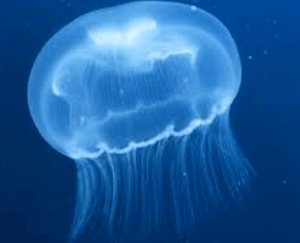
This form of cnidaria is known as a _______.

1

polyp

2

medusa

3

larvae

4

hermaphrodite

5

filia

38

Multiple Choice

Question image

This form of cnidaria is known as a __________.

1

medusa

2

polyp

3

cryptid

4

larvae

5

fillia

39

Slide image

40

Multiple Choice

Cnidaria means ____ cells.

1

shelter

2

stinging

3

polyp

4

medussa

41

Slide image

42

Multiple Choice

A cnidarian captures its prey by
1
filtering it through pores
2
paralyzing it with venom
3
bringing it into the osculum
4
killing it with spikes

43

Multiple Choice

Cnidarians have nerves, but no central nervous system
1
True
2
False

44

Slide image

45

Multiple Choice

Cnidarians have what type of symmetry?

1

Asymmetry

2

Radial

3

Bilateral

4

No symmetry

46

Multiple Choice

A fertilized egg is a

1

ovary

2

polyp

3

zygote

4

larva

47

Slide image

48

Multiple Choice

cnidarian swimming larva is called

1

Embryo

2

Zygote

3

Colony

4

Planula

49

Slide image

50

Slide image

51

Multiple Choice

which is the stinging part?

1

nematocyst

2

medusa

3

epidermis

4

polyp

52

Slide image

53

Multiple Choice

Question image

Which part do you think they contract to use for movement?

1

tentacles

2

arms

3

bell

4

mouth

54

Slide image

55

Multiple Choice

which is a medusa?

1
2

56

Slide image

57

Slide image

58

Multiple Choice

most corals have symbiotic zooxanthellae which are

1

dinoflagellates

2

cyanobacteria

3

green algae

59

Slide image

60

Multiple Choice

Question image

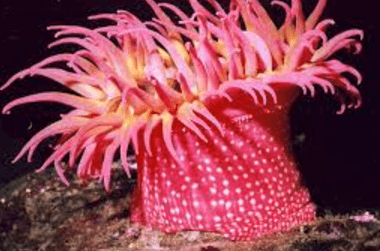
what is this?

1

sea anemone

2

gargonian

3

stony coral

4

cubomedusa

61

Slide image

62

Multiple Choice

Question image

Do Comb Jellies like this have Nematocysts

1

yes

2

no

63

Slide image

64

Multiple Choice

what are comb jellies?

1

Cnidarians

2

Ctenophora

3

Sporifera

65

Slide image

66

Slide image

67

Slide image

68

Multiple Choice

what type of symmetry does a flatworm have?

1

radial

2

bilateral

3

asymmetrical

69

Slide image

70

Slide image

71

Multiple Choice

flatworms have a brain

1

yes

2

no

72

Slide image

73

Slide image

74

Multiple Choice

ribbon worm has a mouth AND an anus

1

yes

2

no

75

Slide image

76

Multiple Choice

the long tube used for entangling prey

1

nematocyts

2

proboscis

3

epidermis

4

mesoglea

5

collar cells

77

Slide image

78

Multiple Choice

a flexible skeleton supported by fluid pressure

1

exoskeleton

2

endoskeleton

3

hydrostatic skeleton

4

leptimatic skeleton

79

Slide image

80

Multiple Choice

nematodes have

1

bilateral symmetry

2

radial symmetry

3

asymmetry

81

Slide image

82

Multiple Choice

Question image

What do you think this guy is?

1

predator

2

prey

3

parasite

83

Slide image

84

Multiple Choice

Which means on the side(s)

1

dorsal

2

ventral

3

lateral

4

caudal

85

Slide image

86

Multiple Choice

What do you think Annelids are?

1

crabs

2

segmented worms

3

fish

4

snails

87

Slide image

88

Multiple Choice

what kind of symmetry would a segmented worm have?

1

radial

2

bilateral

3

asymmetrical

89

Slide image

90

Multiple Choice

which is true of our segmented worms?

1

the blood stays within blood vessels. In this way, blood is kept separate from body tissues. This system has a heart that pumps blood through a continuous circulation pattern

2

the blood is not enclosed in the blood vessels, but is pumped into a cavity called a hemocoel.

91

Slide image

92

Multiple Choice

Which phylum is the first to exhibit a closed circulatory system?
1
Platyhelminthes
2
Nematoda
3
Annelida

93

Multiple Choice

Which of the following is the evolutionary advancement first found in annelids?
1
Three germ layers
2
A complete digestive system
3
Cephalization
4
Coelomates (tube within a tube)

94

Slide image

95

Multiple Choice

which is the most common group of segmented worms?

1

polychaetes

2

nematoda

3

pogonophorans

4

leeches

96

Slide image

97

Multiple Choice

what is used for gas exchange?

1

skin

2

gills

3

coelom

4

tentacles

98

Slide image

99

Slide image

100

Slide image

101

Multiple Choice

beard worms absorb organic material floating in the water column, where do you think they would most likely live?

1

deep water

2

shallow water

102

Slide image

103

Multiple Choice

Which means on the top or backside (also called the dorsal side)

1

posterior

2

ventral

3

lateral

4

caudal

5

anterior

104

Slide image

105

Multiple Choice

unsegmented body means

1

the body is divided into functional units

2

a body that is not divided into separate parts

3

has no discernible organs

106

Slide image

107

Multiple Choice

what retractable part do segmented worms use for feeding

1

meniscus

2

proboscis

3

setae

4

coelom

108

Slide image

109

Multiple Choice

Soft bodied invertebrate with a thick muscular foot for movement: some have shells

1

molluks

2

arthropod

3

segmented worm

4

sponge

110

Multiple Choice

flat structure used for crawling and/or anchorage

1

hand

2

tongue

3

foot

4

radula

111

Slide image

112

Multiple Choice

what part do mollusks use for grazing?

1

medulla

2

radula

3

mantle

4

foot

113

Multiple Choice

Question image

What is the meaning of Gastropod?

1

Soft-bodied

2

Stomach-footed

3

Head-footed

4

Two-shelled

114

Slide image

115

Multiple Choice

Which class of Mollusks is the only class with some terrestrial species?
1
Gastropods
2
Bivalves
3
Cephalopods

116

Slide image

117

Multiple Choice

Which TYPE of mollusk has ONE or NO shell?

1

Bivalve

2

Gastropod

3

Cephalopod

118

Slide image

119

Multiple Choice

Which TYPE of mollusk has two shells?

1

Bivalve

2

Gastropod

3

Cephalopod

120

Slide image

121

Multiple Choice

water enters and exits the mantle through the

1

medulla

2

stellae

3

siphons

122

Slide image

123

Multiple Choice

how do bivalve mollusks get food

1

catching pray with their foot

2

filtering the water

3

photosynthesis

4

absorbing nutrients through the sediment

124

Multiple Choice

What does Cephalopod mean?

1

means "2-shells"

2

means "head-foot"

3

means "stomach-foot"

4

means "soft bodied"

125

Slide image

126

Multiple Choice

Cephalopods move by

1

using jet propulsion

2

waving their tentacles back and forth.

3

crawling along on a single muscular foot.

4

clapping their shells together.

127

Multiple Choice

Which of the following is a function of the mantle in many mollusks?

1

Mantle covers the internal organs.

2

Mantle enables the mollusk to move.

3

Mantle helps the mollusk digest food.

4

Mantle removes wastes.

128

Slide image

129

Multiple Choice

What does the term mollusca mean in Latin?

1

Soft-bodied

2

Hard-bodied

3

Foot

4

Slimy

5

Seafloor

130

Multiple Choice

These molluscs have a head and a modified foot that are now arms or tentacles.

1

Cephalopods

2

Nudibranches

3

Gastropods

4

Bivalves

5

Ctenidia

131

Multiple Select

Researchers report that octopuses can

1

make decisions.

2

solve problems and remember the solutions.

3

make their way through mazes.

4

use tools.

132

Slide image

133

Multiple Choice

What phylum does the squid belong too?

1

mollusk

2

bivalve

3

animal

4

cephalopod

134

Multiple Choice

What class does the squid belong too?

1

mollusk

2

bivalve

3

animal

4

cephalopod

135

Slide image

136

Multiple Choice

Ventral means

1

topside

2

underside

3

side

4

back

137

Slide image

138

Slide image

139

Multiple Choice

What type of circulatory system do most Molluscs have?

1

Open

2

Closed

140

Multiple Choice

The term 'arthropod' literally means

1

bent leg

2

jointed foot

3

bent foot

4

jointed skeleton

141

Multiple Choice

Which of the following is an Arthropod?

1

Shark

2

Turtle

3

Crab

4

Snake

142

Slide image

143

Slide image

144

Multiple Choice

Arthropods have an outer shell called a/ an ____________

1

Endoskeleton

2

Exoskeleton

3

Bones

4

Armor

145

Multiple Choice

The hard, flexible exoskeleton of arthropods is made of a substance called ________.

1

Polycarbonate

2

Calcium

3

Nacre

4

Chitin

146

Slide image

147

Multiple Choice

What does cephalothorax mean?
1
the arthropod body is thoroughly segmented
2
the head and thorax segments have been joined together
3
the abdomen and the thorax segments are joined together
4
the head and abdomen are joined together

148

Multiple Choice

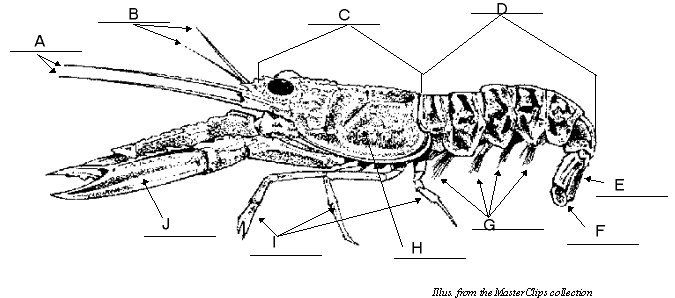
Question image

Letter C is identifying what part of a crayfish?

1

abdomen

2

cephalothorax

3

cheliped

4

telson

149

Slide image

150

Multiple Choice

The carapace is the part of a crayfish's exoskeleton to covers and protects the

1

head

2

thorax

3

abdomen

4

cephalothorax

151

Multiple Choice

Which animal is NOT a Crustacean?

1

Spider crab

2

Barnacle

3

Lobster

4

Horseshoe crab

152

Multiple Choice

Which is the only sessile member of the marine arthropods?
1
Coral 
2
Sponges
3
Anemones
4
Barnacles

153

Multiple Choice

Barnacles use their ___________ to help them get food.

1

Cilia

2

Cirri

3

Claws

4

Carapace

154

Slide image

155

Multiple Choice

Barnacles are hermaphroditic

1

true

2

false

156

Slide image

157

Multiple Choice

the small little swimmerets on the crustacean

1

cheliped

2

pleopods

3

uropods

4

pereopods

158

Slide image

159

Multiple Choice

What type of symmetry do Arthropods have?

1

Radial

2

Bilateral

3

Asymmetrical

160

Slide image

161

Multiple Choice

Which arthropod is considered a living fossil?
1
Blue Claw Crab
2
Lobster
3
Horseshoe Crab
4
Fiddler Crab

162

Slide image

163

Multiple Choice

what is a proboscis

1

an elongated sucking mouthpart that is typically tubular and flexible.

2

a pair of mouthparts used either for biting or cutting and holding food

3

used to recognize various chemical signals in water

4

used for touching to find its way around

164

Slide image

165

Slide image

166

Multiple Choice

bryozoans can be planktonic and as individual animals

1

yes

2

no

167

Slide image

168

Slide image

169

Multiple Choice

a horseshoe-shaped structure bearing ciliated tentacles around the mouth in certain small marine invertebrates.

1

hanophore

2

stenophore

3

lophophore

4

marophore

170

Slide image

171

Slide image

172

Slide image

173

Multiple Choice

What does the term echinoderm mean?

1

tube feet

2

star shaped

3

spiny skin

4

stomach foot

174

Multiple Choice

Which is an example of an Echinoidea member? 
1
sea star
2
sand dollar
3
sea cucumber
4
sea lilies 

175

Slide image

176

Multiple Choice

Echinoderms have an internal skeleton and a system of fluid-filled tubes called a(n)...
1
water vascular system
2
nervous system
3
notochord
4
ampulla

177

Slide image

178

Multiple Choice

What type of symmetry do adult echinoderms exhibit?

1

Asymmetry

2

Pentaradial symmetry

3

Bilateral symmetry

4

Trilateral symmetry

179

Slide image

180

Slide image

181

Slide image

182

Multiple Choice

for many/most of the echinoderms

1

the mouth is on top and anus on bottom

2

the anus is on top and the mouth is on the bottom

183

Slide image

184

Multiple Choice

Echinoderms have no head or brain.

1

True

2

False

185

Slide image

186

Slide image

187

Multiple Choice

Question image

What echinoderm is this?

1

sea lily

2

sea urchin

3

sea cucumber

4

sand dollar

188

Slide image

189

Slide image

190

Slide image

191

Multiple Choice

when did crinoids first come around?

1

2 mya

2

115 mya

3

4 bya

4

530 mya

192

Slide image

193

Slide image

194

Multiple Choice

humans are chordates

1

yes

2

no

195

Slide image

196

Multiple Choice

All chordates contain vertebrae.

1

True

2

False

197

Slide image

198

Multiple Choice

Which of the following chordates are also vertebrates?

1

Fish, Amphibians, Lancelets

2

Fish, Birds, Reptiles, Mammals

3

Tunicates, Sea squirts, Lancelets

4

Lampreys, Lancelets, Amphibians

199

Slide image

200

Multiple Choice

adult tunicates have a notochord

1

yes

2

no

201

Slide image

202

Slide image

203

Multiple Choice

lancelets have vertebrae

1

yes

2

no

204

Slide image

205

Multiple Choice

On which side of the body is the Hollow Nerve chord located?

1

Ventral

2

Anterior

3

Posterior

4

Dorsal

206

Slide image

207

Slide image

Marine Science Ch 9

Slide image

Show answer

Auto Play

Slide 1 / 207

SLIDE