Search Header Logo
  1. Resource Library
  2. Science
  3. Biology
  4. Sexual Vs Asexual Reproduction
  5. Sexual Vs. Asexual Reproduction
Sexual vs. Asexual Reproduction

Sexual vs. Asexual Reproduction

Assessment

Presentation

Science

7th Grade

Medium

NGSS
MS-LS3-2, MS-LS4-4, MS-LS4-5

+8

Standards-aligned

Created by

Katie Reche

Used 3+ times

FREE Resource

7 Slides • 39 Questions

1

Sexual vs. Asexual Reproduction
Natural Selection
Artificial Breeding

2

media

3

4

Multiple Choice

Question image

A mode of reproduction by which an organism arises from a single organism and inherit the identical genes of that parent

1

Asexual Reproduction

2

Sexual Reproduction

3

Genetic Variation

4

Alleles

5

Multiple Choice

Genetic Variation means
1
genetic differences in a population or species
2
genetic similarities between a population or species

6

Multiple Choice

What are some of the facts about asexual reproduction?
1
Takes only one mate to reproduce and takes a longer time to reproduce
2
Takes a shorter amount of time to reproduce and it takes two mates to reproduce
3
Reproduces diverse offspring and takes a longer time to reproduce
4
Takes only one mate to reproduce and takes a shorter time to reproduce

7

Multiple Choice

What are some of the facts about sexual reproduction?
1
Takes two mates to reproduce and takes a longer time to reproduce
2
Takes one mate to reproduce and takes a shorter amount of time to reproduce
3
Takes two mates to reproduce and takes a shorter amount of time to reproduce
4
Takes one mate to reproduce and takes a shorter amount of time to reproduce

8

Multiple Choice

Question image

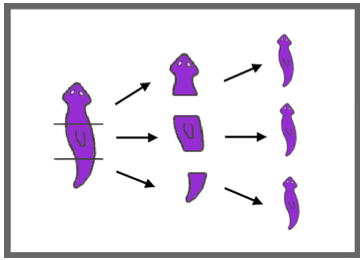
What kind of reproduction is pictured?

1

spore reproduction

2

fragmentation

3

parthenogenesis

4

budding

5

runner

9

Multiple Choice

Question image

What kind of reproduction is pictured?

1

spore reproduction

2

fragmentation

3

parthenogenesis

4

budding

5

runner

10

Multiple Choice

Question image

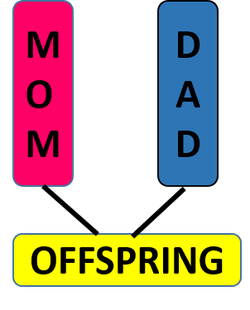
Requires two parents

1

sexual

2

asexual

11

Multiple Choice

Question image
The offspring from asexually reproduced organisms are?
1
Different than their parents
2
Identical to parents
3
Like a combination from both parents
4
A different species

12

Multiple Choice

Question image

A mode of reproduction in which an organism arises from two organisms and inherits half of its DNA from each parent

1

Sexual Reproduction

2

Asexual Reproduction

3

Cloning

4

Fragmentation

13

Multiple Choice

Question image

Requires only one parent

1

sexual

2

asexual

14

Multiple Choice

Where in an animal cell are chromosomes found?

1

Nucleus

2

Everywhere!

3

cell membrane

4

mitochondria

15

Multiple Choice

What part of a cell is made of genes, and passes traits from parents to their offspring (children)?

1

Cell wall

2

Chromosomes

3

Mitochondria

4

Cell membrane

16

Multiple Choice

Over time, organisms that reproduce only asexually do not have genetic variation. This can cause problems for the organisms because they might not be able to -

1

have cell divisions

2

produce enough offspring

3

adapt to their environment

4

grow

17

Multiple Choice

Question image

Which is a type of Asexual Reproduction

1

Sexual

2

Binary fission

3

Cells

4

organism

18

Multiple Choice

Sexual reproduction results in

1

No variation

2

Large amounts of variation

19

Multiple Choice

Question image

These are long strands of DNA in the nucleus that controls the traits of an organism.

1

Gene

2

Allele

3

Chromosomes

20

Natural Selection vs Selective Breeding

media

21

Natural Selection

"Survival of the Fittest"- Nature Decides


The process by which animals that are best adapted to their environment survive and pass on their genes.


Example: Giraffes with longer necks survive and reproduce because they can reach the food on the trees.

media

22

23

Multiple Choice

"Survival of the fittest" describes which theory

1

Natural selection

2

Selective breeding

24

Multiple Choice

Dalmatian dogs sometimes become deaf due to a recessive trait they may inherit. For this reason, some Dalmatian owners will not let their dogs have puppies if they are deaf. Allowing only Dalmatians that can hear to produce offspring is NOT an example of

1

artificial selection

2

crossbreeding

3

natural selectoin

4

selective breeding

25

Multiple Choice

A dichotomous key consists of a series of steps. Each step

has _____ statements.

1

1

2

2

3

3

4

4

26

Multiple Choice

Why are advantageous traits more likely to be passed onto offspring?
1
Because they are more likely to survive and reproduce.
2
Because they come from dominant alleles.
3
Because they come from recessive alleles.
4
Because the trait is an acquired phenotype.

27

Multiple Choice

Natural selection

1

organisms better adapted to their environment tend to survive and produce more offspring

2

process used by humans to develop new organisms with desirable characteristics

28

Multiple Choice

Question image

Natural selection is where ___________ decides which traits should be passed on.

1

nature

2

a human

3

traits

4

evolution

29

Multiple Choice

Which statement is MOST likely the explanation of why certain animals are able to adapt to changing environments?

1

Some species have greater variation

2

Some species evolve once they face change in their environment

3

Some species have unlimited habitats

4

Some species can change their environment back

30

Multiple Choice

Darwin observed many finch species on the Galapagos Islands. To explain these observations, he

proposed that each species evolved from the same common ancestor, which was a finch species

that migrated to the islands from the mainland. What additional evidence did Darwin use to support

his explanation?

1

The finch populations were very numerous, and different species often bred with one another.

2

The finch species lived in different habitats on different islands, which isolated them from one another.

3

The finch species were distributed evenly among all of the islands, but did not interbreed.

4

The beaks of the finches were identical, allowing them to eat the same foods on any of the islands.

31

Multiple Choice

Natural selection

1

organisms better adapted to their environment tend to survive and produce more offspring

2

process used by humans to develop new organisms with desirable characteristics

32

Multiple Choice

Question image

Natural selection is where ___________ decides which traits should be passed on.

1

nature

2

a human

3

traits

4

evolution

33

Multiple Choice

Question image
 According to natural selection, which organisms are most likely to survive?
1
The fastest organisms
2
The biggest organisms
3
The best-adapted organisms
4
The most domesticated organisms

34

Multiple Choice

Several kinds of birds live on a small island. A storm destroys most of the plants on which the birds feed and build their nests. Which kind of bird is MOST likely going to survive on the island?

1

the bird species with the strongest beaks

2

The bird species that are most able to adapt

3

the bird species that can fly the farthest

4

the bird species that have the greatest number

35

Multiple Choice

Several kinds of birds live on a small island. A storm destroys most of the plants on which the birds feed and build their nests. Which kind of bird is MOST likely going to survive on the island?

1

the bird species with the strongest beaks

2

The bird species that are most able to adapt

3

the bird species that can fly the farthest

4

the bird species that have the greatest number

36

Multiple Choice

A group of ponies lives in the Chincoteague National Wildlife Reserve in Virginia. The development of longer legs would increase over time if...

1

longer legs decreased the rate of reproduction of the ponies.

2

longer legs improved the survival rate of the ponies

3

longer legs made the ponies run more slowly.

4

longer legs prohibited the ponies from using available food sources.

37

Selective Breeding or Artificial Selection

Humans Decide


A process by which humans decide which 2 parents will mate in order to produce offspring with desired traits.


Example- Dog breeders breed a certain type of dog to get the desired fur color.

media

38

Multiple Choice

Question image

Selective breeding is where _____________ decides which traits should be passed on.

1

nature

2

a human

3

traits

4

evolution

39

Multiple Choice

1. The process of choosing parent organisms for desired characteristics is called

1

natural selection

2

Artificial selection

3

random selection

4

genetic manipulation

40

Multiple Choice

What is an example of artificial selection?

1

Letting dogs choose their own mate

2

Letting plants pollinate on their own

3

Crossing a labrador and a poodle to create a labradoodle

41

Multiple Choice

Which statement is true comparing natural selection and artificial selection?

1

In natural selection, traits benefit humans and in artificial selection, the traits benefit the species

2

In natural selection, traits benefit the species and in artificial selection, the traits benefit humans

3

In natural and artificial selection, the process takes hundreds of years to occur

4

In natural and artificial selection, nature determines what traits will be passed down to offspring.

42

Multiple Choice

Which statement best describes selective breeding?

1

Survival of the fittest.

2

Evolution.

3

Breeding for a desired trait.

43

Multiple Choice

Question image

What is 1 way selective breeding is DIFFERENT from natural selection?

(Selective breeding is also called artificial selection.)

1

Selective breeding does not produce any offspring at all.

2

Humans, not nature, control reproduction in selective breeding.

3

Nature, not humans, controls reproduction in selective breeding.

4

Animals are the only organisms that can be selectively bred, while both plants and animals can undergo natural selection.

44

Multiple Choice

Question image

Which is an example of SELECTIVE BREEDING ?

(also called artificial selection)

1

A giraffe’s long neck.

2

Training a horse to run faster.

3

Clipping a horse’s tail so it is not too long.

4

Cross breeding a labrador retriever with a poodle.

45

Multiple Choice

Over the past few thousand years, humans have helped to bring about changes in many plant and animal species in order to make them more useful. Examples include strong workhorses, hunging dogs, large-eared corn, and beautiful flower varaieties. These changes were primarily brought about by humans, using the process of

1

cloning

2

natural selection

3

asexual reproduction

4

selective breeding

46

Multiple Choice

Some dairy farmers want to increase the amount of milk produced by their cows. How can the farmers use selective breeding to increase milk production?

1

By limiting the number of offspring per cow

2

By choosing cows that are high milk producers

3

By choosing cows that can produce milk after eating the most food

4

By increasing the age of the cows that are bred

Sexual vs. Asexual Reproduction
Natural Selection
Artificial Breeding

Show answer

Auto Play

Slide 1 / 46

SLIDE