Search Header Logo
APT Test Review

APT Test Review

Assessment

Presentation

Science, Physics, Chemistry

6th - 8th Grade

Medium

NGSS
MS-PS1-1

Standards-aligned

Created by

Jawara Senghor

Used 36+ times

FREE Resource

15 Slides • 31 Questions

1

by Mr. Senghor

media

2

​The Atom

An atom is the smallest particle into which an element can be divided and still be the same substance. All atoms of a particular element are identical but are different from atoms of all other elements. Every atom of silver, for example, is the same as every other atom of silver but different from an atom of iron.

media

3

​Parts of an atom

The Nucleus​

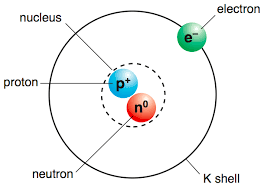
Protons are the positively charged particles within the atom. They have a mass of of 1u. Neutrons are particles that carry no electric charge and have the same mass as a proton (1u). Together, protons and neutrons form the nucleus of the atom located in its center.

media

4

​Parts of an atom

The electron cloud

Electrons are the negatively charged particles in the atom that move around the nucleus at almost the speed of light. Scientists have found that it is impossible to determine the exact position of an electron and for that reason, the electrons are pictured as being in a cloud around the nucleus.

media

5

media

6

Multiple Choice

What are the 3 subatomic particles of an atom?

1

carbon atom, proton, electron

2

quarks, neutrons, protons

3

nucleus, protons, electrons

4

protons, neutrons, electrons

7

Multiple Choice

Which subatomic particle has a negative charge?

1

proton

2

neutron

3

electron

8

Multiple Choice

Question image

Which subatomic particles contribute the most to the mass of an atom?

1

Protons and Neutrons

2

Protons only

3

Electrons only

9

Multiple Choice

Question image
What subatomic particle(s) would be found orbiting the nucleus?
1
Neutrons only
2
Electrons only
3
Protons and Neutrons
4
Protons and Electrons

10

Multiple Choice

Question image

Which subatomic particles contribute the least to the mass of an atom?

1

Neutrons

2

Protons

3

Electrons

11

​Identifying Atoms

  • By atomic number - The number of protons in the nucleus of an atom is the atomic number of that atom. The number of protons distinguishes the atoms of one element from the atoms of another. For example, every hydrogen atom contains one proton while every carbon atom has exactly six protons in its nucleus.

  • By mass number - The combined number of protons and neutrons in an atom's nucleus is its mass number. While the atoms of a certain element always has the same number of protons, they may not always have the same number of neutrons. Atoms of the same element that have a different number of neutrons are called Isotopes.

12

media

13

Multiple Choice

an atom with atomic number 6 would have how many protons 
1
6
2
12
3
3
4
cannot be determined 

14

Multiple Choice

What is the mass number defined as?
1
the number of protons
2
the number of protons and neutrons
3
the number of neutrons
4
the number of protons and electrons

15

Multiple Choice

Question image
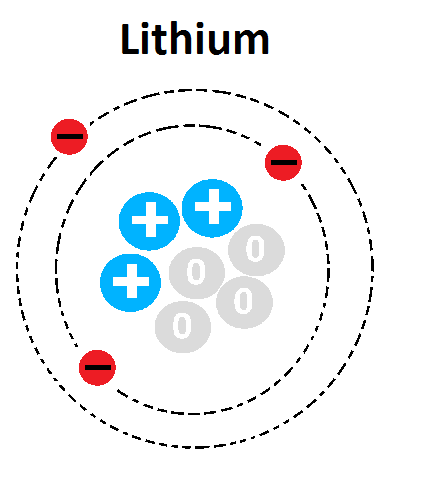
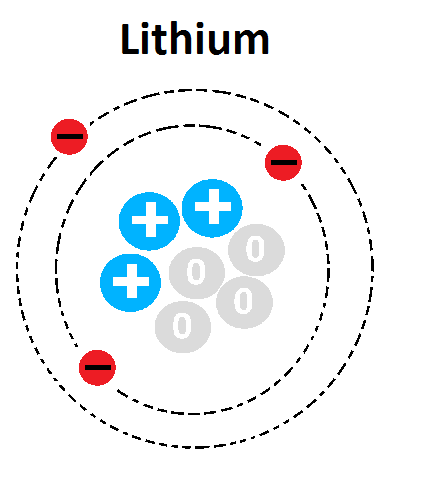
What is the atomic number of this atom?
1
1
2
3
3
4
4
7

16

Multiple Choice

Question image

What is the mass number of this atom?

1

1

2

3

3

4

4

7

17

​The Periodic Table

The ​periodic table of the elements, in chemistry, is the organized array of all the chemical elements in order of increasing atomic number. When the chemical elements are thus arranged, there is a recurring pattern called the “periodic law” in their properties, in which elements in the same group have similar properties. The initial discovery, made by Dmitri I. Mendeleev in the mid-19th century, has been of immense value in the development of chemistry.

media

18

​Square Biz

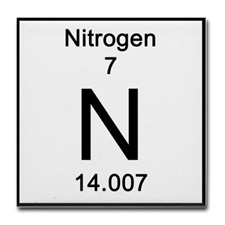
The Periodic Table is not simply a list of the names of a bunch of elements, it contains useful information about each of them. The table is shown as a grid of squares, with each square containing the element's atomic number, chemical symbol, element name and average atomic mass.

media

19

media

20

Multiple Choice

Question image

Where is the element's atomic NUMBER located?

1

the top

2

the bottom

3

the top + the bottom

4

the number of protons + the number of neutrons

21

Multiple Choice

Question image
What is the number of protons that the element in this image contain?
1
14
2
7
3
15
4
18

22

Multiple Choice

Question image
What is the atomic mass of "F"
1
9
2
18
3
17
4
19

23

​Regions of the Periodic Table

​Elements of the periodic table can be classified into three major categories: metals, nonmetals and metalloids. There is a zig-zag line that looks like a staircase can help you identify where these elements are located. The elements bordering the zig-zag line are metalloids. All of the elements to the left of the zig-zag line are metals, except for hydrogen. Nonmetals are to the right of the metalloids.

media

24

​Groups & Periods

Every vertical column of elements is called a group. In total, there are 18 groups on the periodic table. Elements in the same group often have similar physical and chemical properties and for this reason, a group is sometimes called a family. The elements in a group are similar because they have the same number of valence electrons.

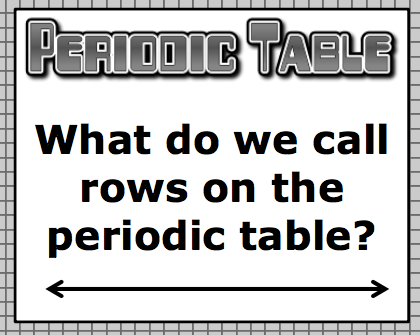
Each horizontal row of elements on the periodic table is called a period. The physical and chemical properties of elements change in predictable ways from one end of the period to another. Atomic size increases as you move from left to right. Also, elements in the same period have the same number of electrons shells.

25

media

26

Multiple Choice

how many groups/families are on the table

1

15

2

16

3

17

4

18

27

Multiple Choice

what is the biggest group on the table

1

metals

2

nonmetals

3

metaloids

4

halogens

28

Multiple Choice

how many rows are on the table

1

4

2

5

3

6

4

7

29

Multiple Choice

where are the metaloids found

1

far left, vertical

2

stair step/diagonal

3

far right horizontal

4

at the bottom

30

​APE MAN

​In order to figure out the structure of an atom, you can use the acronym APE MAN along with the periodic table. The acronym is as follows

Atomic Number =

Protons =

Electrons

Mass number -

​Atomic number =

Neutrons

31

media

32

Multiple Choice

The smallest unit of a pure substance that has the properties of that substance
1
element
2
atom
3
neutron
4
compound

33

Multiple Choice

An atom's overall charge is ________.
1
positive 
2
depends
3
neutral 
4
negative 

34

Multiple Choice

Question image
Rutherford's gold foil experiment provided evidence that...
1
negative and positive charges are spread evenly throughout the atom.
2
alpha particles have a positive charge.
3
gold is not a dense as previously thought.
4
there is a dense positively charged nucleus at the center of an atom.

35

Multiple Choice

What is the number of protons in the nucleus of an atom that determines the chemical properties of an atom?

1

mass number

2

atomic mass

3

atomic number

4

atomic symbol

36

Multiple Choice

What is the combined mass of all the protons and neutrons of an atom and is approximately equal to the number of protons and neutrons?

1

atomic mass

2

atomic number

3

subatomic particles

4

nucleus weight

37

Multiple Choice

how many rows are on the table

1

4

2

5

3

6

4

7

38

Multiple Choice

what is the small group of elements called that include C,N,O

1

metals

2

nonmetals

3

metaloids

4

noble gases

39

Multiple Choice

Elements in the same ________ are more chemically similar.
1
group
2
period
3
club
4
table

40

Multiple Choice

The majority of elements on the periodic table are
1
man made.
2
nonmetals.
3
metals.
4
gases.

41

Multiple Choice

Question image
Beryllium is in group number______.
1
Group 2
2
Group 3
3
Group 4
4
Group 7

42

Multiple Choice

The majority of elements on the periodic table are
1
man made.
2
nonmetals.
3
metals.
4
gases.

43

Multiple Choice

Which elements have the most similar chemical properties?
1
K and Na
2
K and Ca
3
K and Cl
4
K and S

44

Multiple Choice

Question image
The atoms along the staircase are called 
1
metals
2
nonmetals
3
metalloids
4
noble gases

45

Multiple Choice

Question image
1
Periods
2
Groups

46

Multiple Choice

What do the horizontal rows on the periodic table tell us?

1

The number of orbitals

2

The number of valence electrons (the electrons on the outer most shell)

by Mr. Senghor

media

Show answer

Auto Play

Slide 1 / 46

SLIDE