Search Header Logo
Review Unit 11, 12, & 13

Review Unit 11, 12, & 13

Assessment

Presentation

Chemistry

9th - 12th Grade

Hard

NGSS
HS-PS3-4, HS-ESS2-5

Standards-aligned

Created by

Ricardo Mora

FREE Resource

8 Slides • 30 Questions

1

Review Unit 11 (Gas Laws), 12 (Solutions), & 13 (Acids / Bases)

By Ricardo Mora

2

media

In this unit, you learned about how gasses behave when conditions change and when conditions are @STP. We also dealt with conditions that are IDEAL for gasses to react. The conditions (Variables) deal with pressure, volume, temperature, and number of moles of a gas.

Some text here about the topic of discussion.

Unit 11 Gas Laws

3

Multiple Choice

You have a gas that has a pressure of 2 ATM and a volume of 10L.  What would be the new volume if the pressure was changed to 1 ATM?
1
5 L
2
20 L
3
It would stay at 10L
4
1 L

4

Multiple Choice

A gas of volume V is placed in a balloon.  Determine the new volume of the balloon if the pressure is tripled. The new volume will be ____ what it was originally.  
1
1/3 of
2
1/6 of
3
1/9 of
4
 9 times

5

Multiple Choice

The volume occupied by 3 moles of N2 at 0oC and 101.3 kPa is ____.  
1
67.2 L
2
22.4 L
3
7.47 L
4
134.4 L

6

Multiple Choice

What is 50 C in Kelvin?
1
223
2
323
3
100
4
50

7

Multiple Choice

A sample of oxygen at 28.0°C has 340.0 kPa. What will its temperature be at 150.0 kPa?
1
132.8 K
2
132.8 °C
3
682.2 K
4
12.35 K

8

Multiple Choice

A sample of a gas has a volume of 852 mL at 298 K. What temperature is necessary for the gas to have a volume of 945 mL?
1
57.5 °C
2
57.5 °K
3
330.5 K
4
330.5°C

9

Multiple Choice

The pressure of a 6.5 L sample of oxygen gas is measured to be 3.8 atm. If the gas is transferred into a 12 L tank, what is the new pressure?

1

6.6 atm

2

3.9 atm

3

4.5 atm

4

2.1 atm

10

Multiple Choice

If the pressure exerted by a gas at 25 degrees C in a volume of 0.044 L is 3.81 atm, how many moles of gas are present?
1
.002766 mole
2
.0069 mol
3
2.766 mol
4
9.887 mol

11

media

In this unit, you learned about the concentration of solutions using Molarity (M=mol/liters)and how to dilute a concentrated solution by using M1V1=M2V2. We also discussed the properties of water and why water is THE BEAST in being able to dissolve solutes.

Some text here about the topic of discussion.

Unit 10: Solutions

12

Multiple Choice

Water is a universal solvent because it...
1
It can be found anywhere
2
It freezes when it gets cold
3
floats when frozen
4
Dissolves most substances

13

Multiple Choice

Question image
The fact that ice floats on liquid water is due to the fact that water's solid is ___________ than it's liquid form
1
less polar
2
more polar
3
less dense
4
more dense

14

Multiple Choice

Solution where more solute can still be dissolved at the given temperature. 
1
Saturated
2
Unsaturated
3
Supersaturated
4
Homogeneous solution

15

Multiple Choice

Question image
Which solute is the most soluble at 10 ⁰C?
1
KI
2
KClO3
3
NH4Cl
4
NH3

16

Multiple Choice

Question image
How many grams of SOcan dissolve at 50 ⁰C?
1
5 g
2
10 g
3
20 g
4
39 g

17

Multiple Choice

Question image

The fact that water can stick to other substances is called:

1

Ph

2

Adhesion

3

Cohesion

4

Insulation

18

Multiple Choice

Question image

Heat Capacity is a measure of the heat required to raise the temperature of 1g of a substance by 1°C.


So...

True or False:

Water has a very high heat capacity, which means it resists changing temperature when heat is added or removed.

1

True

2

False

19

Multiple Choice

What is the molarity of 4 g of NaCl (MM=58.45g/mol) in 3,800 mL of solution?

1

0.018 M

2

0.0011 M

3

1.052 M

4

0.062 M

20

Multiple Choice

What is the molarity of 122.5 g of AlCl3 in 1.0 L of solution? (MM = 133 g/mol)

1

1.225 M

2

0.92 M

3

0.1225 M

21

Multiple Choice

If I have 340 mL of a 0.5 M NaBr solution, what will the concentration be if I add 560 mL more water to it?

1

.188 M

2

3.78 M

3

.389 M

4

1.76 M

22

Multiple Choice

If I dilute 250 mL of 0.10 M lithium acetate solution to a volume of 750 mL, what will the concentration of this solution be?

1

2 M

2

0.02 M

3

0.03 M

4

0.08 M

23

media

​In this unit, you learned about the two different theories of an Acid and a Base. You were also shown how water can act like an acid or a base according to the BrΦnsted-Lowry definition.

Some text here about the topic of discussion.

Unit 13: Acids / Bases

24

25

Ants and bees have acids

Acids on your skin sting because they are corrosive and attack your body tissues. This is why lemon juice stings if you get it in a cut on your finger. Certain types of ants and bees sting because they inject you with formic acid.

media

26

Dilute and concentrated acids

Most fruits contain acids but you can eat them because the acid in them is very dilute. A dilute acid contains large amounts of water and a small amount of acid. Some of the acids that we use at school laboratories are concentrated acids. They contain large amount of acid and very little water.

media

27

Multiple Choice

A substance is found to have the following characteristics:


Very bitter taste

Feels slippery to the touch

Produces OH- ions when dissolved in water


In what category would the substance be classified?

1

acid

2

base

3

enzyme

4

fatty acid

28

Multiple Choice

HNO2

1

a base

2

a salt

3

an acid

4

an ionic compound

29

Multiple Choice

Releases hydrogen in an aqueous solution.
1
base
2
strong base
3
acid
4
weak base

30

Multiple Choice

KOH is ...

1

an acid

2

a base

3

a salt

4

an ionic compound

31

Multiple Choice

An Arrhenius base:

1

donates H+

2

accepts H+

3

produces H+

4

produces OH-

32

Multiple Choice

An Arrhenius acid:

1

donates H+ to another substance

2

accepts H+ from another substance

3

produces H+

4

produces OH-

33

Multiple Choice

A Bronsted Lowry base:

1

donates H+ to another substance

2

accepts H+ from another substance

3

produces H+

4

produces OH-

34

Multiple Choice

According to Bronsted-Lowry, what is the definition of an BASE?

1

a substance that donates a hydrogen (H+) ion

2

a substance that donates a hydroxide (OH-) ion

3

a substance that accepts a hydrogen (H+) ion

4

a substance that accepts a hydroxide (OH-) ion

35

Multiple Choice

Question image
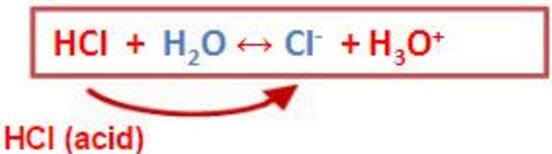
Which of the following shows the correct conjugate acid base pair?
1
HCI (acid) / H3O+ (conjugate base)
2
HCI (acid) / CI- (conjugate base)
3
HCI (base) / CI- (conjugate acid)
4
HCI (base) / H3O+ (conjugate acid)

36

Multiple Choice

Question image
What is the conjugate acid in the following equation?
1
PO43- 
2
HNO3 
3
NO3- 
4
HPO42-

37

Multiple Choice

A sour taste is a characteristic of:

1

acids

2

bases

3

neutral

4

pH scale

38

media

I have truly enjoyed hanging out with you and teaching you a few things about Chemistry! Have an awesome summer and be safe!!!!! I will see you next year. :)

Some text here about the topic of discussion.

Thank you for being such awesome students!!

Review Unit 11 (Gas Laws), 12 (Solutions), & 13 (Acids / Bases)

By Ricardo Mora

Show answer

Auto Play

Slide 1 / 38

SLIDE