Interactions of Life Forms & Ecosystem Dynamics
Presentation
•
Biology
•
9th Grade
•
Medium
+14
Standards-aligned
Laura Rodriguez
Used 6+ times
FREE Resource
21 Slides • 42 Questions
1
Interactions of Life Forms & Ecosystem Dynamics
By Laura Rodriguez
2
The variety of traits in an organism are the result of the expression of various combinations of alleles
Inheritance
3
Meiosis has a role in genetic variation between generations
Meiosis creates gametes & increases genetic variation
Meiosis
4
Exchange of genes between non-homologous chromosomes
Increases genetic variation
Crossing Over
During Metaphase I, homologous pairs line up on the equator
Their orientation is random
Creates many different gamete combinations, increasing genetic variation of the gametes
Independent Assortment
5
Multiple Choice
6
Multiple Choice
INCREASES GENETIC VARIATION
TAKES PLACE IN PROPHASE I
CROSSING OVER
ALL ARE TRUE
7
Multiple Choice
8
Multiple Choice
9
Multiple Choice
Genetic females have ____ and genetic males have _____ chromosomes.
10
Mendel discovered the principles of inheritance with experiments in which large numbers of pea plants were crossed
Mendel & Inheritance
11
Many different ways that traits can be inherited
Punnett square can be use to predict inheritance of traits
Predicting Inheritance
12
In mice, black fur color is dominant to white fur color. Predict the genotype and phenotype ratio of a cross between a heterozygous black mouse and a white mouse.
Monohybrid Traits
13
In chickens, feather color is a co-dominant trait. Feathers can either be black, white, or black & white speckled. Predict the genotypes and phenotypes of a cross between a chicken with black feathers and a chicken with white feathers
Co-dominant traits
14
In flowers, red is incompletely dominant to white. The heterozygous phenotype is pink. Predict the genotypes and phenotypes of a cross between a pink flower and a white flower.
Incomplete Dominance traits
15
In humans, the allele for normal blood clotting is dominant to the allele for hemophilia. A woman heterozygous for the trait marries a man with hemophilia. What is the probability of the couple having a daughter with hemophilia?
Sex-linked traits
16
A man who is heterozygous for blood type A and a woman homozygous for blood type B have a child. What is the probability that the child will have blood type A?
Multiple Alleles
17
Multiple Choice
When the two alleles of a particular gene are different:
heterozygous
homozygous
genotype
phenotype
18
Multiple Choice
The set of alleles that an individual has:
heterozygous
phenotype
homozygous
genotype
19
Multiple Choice
The allele that is fully expressed by itself:
recessive
homozygous
dominant
heterozygous
20
Multiple Choice
The allele that is not expressed when the dominant corresponding allele is present:
dominant
heterozygous
recessive
homozygous
21
Multiple Choice
A version of a gene:
allele
trait
character
generation
22
Multiple Choice
When the two alleles of a particular gene are the same:
homozygous
genotype
heterozygous
phenotype
23
Multiple Choice
A detectable trait or traits that result from the genotype such as color, shape, etc:
genotype
homozygous
heterozygous
phenotype
24
Multiple Choice
On this pedigree, the allele for curly hair is dominant. The couple labeled 2 both have curly hair, but have a daughter who does not have curly hair. Therefore, we can tell from the chart that for the couple labeled 2 -
the male is heterozygous and the female is heterozygous.
the male is homozygous recessive and the female is homozygous dominant.
25
Multiple Choice
If this pedigree shows a recessive disorder, what MUST the genotype of individual 4 be?
HH
Hh
hh
26
The diversity of life has evolved and continues to evolve through natural selection
Evolution
27
Alleles code for traits in organisms
Natural selection increases the frequency of those alleles that make an individual more fit for an environment
Natural selection can only occur if there is genetic variation in a population
Mutations, meiosis & sexual reproduction increase variation
Natural Selection
28
Selection pressures are external agents which affect an organism’s ability to survive in a given environment
Types of selection pressure:
Resource availability
Environmental conditions
Biological factors
*** THESE ARE ALSO LIMITING FACTORS FOR POPULATIONS!!
Selection Pressures
29
Patterns of Evolution
Divergent Evolution - species share a common ancestor - diverged into separate species because of some type of isolation
Convergent Evolution - species do not share a common ancestor, but have similar adaptations because of similar environments
Co-evolution - the evolution of the species influence each other
Gradualism - small changes over long periods of time
Punctuated Equilibrium - periods of no change followed by periods of rapid change
30
Evolution has scientific evidence and explanations
Evidence is found in fossil records, comparative structures, and through DNA analysis
Evidence of Evolution
31
Multiple Choice
Due to pollution, a pond becomes darker over time. Which trait variation became more common?
light fish
dark fish
32
Multiple Choice
33
Multiple Choice
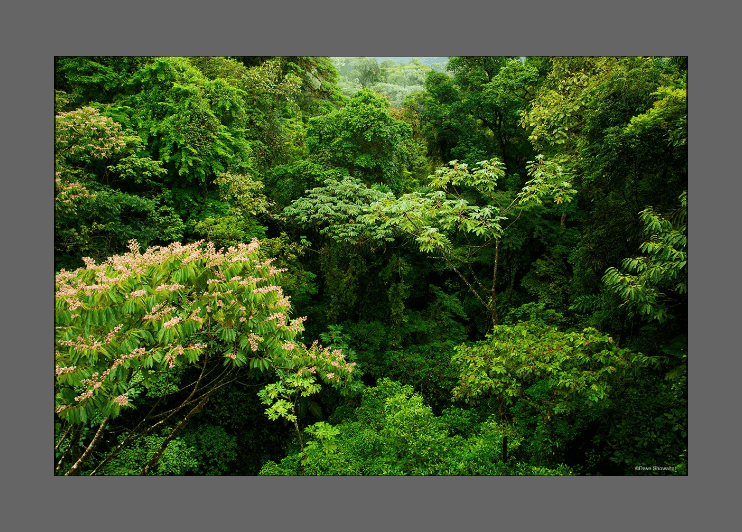
A yellow morph and green morph of an insect lives in the rainforest canopy. You would expect:
the green population to increase and the yellow to decrease
both populations should stay the same
both populations will increase
the green population to decrease and the yellow to increaseThis is a wrong answer
34
Multiple Choice
35
Multiple Choice
Similarities in bone arrangements, like those in the picture, support the hypothesis that...
these organisms are not well adapted
these organisms share a common ancestor
these organisms all share the same DNA sequences
these organisms are members of the same species
36
Multiple Choice
37
Multiple Choice
38
Multiple Choice
Researchers discovered that the legs of birds are homologous to the feet of reptiles. Which claim is BEST supported by this fact?
Birds do not require legs
Birds and reptiles have a common ancestor
They randomly developed the same structures
Selection pressures have acted on birds, but not on reptiles
39
Multiple Choice
Hummingbirds have a beak just the right length to reach the nectar in a cardinal flower and as they feed their foreheads bump into the pollen structure. Cardinal flowers are red which hummingbirds can see but bees can’t. Cardinal flower’s pollen structure is just the right length for the hummingbird to pick up pollen as it feeds
Convergent
Divergent
Coevolution
40
Multiple Choice
In the ocean surrounding Antarctica, there are fish that survive the cold water by using a molecule made of glycoproteins that circulates the blood and keeps it from freezing. Certain kinds of worms that live in the Arctic ocean also make antifreeze proteins that help them live in icy water.
Convergent Evolution
Divergent Evolution
Coevolution
41
Multiple Choice
The Galápagos tortoises share a common ancestor, but have necks of different lengths to best reach the food they need in their environment.
Convergent
Divergent
Coevolution
42
Interactions within & among populations include:
carrying capacities
limiting factors (selection pressures), &
growth curves
Some text here about the topic of discussion.
Ecology
43
In nature no species exists in total isolation – all organisms interact with both the abiotic environment and other organisms
If two species interact directly within a shared environment, they share a positive association (they co-exist)
If interactions within an environment are mutually detrimental to both species, they share a negative association (do not co-exist)
Predator-Prey
Symbiosis
44
Nutrients and energy cycle through ecosystems
Producers are always at the bottom of a food pyramid/energy pyramid
Consumers can function at multiple levels in a food web
Energy Flow
45
Nutrients refer to the material required by an organism, and include elements such as carbon, nitrogen and phosphorus
The supply of inorganic nutrients on Earth is finite – new elements cannot simply be created and so are in limited supply
Hence chemical elements are constantly recycled after they are used:
Autotrophs obtain inorganic nutrients from the air, water and soil and convert them into organic compounds
Heterotrophs ingest these organic compounds and use them for growth and respiration, releasing inorganic byproducts
When organisms die, microbes decompose the remains and free inorganic materials into the soil
The return of inorganic nutrients to the soil ensures the continual supply of raw materials for the autotrophs
Carbon Cycle
Nitrogen Cycle
Water Cycle
46
Changes in the communities in ecosystems
Primary - no soil
Secondary - soil remains
Ecological Succession
47
Multiple Choice
48
Multiple Choice
49
Multiple Choice
An organism's place in the biotic environment and its role in an ecosystem is
Niche
Epitope
Habitat
Habit
50
Multiple Choice
51
Multiple Choice
52
Multiple Choice
53
Multiple Choice
54
Multiple Choice
55
Multiple Choice
If a scientist in New Zealand was studying how a group of herbivores interacted with a group of omnivores, and all of their abiotic surroundings, what level of ecology would she be studying?
Community
Population
Species
Ecosystem
Biome
56
Multiple Choice
57
Multiple Choice
Plants obtain light from the sun to make food during _______________.
respiration
pollination
reproduction
photosynthesis
58
Multiple Choice
Is soil a biotic or abiotic factor?
biotic
abiotic
59
Multiple Choice
Is pH a biotic or abiotic factor?
biotic
abiotic
60
Multiple Choice
What is the carrying capacity of the graph?
1000
8000
800
600
61
Multiple Choice
62
Multiple Choice
63
Multiple Choice
A scientist was studying a population of fish in a pond over a period of 10 years. He observed that the population increased each year for 3 years, and then remained nearly constant for the rest of the study. The best explanation for this observation is that the population had
stopped reproducing
reached carrying capacity
mutated into a different species
run out of food and all died
Interactions of Life Forms & Ecosystem Dynamics
By Laura Rodriguez
Show answer
Auto Play
Slide 1 / 63
SLIDE

Similar Resources on Wayground
59 questions
S3 - Pop decades Lesson 3
Presentation
•
9th Grade
58 questions
Biology Review
Presentation
•
8th Grade
57 questions
Unit 5D
Presentation
•
9th Grade
56 questions
Cell Structures & Functions
Presentation
•
10th - 11th Grade
57 questions
Theory of Evolution
Presentation
•
10th Grade
60 questions
Types of Clauses
Presentation
•
9th Grade
58 questions
La historia de Seppi
Presentation
•
9th Grade
61 questions
Complex Patterns of Inheritance
Presentation
•
9th Grade
Popular Resources on Wayground
15 questions
Grade 3 Simulation Assessment 1
Quiz
•
3rd Grade
22 questions
HCS Grade 4 Simulation Assessment_1 2526sy
Quiz
•
4th Grade
16 questions
Grade 3 Simulation Assessment 2
Quiz
•
3rd Grade
19 questions
HCS Grade 5 Simulation Assessment_1 2526sy
Quiz
•
5th Grade
17 questions
HCS Grade 4 Simulation Assessment_2 2526sy
Quiz
•
4th Grade
20 questions
Equivalent Fractions
Quiz
•
3rd Grade
24 questions
HCS Grade 5 Simulation Assessment_2 2526sy
Quiz
•
5th Grade
20 questions
Math Review
Quiz
•
3rd Grade
Discover more resources for Biology
35 questions
Biology EOC Review
Quiz
•
9th Grade
16 questions
AP Biology: Unit 1 Review (CED)
Quiz
•
9th - 12th Grade
50 questions
Biology EOC Review
Quiz
•
9th Grade
20 questions
AP Biology: Unit 3 Review (CED)
Quiz
•
9th - 12th Grade
21 questions
AP Biology: Unit 6 Review (CED)
Quiz
•
9th - 12th Grade
14 questions
AP Biology: Unit 4 Review (CED)
Quiz
•
9th - 12th Grade
20 questions
Food Chains and Food Webs
Quiz
•
7th - 12th Grade
20 questions
Transcription and Translation (Protein Synthesis)
Quiz
•
9th Grade