Search Header Logo
Earth's Early History

Earth's Early History

Assessment

Presentation

Science

10th - 12th Grade

Medium

NGSS
MS-LS1-1, MS-LS1-6, HS-ESS1-2

+12

Standards-aligned

Created by

Nicole Musselwhite

Used 11+ times

FREE Resource

17 Slides • 22 Questions

1

media

2

media

3

Multiple Choice

How old do scientists think the Universe is?
1
13.8 billion years old
2
4.5 billion years old
3
24,000 years old
4
5 years old

4

media

5

Multiple Choice

Which of the following is the correct order of ages in geologic time?

1

Eon > Era > Period > Epoch

2

Era > Period > Eon > Epoch

3

Epoch > Era > Eon > Period

4

Period > Eon > Era > Epoch

6

media

7

media

8

media

9

Multiple Choice

How do scientist think that early atmosphere was probably formed?

1

Gases from volcanoes

2

Lava from volcanoes

3

Gases released from bacteria

4

They are unsure how it is formed

10

Multiple Choice

Volcanic "outgassings" provided sources of

1

water vapor

2

carbon dioxide

3

nitrogen

4

all of the answer choices

11

media

12

Multiple Choice

Modern day atmosphere has approximately what percentage of the air is Oxygen ?

1

1%

2

21%

3

78%

4

52%

13

media

14

Multiple Choice

Where do scientist thing the water from the oceans came from?

1

Plants

2

Dinosaurs

3

Volcanoes

4

Rain

15

media

16

Multiple Choice

Pangea was the first supercontinent on Earth.

1

True

2

False

17

media

18

Multiple Choice

Precambrian shields are made of deformed metamorphic rocks.

1

True

2

False

19

media

20

media

21

media

22

Multiple Choice

Which of the following is a defining characteristic that all protobionts had in common?

1

the ability to synthesize enzymes

2

a surrounding membrane or membrane-like structure

3

RNA genes

4

the ability to replicate RNA

23

media

24

Multiple Choice

Question image

The graph illustrates the change in oxygen concentration that occurred around 2.3 billion years ago. Which of the events listed below most likely led to this rapid rise in atmospheric oxygen?

1

Evolution of multicellularity

2

Evolution of photosynthetic bacteria

3

Origin of land plants

4

Origin of land animals

25

media

26

Multiple Choice

Which molecule did cyanobacteria add to the atmosphere?

1

CO2

2

H2O

3

CH4

4

O2

27

Multiple Choice

the chemical process in which Carbon dioxide and Water combine, using energy from the Sun, to make Sugar and Oxygen

1

Molecule

2

Water

3

Photosynthesis

4

Glucose

28

Multiple Choice

The evolution of cyanobacteria led to which event in Earth's history?

1

The Great Nitration Event

2

The Great Oxygenation Event

3

The Great Carbon Dioxide Event

4

The Great Ozonification Bifurcation Event

29

media

30

Multiple Choice

Choose the answer that represents the correct sequence of events in the origin of life.

I. formation of protobionts

II. synthesis of organic compounds

III. evolution of prokaryotes

IV. evolution of eukaryotes

1

I, II, III, IV

2

I, III, II, IV

3

II, III, I, IV

4

II, I, III, IV

31

Multiple Choice

True or False. Eukaryotes evolved before prokaryotes, which explains why prokaryotes contain mitochondria and chloroplasts with DNA.

1

True

2

False

32

Multiple Choice

Which of the following is the strongest evidence that prokaryotes evolved before eukaryotes?

1

the primitive structures of plants

2

meteorites that have struck the Earth

3

abiotic experiments that constructed amino acids in the laboratory

4

the oldest fossilized cells resemble prokaryotes

33

Multiple Choice

Which types of organisms developed first due to the early environmental conditions on Earth?

1

prokaryotic and aerobic

2

prokaryotic and anaerobic

3

eukaryotic and aerobic

4

eukaryotic and anaerobic

34

Multiple Choice

Question image
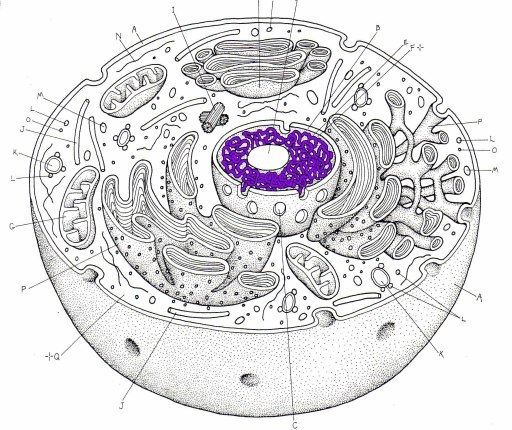
Cells without a nucleus are said to be _____________________.
1
Eukaryotic
2
Prokaryotic

35

Multiple Choice

Question image
Which type of cell came first?
1
Eukaryotic
2
Prokaryotic
3
Plant
4
Both Eukaryotic and Prokaryotic cells evolved around the same time

36

Multiple Choice

Question image
What kind of cell is this?
1
Eukaryotic
2
Prokaryotic

37

Multiple Choice

What is unicellular? 
1
one cell 
2
many cells 
3
no nuclues 
4
DNA 

38

Multiple Choice

What is multicellular? 
1
one cell 
2
no cells 
3
many cells 
4
no nucleus 

39

media
media

Show answer

Auto Play

Slide 1 / 39

SLIDE