Search Header Logo
  1. Resource Library
  2. Science
  3. Earth & Space Science
  4. Earth Science
  5. Earth Science Earth's Dimensions
Earth Science- Earth's Dimensions

Earth Science- Earth's Dimensions

Assessment

Presentation

Science

10th Grade

Hard

Created by

Sarah Sheehan

FREE Resource

10 Slides • 45 Questions

1

Multiple Choice

Question image

The earth's actual shape is most correctly described as...

1

Circle

2

A perfect sphere

3

Oblate Sphere

4

An eccentric ellipse

2

Open Ended

Question image

What do the contour

lines on a

topographic map

show us?

3

Multiple Choice

To find the contour interval, you need to....

1

1. Find a friend

2. Ask them to do it for you

3. Sit back and watch them do it

2

1. Find two known elevations

2. Add them together

3. Multiply by the number of spaces

3

1. Find two known elevations

2. Find the difference

3. Divide by the number of spaces

4

1. Find two known elevations

2. get confused

3. Cry

4

Multiple Choice

Question image

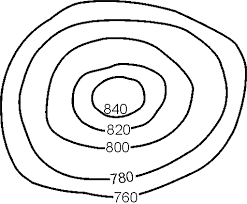
What is the elevation of point A on this map? (The contour interval is 10 ft.)

1

740 ft.

2

760 ft.

3

730ft

4

750ft.

5

Multiple Choice

Question image
In which direction is Mill River flowing?
1
Southeast
2
Southwest
3
Northeast
4
Northwest

6

Multiple Choice

Question image
If we were in a plane, Path B --> C is about the same distance as path E --> N. But, which path is the easier walk? 
1
B --> C is the easier walk
2
E --> N is the easier walk
3
B --> C and E --> N are the same walking distance

7

Definition of isoline:

a line on a map or chart along which there is a constant value (elevation)

8

Multiple Choice

The slope or steepness of a stream channel

1

Base Level

2

Gradient

3

Discharge

4

Infiltration

9

Open Ended

What is a topographic map used for?

10

Fill in the Blanks

Type answer...

11

Multiple Choice

We use ______ ______ to measure the height of a location above sea level.

1

contour lines

2

contour interval

3

isotherms

4

isobars

12

The 5 Rules for Drawing Isolines

  • Connect points of EQUAL value.

  • Isolines should be gentle and curved.

  • Isolines are closed curves.

  • They NEVER cross.

  • Isolines are PARALLEL-ish

13

media

14

Gradient

change in field value/ distance

15

Open Ended

Question image

If the distance between A and B is 10 miles, what is the gradient of this slope?

16

Multiple Choice
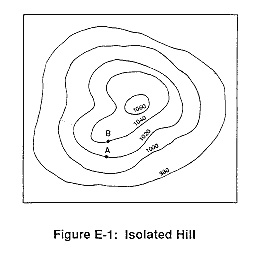
Question image
What is the contour interval on this map?
1
100
2
10
3
15
4
20

17

Multiple Choice

Question image
Determine the contour interval:
1
5 m
2
10 m
3
15 m
4
20 m

18

Multiple Choice

Question image
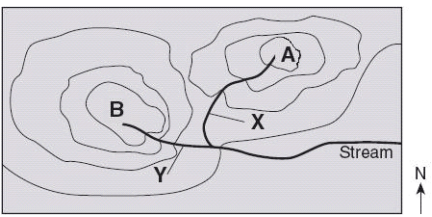
Which direction is the stream flowing?
1
northward
2
southward
3
westward
4
eastward

19

Multiple Choice

Time zones are created by lines of ____.

1

latitude

2

longitude

20

Multiple Choice

Question image

Location D is located at which coordinates?

1

30oN, 90oW

2

90oN, 30oW

3

10oN, 40oW

4

30oN, 90oE

21

Multiple Choice

Question image
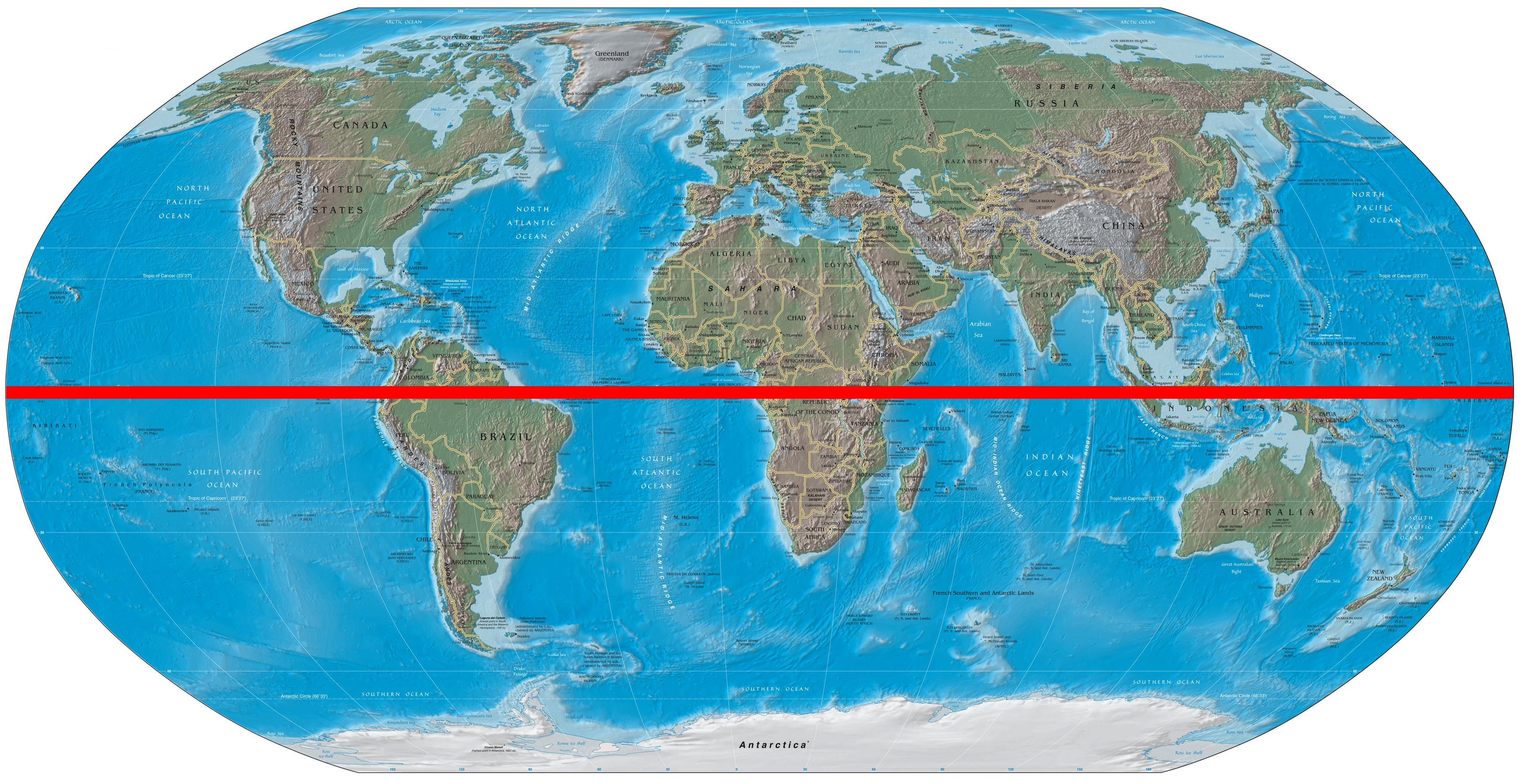
What is the name of this line at 0 degrees latitude?
1
Prime Meridian
2
Equator
3
North Pole
4
South Pole

22

Multiple Choice

Question image
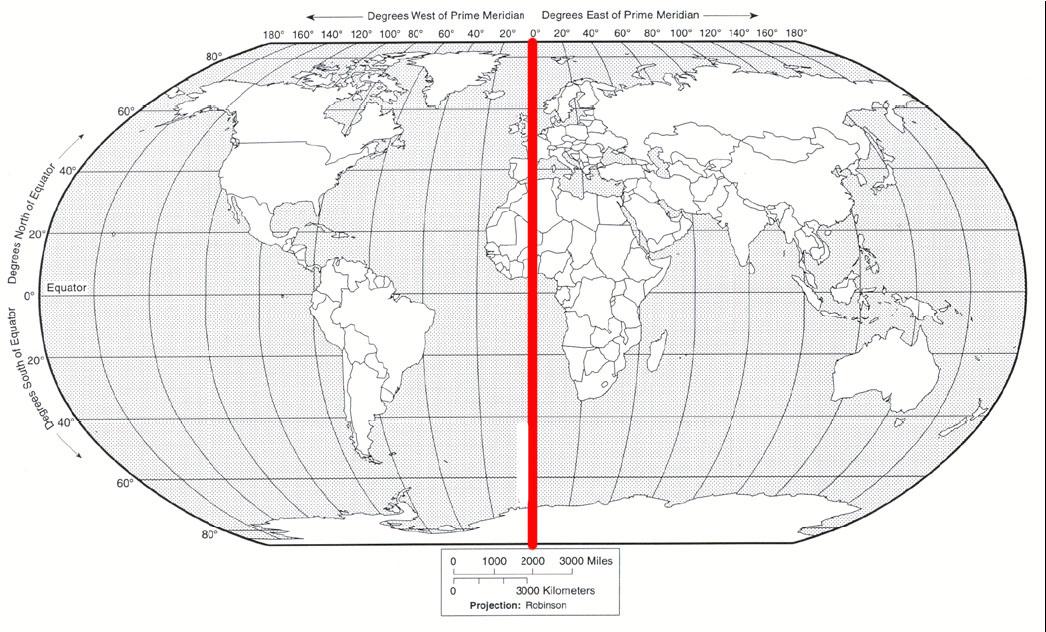
What is the name of the line at zero degrees longitude?
1
Equator
2
Prime Meridian
3
North Pole
4
South Pole

23

Multiple Choice

The equator breaks the Earth into what two hemispheres?
1
Eastern and Southern
2
Northern and Southern
3
Western and Eastern
4
Northern and Western

24

Multiple Choice

What direction to Latitude Lines go?

1

East

2

North

3

South

4

East and West

25

REMEMBER Latitude rhymes with --------->

Flat -i -tude

26

media

The measurement of distance north or south of the equator. It is measured with 180 imaginary lines that form circles around the Earth east to west parallel to the equator.​

Latitude​

27

media

Longitude measures distance east or west​ of the prime meridian. Lines of longitude, also called meridians, are imaginary lines that divide the earth. They run north to south from pole to pole, but they measure the distance east or west. Longitudes is measured in degrees, minutes and seconds

​Longitude

28

Multiple Choice

Question image

A camera was placed outside at night and pointed directly at Polaris and several other stars. The lens was kept open and a time-exposure photograph was taken. The diagram below represents that photograph of Polaris and star trails, with an angular protractor to measure apparent motion.

How many hours was the lens kept open to create the star trails in this photograph?

1

1 hour

2

6 hours

3

3 hours

4

4 hours

29

Multiple Choice

Question image

At which latitude were these star trails observed?

1

1° N

2

30° N

3

60° N

4

90° N

30

Multiple Choice

At which latitude will polaris be overhead?

1

2

90º N.

3

90º S

4

23 ½ºN

31

Multiple Choice

As a person travels due west across New York State, the altitude of polaris will

1

decrease (get lower in the sky)

2

increase (get higher in the sky)

3

remain the same

32

Multiple Choice

What is the approximate latitude and longitude of Elmira, NY? Use your Earth Science reference table.

1

42 N, 77 W

2

77 W 42 N

3

42 S 77 W

4

42 W 77 N

33

Multiple Choice

Looking at Polaris we find the altitude (degrees difference between horizon and Polaris) to be 49 degrees. What latitude are we at?

1

49 S

2

49 N

3

41 N

4

41 S

34

Multiple Choice

What is the approximate latitude and longitude of Elmira, NY? Use your Earth Science reference table.

1

42 N, 77 W

2

77 W 42 N

3

42 S 77 W

4

42 W 77 N

35

media

A half of the globe

Hemisphere​

36

Multiple Choice

What is the approximate latitude and longitude of Slide Mt, NY? Use your Earth Science reference table.

1

44 N, 80 W

2

42 N, 75 W

3

42 N, 79 W

4

42 W, 75 N

37

media

An equator is an imaginary line around the middle of a planet or other celestial bodies. It is halfway between the North Pole and the South Pole​ at 0 degrees latitude. An equator divides the Earth into a Northern Hemisphere and a Southern Hemisphere.

Equator

38

Multiple Choice

Looking at Polaris we find the altitude (degrees difference between horizon and Polaris) to be 49 degrees. What latitude are we at?

1

49 S

2

49 N

3

41 N

4

41 S

39

The prime meridian is the imaginary line that divides the Earth into two equal parts: the Eastern Hemisphere and the Western Hemisphere. The prime meridian is also used as the basis for the world's time zones. Meridians are used to measure distance in degrees eats or west from the prime meridian.

Prime Meridian​

40

Multiple Choice

How many degrees above the horizon would you see Polaris at Utica, Ny?

1

43 degrees

2

42 degrees

3

75 degrees

4

76 degrees

41

Draw

Track the hurricane. Plot the locations of Hurricane Andrew given in the data table, following the directions below.

42

Multiple Choice

What city in NY would you see Polaris at 44 degrees above the horizon?

1

Watertown

2

New York City

3

Elmira

4

Rochester

43

Multiple Choice

Question image

What is the latitude of this person?

1

66.5° S

2

66.5° N

3

23.5° N

4

23.5° S

44

Multiple Choice

Question image
1
The map shows lines of longitude.
2
The map shows lines of latitude.

45

Multiple Choice

Question image
1
The map show the lines of longitude.
2
The map shows the lines of latitude.

46

Multiple Choice

How can we describe an oblate spheroid?

1

Equatorial Diameter is shorter than the Polar Diameter

2

Polar Diameter is shorter than the Equatorial Diameter

3

Polar and Equatorial Diameter are equal

47

Multiple Choice

Which two elements make up the greatest percentages by mass in Earth's crust?

1

oxygen and potassium

2

oxygen and silicon

3

aluminum and potassium

4

aluminum and silicon

48

Multiple Choice

Question image

The graph represents percentage of elements by volume. This graph best represents the elements of the Earth's

1

lithosphere

2

hydrosphere

3

troposphere

4

stratosphere

49

Multiple Choice

Polaris is also known as the...

1

Big Dipper

2

Little Dipper

3

North Star

4

South Star

50

Multiple Choice

Question image

Base your answer on the map, which shows the latitude and longitude of five observers, A, B, C, D and E, on Earth. What is the altitude of Polaris (the North Star) above the northern horizon for observer A?

1

0o

2

10o

3

80o

4

90o

51

Multiple Choice

The angle of the star Polaris above the northern horizon can be used to determine an observer's

1

solar time

2

latitude

3

longitude

4

local time

52

Multiple Choice

Earth's true shape is a

1

Sphere

2

Square

3

Oblate Spheroid

53

Multiple Choice

How can we describe an oblate spheroid?

1

Equatorial Diameter is shorter than the Polar Diameter

2

Polar Diameter is shorter than the Equatorial Diameter

3

Polar and Equatorial Diameter are equal

54

Multiple Choice

In which two Earth regions is oxygen the second most abundant element by volume?

1

crust and hydrosphere

2

hydrosphere and troposphere

3

troposphere and core

4

core and crust

55

Multiple Choice

Which object best represents a true scale model of the shape of the Earth?

1

a Ping-Pong ball

2

a football

3

an egg

4

a pear

Question image

The earth's actual shape is most correctly described as...

1

Circle

2

A perfect sphere

3

Oblate Sphere

4

An eccentric ellipse

Show answer

Auto Play

Slide 1 / 55

MULTIPLE CHOICE