Search Header Logo
CARDIOVASCULAR SYSTEM

CARDIOVASCULAR SYSTEM

Assessment

Presentation

•

Biology

•

9th - 12th Grade

•

Medium

Created by

Bayram Kenci

Used 27+ times

FREE Resource

94 Slides • 82 Questions

1

media

2

media

3

media

4

Multiple Choice

Which is NOT a function of the circulatory system?
1
deliver O2 and nutrients to cells
2
remove CO2 and wastes from cells
3
break down carbohydrates into glucose
4
transport other materials through body

5

Multiple Choice

What are the main parts of the cardiovascular system?
1
heart and lungs 
2
blood, blood vessels, and heart
3
blood, heart, and brain
4
veins, arteries, lungs, and heart

6

media

7

8

media

9

media

10

media

11

media

12

Match

Question image

Match the following valve locations

Tricuspid Valve

Bicuspid or Mitral Valve

Semi-Lunar Valves

Pulmonic Valve

Aortic Valve

Between the right atria and the right ventricle

Between the left atria and the left ventricle

Between the ventricles and arteries

Between the right ventricle and pulmonary artery

Between the left ventricle and aorta

13

Fill in the Blank

Question image

The right side of the heart collects __________blood

14

media

15

media

16

media

17

Match

Question image

Match the following

Thick middle muscle heart layer.

Innermost heart lining

Tissue sac encasing the entire heart.

Opens and closes to prevent backflow

Myocardium

Endocardium

Pericardium

Valves

18

Match

Question image

Match the following valve locations

Tricuspid Valve

Bicuspid or Mitral Valve

Semi-Lunar Valves

Pulmonic Valve

Aortic Valve

Between the right atria and the right ventricle

Between the left atria and the left ventricle

Between the ventricles and arteries

Between the right ventricle and pulmonary artery

Between the left ventricle and aorta

19

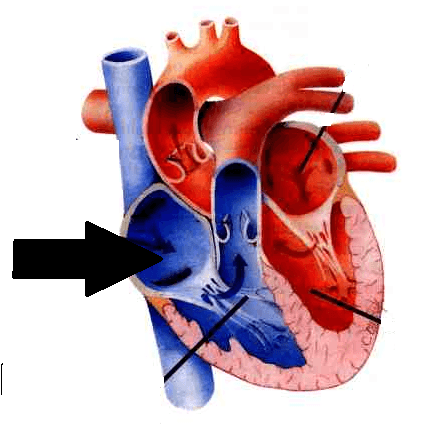
Multiple Choice

Question image
Identify
1
Left atrium
2
Right atrium
3
Left ventricle
4
Right ventricle

20

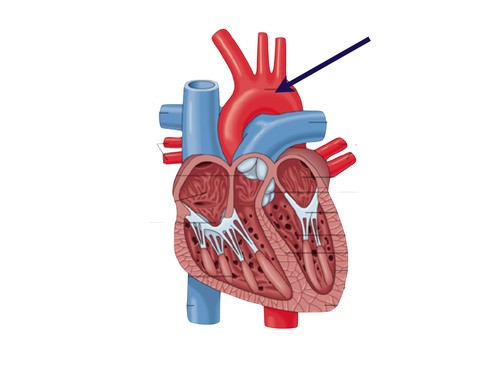
Multiple Choice

Question image
Identify
1
Pulmonary veins
2
Pulmonary artery
3
Aorta
4
Vena cava

21

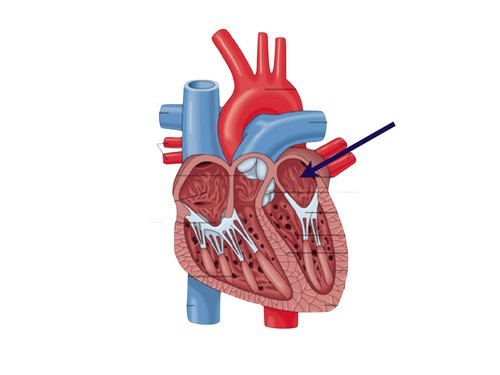
Multiple Choice

Question image
Identify
1
Left atrium
2
Right atrium
3
Left ventricle
4
Right ventricle

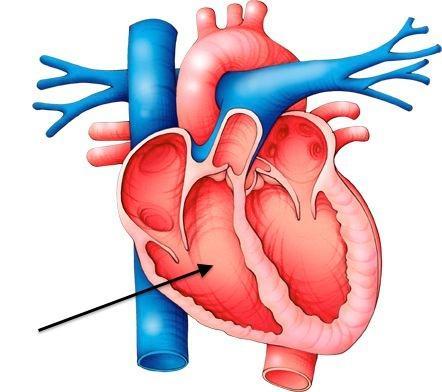
22

Multiple Choice

Question image
Identify
1
Left atrium
2
Right atrium
3
Left ventricle
4
Right ventricle

23

Multiple Choice

The Human heart has ___ chambers.

1

1

2

2

3

3

4

4

24

Multiple Choice

This chamber of the heart RECEIVES blood returning from the body
1
Right Atrium
2
Right Ventricle
3
Left Atrium
4
Left Ventricle

25

Multiple Choice

Structure(s) that keep the blood flowing in one direction.
1
Valve(s)
2
Septum(s)
3
Neuron(s)
4
Bronchiole(s)

26

media

27

Reorder

Question image

Blood from the body flows: To the SVC and IVC, then to the Right Atrium

Reorder the following

To the Lungs

Through the Tricuspid Valve

To the Right Ventricle

Through the Pulmonic Valve

To the Pulmonary Artery

1
2
3
4
5

28

media

29

media

30

media

31

media

32

media

33

media

34

Multiple Choice

Question image

State the phase of cardiac cycle shown in the diagram.

1

Atrial systole, ventricular systole

2

Atrial diastole, ventricular systole

3

Atrial systole, ventricular diastole

4

Atrial diastole, ventricular diastole

35

Multiple Choice

What electrical part of the heart is also called the intrinsic pacemaker of the heart?
1
SA node
2
AV node
3
VA node
4
purkinje fibers

36

Multiple Choice

Why are the walls of the left ventricle thicker than that of the right ventricle?
1
The left ventricle must force blood into all the capillaries of the lungs 
2
the left ventricle doesn't skip leg day
3
This is false, the walls of the right ventricle are thicker
4
Blood from the left ventricle is pumped throught the entire body 

37

media

38

media

39

Fill in the Blank

Question image

What provides the stimulus for the heart to contract?

40

Match

Match the following

When measuring BP

Diastole

Systole

Cardiac Cycle

Ventricles are relaxed

Resting Phase

Ventricles are working

Working Phase

The process of blood flowing through all the components of the heart.

41

​Electrocardiogram

​An electrocardiogram records the electrical signals in the heart. It's a common and painless test used to detect heart problems and monitor the heart's health quickly. An electrocardiogram — also called ECG or EKG

media

42

43

media

44

media

45

​Electrocardiogram

media

46

​Electrocardiogram

media

47

Multiple Choice

T wave represents _______________.

1

atrial depolarization

2

atrial repolarization

3

ventricular depolarization

4

ventricular repolarization

48

Multiple Choice

P wave represents ____________ of the atria.

1

depolarization

2

repolarization

49

Multiple Choice

Question image

Calculate the heart rate.

1

80 bpm

2

70 bpm

3

60 bpm

4

50 bpm

50

Multiple Choice

Which component of ECG cycle shows ventricular depolarisation?

1

P

2

QRS

3

T

4

U

51

Multiple Select

One small square on ECG tracing paper _______

1

is 1 mm by 1 mm

2

represents 0.04 seconds

3

represent 0.1mV

52

Multiple Choice

Question image

In the diagram below, which part of the tracing represents the contraction of the atria?

1

P

2

T

3

R

4

S

53

Multiple Choice

Question image

In the 6 second strip below, the heart rate is

1

7

2

60

3

70

4

75

54

media

55

media

56

media

57

media

58

media

59

media

60

61

media

62

Multiple Choice

Suggest the equation to work out Cardiac output.

1

Heart rate x Stroke volume

2

Hear rate x minute ventilation

3

Stroke Volume x Vital capacity

63

Multiple Choice

Define the term Stroke Volume.

1

the volume of oxygen transported in the blood

2

the volume of blood pumped out of the heart in one beat

3

the volume of blood pumped out of the heart each minute

64

Multiple Choice

Question image

Look at the graph. State the resting Heart rate of the performer.

1

50 bpm

2

60 bpm

3

70 bpm

4

80 bpm

65

Multiple Choice

State the unit of measurement for Cardiac output.

1

ml per minute

2

litres per minute

66

Multiple Choice

Calculate the cardiac output for a performer who has a heart rate of 150 beats per minute and a stroke volume of 90 ml.

Cardiac output:

1

13500 Liter

2

13.5 Liter

3

1.66 Liter

4

1350 Mililiter

67

Fill in the Blank

Work out the cardiac output a performer who has a heart rate of 190 bpm and a stroke volume of 75ml

68

media

69

media

70

media

71

media

72

media

73

media

74

media

75

media

76

media

77

media

78

media

79

Match

Question image

Match the following

Thick middle muscle heart layer.

Innermost heart lining

Tissue sac encasing the entire heart.

Opens and closes to prevent backflow

Myocardium

Endocardium

Pericardium

Valves

80

Multiple Choice

Question image

Classify a BP of 118/78

1

Stage 1 Hypertension

2

Elevated -Hypertension

3

Normal Range

4

Stage 2 Hypertension

81

media

82

media

83

media

84

media

85

Reorder

Question image

The blood picks up oxygen in the lungs and then flows from the lungs to the pulmonary veins to the Left Atrium

Reorder the following

Through the Mitral Valve

To the Left Ventricle

Through the Aortic Valve

To the Aorta

To the Body

1
2
3
4
5

86

Reorder

Question image

Blood from the body flows: To the SVC and IVC, then to the Right Atrium

Reorder the following

To the Lungs

Through the Tricuspid Valve

To the Right Ventricle

To the Pulmonary Artery

To the Lungs

1
2
3
4
5

87

media

88

media

89

media

90

media

91

media

92

media

93

media

94

media

95

media

96

media

97

98

Multiple Select

Cardiac Output= Stroke Volume (__/__) x Heart Rate (__/__)

1

mL/beat

2

beats/min

3

L/beat

4

beats/sec

99

Multiple Select

Stroke volume= the volume of ___ (__) pumped per heart beat

1

blood

2

gas

3

mL

4

L

100

Multiple Choice

Blood always flows from __ pressure to __ pressure

1

High to Low

2

Low to High

101

Multiple Choice

When the heart REFILLS with blood

1

Diastole

2

Systole

102

Multiple Choice

Contraction (of atria or ventricles) which forces BLOOD OUT

1

Diastole

2

Systole

103

Multiple Choice

Cardiac diastole

1
2
3

104

Multiple Choice

Atrial diastole, Ventricular systole

1
2
3

105

Multiple Select

Systolic blood pressure

1

Peak pressure, produce by ventricles contracting

2

120 mmHg

3

Baseline pressure, when the ventricles

4

80 mmHg

106

Multiple Select

Diastolic blood pressure

1

Peak pressure, produced by the ventricles contracting

2

120 mmHg

3

Baseline pressure, when the ventricles are relaxed

4

80 mmHg

107

Multiple Choice

Question image

Normal blood pressure is...

1

120/80 mmHg and below

2

80/120 mmHg and below

3

140/90 mmHg and below

4

80/140 mmHg and below

108

Multiple Choice

Question image

The force of blood pushing against your arteries is...

1

Heart Rate

2

Temperature

3

Respiration Rate

4

Blood Pressure

109

Multiple Choice

Question image

What is the blood pressure in the picture?

1

118

2

118/78

3

78

4

78/70

5

70

110

Multiple Choice

Question image

Is the blood pressure in the picture normal?

1

Yes

2

No

111

Multiple Choice

Question image

Is the blood pressure in the picture normal?

1

Yes

2

No

112

Multiple Choice

What is the ideal range for blood pressure?

1

70/50 mmHg - 100/90 mmHg

2

90/60 mmHg - 120/80 mmHg

3

60/90 mmHg - 80/120mmHg

4

50/30 mmHg - 90/60 mmHg

113

Multiple Choice

120/80 mmHg

1

Low

2

Ideal

3

High

114

Multiple Choice

140/90 mmHg

1

Low

2

Ideal

3

High

115

Multiple Choice

75/50 mmHg

1

Low

2

Ideal

3

High

116

Multiple Choice

190/160 mmHg

1

Low

2

Ideal

3

High

117

Multiple Choice

Systolic blood pressure measured when the heart is...

1

Contracting

2

Relaxing

118

Multiple Choice

100/85 mmHg is a blood pressure reading.

The 85 represents the individuals...

1

Heart Rate

2

Systolic Blood Pressure

3

Diastolic Blood Pressure

4

Stroke Volume

119

Multiple Choice

100/85 mmHg is a blood pressure reading.

The 100 represents the individuals...

1

Heart Rate

2

Systolic Blood Pressure

3

Diastolic Blood Pressure

4

Stroke Volume

120

media

121

media

122

media

123

media

124

media

125

media

126

media

127

media

128

media

129

media

130

media

131

media

132

media

133

media

134

Multiple Choice

What type of blood do the Vena Cava carry?

1

Oxygenated

2

Deoxygenated

135

Multiple Choice

Arteries carry oxygenated blood _______ the heart.

1

Away from

2

Towards

3

Through

4

Into

136

Multiple Choice

How many blood vessel types do humans have?

1

4

2

5

3

3

4

2

137

Multiple Choice

Human blood vessels are

1

artries, capillaries, and atria

2

ventricles, atria and pulmonary veins

3

capillaries, artries, and veins

4

veins, artries, and aorta

138

Multiple Choice

The thickest and strongest blood vessel is the

1

vein

2

artery

3

capillary

4

both veins and capillaries

139

Multiple Choice

The blood vessel that has the largest diameter is

1

vein

2

artery

3

capillary

140

Multiple Choice

The blood vessel that has valves at intervals...

1

capillary

2

artery

3

vein

4

none of the above

141

Multiple Choice

Valves in veins

1

support them

2

protect them

3

prevent the backward movement inside them

4

provide them elesticity

142

Multiple Choice

which of the blood vessels do you think have greatest blood pressure

1

veins

2

capillaries

3

atria

4

arteries

143

Multiple Choice

Carry blood away from heart; mostly oxygen-rich
1
Arteries
2
Veins
3
Capillaries

144

Multiple Choice

These are one cell thick

1

arteries

2

capillaries

3

veins

145

Multiple Choice

Pulmonary circulation involves blood flow to and from the heart and the _______.
1
body
2
digestive organs
3
brain
4
lungs

146

Multiple Choice

Pulmonary artery carries...

1

Oxygenated blood from the heart to the lung

2

Deoxygenated blood from the heart to the lung

147

Multiple Choice

Pulmonary vein carries...

1

Deoxygenated blood from the heart to the lung

2

Oxygenated blood from the lung to the heart

148

Multiple Choice

Which of the following is the smallest blood vessel?

1

Venules

2

Veins

3

Arterioles

4

Capillaries

149

Multiple Choice

Where pressure is the highest
1
arteries closest to the heart
2
veins closest to the heart
3
capillaries
4
venules

150

Explanation Slide...

151

Explanation Slide...

152

media

153

media

154

media

155

media

156

media

157

media

158

media

159

media

160

media

161

media

162

media

163

media

164

media

165

media

166

media

167

media

168

media

169

Multiple Choice

Responsible for stopping bleeding in a vessel

1

RBCs

2

WBCs

3

Platelet

170

Multiple Choice

Responsible for the transportation of O2 and CO2

1

RBCs

2

WBCs

3

Platelet

171

Multiple Choice

The process of making RBCs

1

Erythropoiesis

2

Erythropoietin

172

Multiple Choice

What percentage of plasma is found in the blood?

1

40%

2

92%

3

55%

4

5%

173

Multiple Choice

Plasma is made of ____% water.

1

45%

2

55%

3

90%

4

110%

174

Multiple Choice

Amino acids, simple sugars, & lipids are examples of plasma _____.

1

proteins

2

gases

3

nutrients

4

electrolytes

175

Multiple Choice

Which blood cell fights infection?

1

RBC

2

Plasma

3

WBC

4

Platelets

176

Multiple Choice

Platelets are also known as

1

leukocytes

2

erthryocytes

3

thrombocytes

4

monocytes

media

Show answer

Auto Play

Slide 1 / 176

SLIDE