
Metallic Properties Lesson

Presentation
•
Chemistry
•
9th - 12th Grade
•
Easy
+4
Standards-aligned

Vanessa Ward
Used 16+ times
FREE Resource
23 Slides • 28 Questions
1
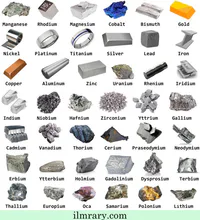
Metals

2
Lesson Objectives
Describe the characteristic properties of metals. Identify the location of metals in the periodic table. Explain how and why the reactivity of metals changes in the periodic table.
3
Properties of Metals
Malleable-Can be shaped and does not break easily.
Ductile-Can be pulled into long sheets of metal or wire.
Thermal Conductivity-Allows heat to pass easily-Example Pans.
Electrical Conductivity-Allows the easy flow of electric current.
4
Multiple Choice

Metallic bonds give metals all of the following properties except for
malleability
ductility
being conductive
being translucent
5
Multiple Choice
Which would be the best example of a metal displaying malleability?
6
Multiple Choice
Select the Vocabulary Word: Ability of a substance to be hammered or shaped into thin sheets
Ductility
Resonance
Hydrogen Bonding
Malleability
7
Multiple Choice
Select the Vocabulary Word: Ability of a substance to be drawn into a wire
Malleability
Ductility
Resonance
8
Multiple Choice
9
Malleability means it can be bent into different shapes.
10
Metals are typically malleable, ductile, conductive, and lustrous.

11
Multiple Choice
12
Multiple Choice
Which one of these objects is malleable?
Antique Ceramic Vase
Steel Pole Fence Post
Glass Table Top
Marbel Sculpture
13
Physical Properties of Metals
Lustrous-Shiny to the eye.
Opaque-Does not allow light to pass through.
High Melting Points (with some exceptions).
14
Multiple Choice

Based on the physical appearance of the two crystal samples, which is a metal?
Sample A
Sample B
Sample A and B
15
How are Metals identified
Alkali Metals Group 1
Alkaline Earth Metals Group 2
Transition Metals Group 3-12
16
17

18
Alkali Metals
Shiny
Soft
Extremley Reactive
One Valence Electron available to give up to another element.

19
Alkaline Earth Metals
1.Very Shiny
2.Hard, more Dense, Less Reactive
3.Give up 2 Valence Electrons.

20
Reactive Trends Periods of the Periodic Table
Electrons are used to bond atoms together. Group one will share with group 2.

21
Multiple Choice
What type of metal is Lithium (LI) ?
Alkali Earth Metals
Alkali Metals
Transition
22
Electrical & thermal conductivity
23

Electrical conductor
Electrical insulator
24
Multiple Choice
TRUE OR FALSE
Thermal conductors allow heat to be transferred through them.
TRUE
FALSE
25
Multiple Choice
The bulbs would light up when--
the material did not allow electricity to travel through
the atoms of the material kept electrons inside; electrons could not move
the material allowed electricity to travel through it
26
Multiple Choice
Materials which allow electrons to move from atom to atom are called--
conductors
non-conductors
27
Multiple Choice
A material is a non-conductor. What is true of the material?
It allows electrons to move freely between atoms
It does not allow electrons to move between atoms
28
Multiple Select
A conductivity test was done on four objects. Which ones were conductors. Select all that apply.
Silver earrings
Plastic ring that looks like a spider
Bracelet made of wood
Copper necklace
29
Multiple Choice
When the light bulbs on the conductivity tester light up, this means that--
Electrons are leaving the conductivity tester, flowing into the material, and then flowing back into the conductivity tester
Electrons are not able to move from the conductivity tester into the materail being tested.
30
Multiple Select

Which two materials can be used to light the bulb up?
31
Multiple Choice
We use rubber gloves to hold a hot frying pan because the glove .......................
does not conduct heat
does not slip
conducts electricity
absorbs water
32
Ionic and Metallic Compounds
33
Ionic Compounds
The electrostatic force that holds oppositely charged particles together in an ionic compound is an ionic bond.
Compounds that contain ionic bonds are called ionic compounds.

34
Properties of Ionic Cmpds
Strong attractions among the positive ions and negative ions in an ionic compound result in the formation of a crystal lattice.
A crystal lattice is a 3-D geometric arrangement of particles. Each positive ion is surrounded by negative ions and each negative ion is surrounded by positive ions

35
Physical Properties
High melting & boiling points
Hard yet brittle
Does not conduct electricity in the solid state.
However, ionic compounds are excellent conductors, known as electrolytes, in the liquid or aqueous (dissolved in water) states

36
Lattice Energy
The energy required to separate the ions of an ionic compound is called lattice energy.
Lattice energy is greater when the charge on the ions is greater.
Lattice energy is greater when the distance between the two ions is smaller.

37
Metallic Bonds
Electron Sea Model proposes that all the metal atoms in a metallic solid contribute their valence electrons to form a "sea" of electrons that surround the metal cations in the lattice.

38
Delocalized Electrons
The electrons are not held by any specific atom and they are free to move.
A metallic bond is the attraction of a metallic cation for delocalized electrons.

39
Multiple Choice
What is the structure of metallic compounds?
Irregular arrangement of metal atoms surrounded by a sea of delocalized electrons
Random arrangement of metal atoms surrounded by a sea of delocalized electrons
Regular arrangement of metal atoms surrounded by a sea of delocalized electrons
Regular arrangement of metal atoms surrounded by a sea of localized electrons
40
Multiple Choice

What type of bond is illustrated in this image?
Metallic
Ionic
Covalent
James
Polar Covalent
41
Multiple Choice
How does metallic bondbondings contribute to the ductility and malleabilityof metals?
They allow layers of atoms to slide past each other without breaking the bond.
They create rigid structures that resist deformation.
They increase the melting point of metals, making them less ductile.
They make the metal atoms immobile, reducing ductility.
42
Multiple Choice

Measure of the tendency of an atom to attract a bonding pair of electrons is known as...
electronegativity
bond polarity
angular momentum
valence electrons
43
Multiple Choice
A ________ is located the outermost shell of an atom.
Proton
Neuton
Valence Electron
Core Electron
44
Multiple Choice
Metallic bonds are best described as metal cations in a sea of:
Free Electrons
Photons
Anions
Neutrons
45
Multiple Choice
_____ bonding takes place between a metal and a nonmetal.
Covalent
Metallic
Ionic
Hydrogen
46
Multiple Choice
In covalent bonding, electrons are:
Dissociated
Transferred
Freed
Shared
47
Multiple Choice

The diagram shows metallic bonding.
Which labels are correct?
X: atomic nucleus
Y: outer electron
X: metal atom
Y: mobile electron
X: metal cation
Y: mobile electron
X: positive ion
Y: negative ion
48
Properties of Metals
In general metals have high melting and boiling points (except Hg is a liquid at room temperature).
Malleability, Ductility, Durability
Thermal & Electrical conductivity
Hardness & Strength (More delocalized electrons means greater strength)

49
Alloys
A homogeneous mixture of metals
Alloys are made to vary properties of metals (increase strength)
Substitutional Alloys - two metals of similar size are mixed.
Interstitial Alloys - Large and small metals are mixed.

50
Multiple Choice
51
Multiple Choice
Metals
Show answer
Auto Play
Slide 1 / 51
SLIDE
Similar Resources on Wayground

47 questions
Ionic Compounds Lesson
Presentation
•
9th - 12th Grade
47 questions
The Periodic Table
Presentation
•
10th - 12th Grade
46 questions
Unit 3 Review
Presentation
•
9th - 12th Grade
46 questions
Matrices; 11.2
Presentation
•
9th - 12th Grade
45 questions
Synthetic Materials Tutorial
Presentation
•
9th - 12th Grade
44 questions
Introduction to Stoichiometry
Presentation
•
9th - 12th Grade
47 questions
Forming Ionic Compounds
Presentation
•
9th - 12th Grade
47 questions
Introduction to Mole
Presentation
•
9th - 12th Grade
Popular Resources on Wayground
6 questions
PRIDE Always and Everywhere
Presentation
•
12th Grade
20 questions
Lab Safety Quiz

Quiz
•
6th Grade
26 questions
KOR Review Kahoot Questions
Quiz
•
8th Grade
21 questions
Continents and Oceans
Quiz
•
6th Grade
12 questions
Unit Zero lesson 2 cafeteria
Presentation
•
9th - 12th Grade
20 questions
Parts of Speech
Quiz
•
5th Grade
10 questions
Riddles Riddles fun Riddles
Quiz
•
6th - 12th Grade
16 questions
Subject & Predicate
Quiz
•
5th Grade
Discover more resources for Chemistry
21 questions
Lab Safety
Quiz
•
10th Grade
20 questions
Scientific Method
Quiz
•
10th - 12th Grade
20 questions
Lab Safety
Quiz
•
10th Grade
20 questions
Metric Conversions
Quiz
•
11th Grade
12 questions
Significant figures
Quiz
•
9th - 12th Grade
20 questions
COUNTING ATOMS
Quiz
•
10th Grade
19 questions
Isotopes & Ions
Quiz
•
9th Grade
11 questions
AP Chemistry - Unit 1 Review
Quiz
•
11th Grade